Key takeaways
- Compare the best omelette pans for fluffy folds at home: sloped nonstick pans that slide eggs out cleanly and fold omelettes without sticking or tearing.
A good omelette pan does one job well: it lets beaten eggs set into a soft sheet, then slide and fold without catching on the surface. Sloped sides matter more than most people expect, because a gentle curve guides the eggs toward the center and gives a spatula room to lift the edge. A pan that is too deep or too flat fights you at exactly the wrong moment.
The five pans below cover the main ways home cooks approach omelettes. Three are four-cup egg pans that cook individual portions in separate wells, one is a rectangular Japanese tamagoyaki pan for rolled omelettes, and one is a classic round 8-inch pan with a granite coating. Each one is a dedicated omelette or egg pan, not a general skillet pressed into service.
Quick Picks
As an Amazon Associate we earn from qualifying purchases
| Product | Best for | Key spec from title |
|---|---|---|
| CAROTE 4-Cup Nonstick Granite Egg Pan | Cooking four eggs at once | Granite nonstick, 4-cup design |
| Modern Innovations 4-Cup Egg Frying Pan with Lid | Watching eggs cook under a lid | Glass lid and silicone spatula included |
| Foorey 4 Egg Frying Pan | Fast weekday breakfasts | 4-cup aluminum pan, dishwasher safe |
| HexClad Hybrid Nonstick Tamagoyaki Egg Pan | Rolled Japanese omelettes | Hybrid nonstick, slanted rectangular sides |
| SENSARTE Nonstick Granite Omelette Pan 8-Inch | Classic round omelettes | Swiss granite coating, 8-inch round pan |
How to Choose
Pan shape and size
Shape decides how an omelette folds. A round pan with sloped sides lets eggs slide toward the middle and roll onto a plate in one motion, which is the classic French method. Four-cup pans take a different route: each well holds one egg or one small omelette, so portions come out even without any folding at all. A rectangular tamagoyaki pan suits rolled omelettes built layer by layer. Size matters too. An 8-inch pan fits one or two eggs comfortably, while a four-cup pan handles a small family breakfast in a single round.
Coating and surface
The cooking surface decides how easily eggs release. Granite and ceramic nonstick coatings let a finished omelette slide with little added fat, and they wipe clean quickly after breakfast. Hybrid surfaces mix stainless steel with a nonstick pattern, so they tolerate metal utensils where a plain coating would not. Uncoated carbon steel needs seasoning before it turns slick, and it rewards cooks who keep up the routine. Whatever the surface, check whether the maker calls it dishwasher safe, because hand washing keeps most coatings in better shape for longer.
Stovetop compatibility
Not every omelette pan works on every hob. Gas and electric coil hobs accept nearly all pans, while induction hobs need a magnetic base, so a pan without one simply will not heat. The listings in this guide spell out compatibility for each pan, and two of the five work on induction as well as gas and electric. If your kitchen has an induction hob, confirm this detail before buying, because it is the most common reason a new pan goes back. A pan that matches your hob heats evenly and holds a steady temperature while the eggs set.
Cleaning and upkeep
Omelette pans see daily use, so cleaning effort adds up fast. Dishwasher-safe pans save time, though hand washing with a soft sponge usually extends the life of a nonstick coating. Four-cup pans have more corners to clean than a smooth round pan, and a glass lid adds one more piece to wash. Look at the handle too: a stay-cool handle is easier to hold during a long cook, and a rivet-free interior has fewer spots where egg can catch. A pan that is simple to clean gets used more often, which is the real point.
The 5 Best Options
CAROTE 4-Cup Nonstick Granite Egg Pan

The CAROTE pan divides breakfast into four neat wells, so each egg or small omelette cooks in its own cup with no running into its neighbours. The granite nonstick surface releases eggs cleanly, and the five-layer die-cast aluminum body spreads heat evenly across all four cups. It works on gas, induction, and electric hobs, which covers nearly every kitchen. The square shape sits neatly on a burner and stores easily in a crowded cupboard. For a cook who wants four identical portions at once, this pan removes most of the guesswork from the morning routine.
Specs
- Granite nonstick coating, PFOA-free
- 4-cup design for eggs, pancakes, and small omelettes
- 5-layer die-cast aluminum body
- Gas, induction, and electric stovetop compatible
- Hand wash only, not dishwasher safe
- Bakelite handle
- 6.69 x 7.09 x 0.98 inches
Best for: cooking four eggs or small omelettes at the same time.
Watch out for: hand wash only, and the square shape fits four small portions rather than one large folded omelette.
Modern Innovations 4-Cup Egg Frying Pan with Lid

The Modern Innovations pan adds a glass lid to the four-cup format, so you can watch the eggs set without lifting the cover and losing heat. A silicone spatula comes in the box, which makes serving each portion onto a plate simple. The aluminum alloy body holds heat well, and the maker states eggs cook in about three minutes. The pan is a good fit for cooks who like to keep an eye on breakfast while coffee brews, and the lid also keeps splashes inside the pan. Four wells mean four matching portions with very little fuss.
Specs
- Aluminum alloy body
- 4-cup design with clear glass lid
- Silicone spatula included
- Maker states eggs cook in about 3 minutes
- 16.6 x 9.5 x 1.5 inches
- 2.94 pounds
- Hand wash only, not dishwasher safe
- Electric and gas stovetops, not induction
- California Proposition 65 warning applies
Best for: watching eggs cook under the glass lid while they set.
Watch out for: not induction compatible, and the Proposition 65 warning may concern some buyers.
Foorey 4 Egg Frying Pan

The Foorey pan is the simplest pick in this guide: four cups, a nonstick aluminum body, and a dishwasher-safe finish that makes cleanup quick. It ships with a spatula and a brush, so the pan arrives ready to use with no extra tools needed. At just over a pound, it feels light in the hand and easy to move from hob to sink. The model name is omelet5, and the round shape fits neatly on a standard burner. For a busy morning when breakfast needs to be on the table in minutes, this pan keeps the whole process short and simple.
Specs
- Aluminum body with nonstick coating
- 4-cup design, model omelet5
- 7.48 x 7.48 x 3.93 inches
- 1.06 pounds
- Dishwasher safe
- Gas stovetop compatible
- Spatula and brush included
- Ships from Amazon, sold by Foorey Home
Best for: quick breakfasts with easy cleanup afterwards.
Watch out for: the four wells suit individual portions, not one large folded omelette.
HexClad Hybrid Nonstick Tamagoyaki Egg Pan

The HexClad pan is built for rolled Japanese omelettes, and its rectangular shape with slanted sides is the key. Thin layers of egg set quickly, then roll into a neat block with the help of the slanted lip and the hybrid nonstick surface. The tri-ply body mixes aluminum with stainless steel, and the surface tolerates metal utensils, which most coated pans do not. It is dishwasher safe, oven safe to 900 degrees Fahrenheit, and ready for induction and all other cooktops. This is the most specialised pan in the guide, and it suits cooks who enjoy the tamagoyaki method.
Specs
- Hybrid nonstick surface over aluminum and stainless tri-ply
- Model CWTP09-C, UPC 810140341136
- Rectangular with slanted sides, 6 x 8 inches
- Stay-cool handle
- Dishwasher safe
- Oven safe to 900 degrees Fahrenheit
- Induction ready, compatible with all cooktops
- Metal utensil safe
- 2.15 pounds
Best for: rolled tamagoyaki and layered Japanese omelettes.
Watch out for: no lid included, and the rectangular shape suits rolled omelettes rather than round ones.
SENSARTE Nonstick Granite Omelette Pan 8-Inch
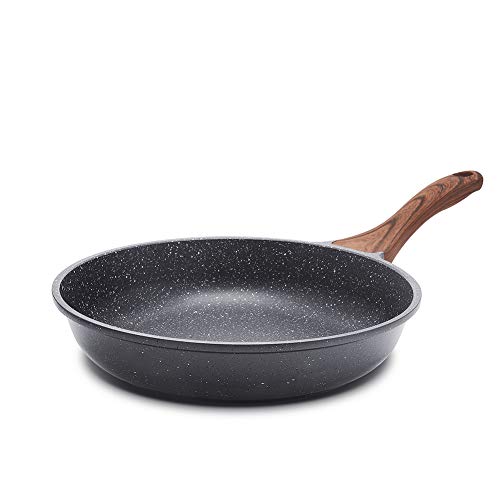
The SENSARTE pan is the classic option in this guide: a round 8-inch skillet with a Swiss granite coating, shaped the way omelette pans have looked for decades. The sloped sides help a finished omelette fold and slide onto a plate, and the coating is PFOA free. It works on electric, gas, and induction hobs, and it goes in the dishwasher when breakfast is done. The listing names omelet among its uses, alongside crepe and pancake, so the pan earns its place here as a dedicated egg pan. For cooks who want one familiar pan for everyday omelettes, this is the straightforward choice.
Specs
- Swiss granite nonstick coating
- Aluminum and granite body, PFOA free
- 8-inch round pan
- 15.1 x 8 x 2.2 inches
- 1.36 pounds
- Dishwasher safe
- Electric, gas, and induction compatible
- Listed uses include crepe, omelet, and pancake
Best for: classic round omelettes in a familiar skillet shape.
Watch out for: a general-purpose fry pan marketed as an omelette pan, so the sides are less sloped than a dedicated French omelette pan.
Which One Fits Your Situation
Cooking for one or two in the morning
A single cook rarely needs four wells at once, so the SENSARTE 8-inch pan or the HexClad tamagoyaki pan fits best. The round SENSARTE pan makes one folded omelette with room to spare, while the HexClad pan turns two or three eggs into a rolled omelette. Both heat quickly and clean up fast, which matters when breakfast is a short window. Pick the round pan for a classic fold, or the rectangular pan if rolled omelettes appeal to you.
Feeding a family at the weekend
Four-cup pans earn their keep when several people want breakfast at the same time. The CAROTE, Modern Innovations, and Foorey pans each cook four portions in one round, so nobody waits while the next batch cooks. The Modern Innovations lid helps when the table is busy, because the eggs keep warm under glass. Choose the Foorey pan if easy cleanup matters most, or the CAROTE pan if your hob is induction and the other two will not work there.
Learning rolled Japanese omelettes
Rolled omelettes need a rectangular pan, and the HexClad tamagoyaki pan is the only one in this guide with that shape. Its slanted sides guide each thin layer as it rolls, and the hybrid surface releases the egg without tearing. A round pan can make a rolled omelette, but the corners of a round pan fight the roll at every turn. If tamagoyaki is the goal, the right shape matters more than any other feature on the list.
Keeping cleanup simple
Two of these pans go in the dishwasher: the Foorey and the HexClad, along with the SENSARTE. The CAROTE and Modern Innovations pans need hand washing, which adds a few minutes after breakfast. A smooth round pan wipes clean faster than a four-cup pan with wells and corners. If the sink is the part of cooking you dislike most, pick a dishwasher-safe pan with a simple shape, and rinse it while the eggs are still warm on the plate.
Common Mistakes
- Picking a pan with straight high sides, which traps the eggs and makes folding hard
- Cooking on high heat, which browns the outside before the inside sets
- Using metal utensils on a coated pan that is not rated for them
- Putting a hand-wash pan in the dishwasher and wearing out the coating early
- Overfilling a four-cup pan so the eggs spill over the wells and stick to the edges
Frequently Asked Questions
What size omelette pan should I buy?
An 8-inch pan suits one or two eggs and a single folded omelette, which covers most home cooks. A four-cup pan suits a family, because it cooks four portions at once. A 6 x 8-inch rectangular tamagoyaki pan suits rolled omelettes of three or four eggs. Match the pan to the number of eggs you usually cook, not to the largest pan on the shelf.
Can I use an omelette pan on induction?
Only if the pan has a magnetic base. In this guide, the CAROTE, HexClad, and SENSARTE pans work on induction, while the Modern Innovations and Foorey pans do not. Check the listing for induction compatibility before buying, because a pan without a magnetic base will not heat on an induction hob at all. Gas and electric hobs accept nearly every pan.
Do I need a lid for an omelette pan?
A lid is not required, but it helps the top of the eggs set without flipping. The Modern Innovations pan includes a glass lid, so you can watch the eggs cook and keep the heat inside. The other four pans have no lid, and they work well without one, because an omelette cooks quickly on a hot surface. If you like soft, barely set eggs, a lid helps.
How do I keep eggs from sticking to a new pan?
Warm the pan on medium heat first, then add butter or oil and let it coat the surface before the eggs go in. Keep the heat moderate so the eggs set gently instead of bonding to the pan. Use a silicone or wooden spatula on coated pans, and lift the edges as the eggs set so they release cleanly. A good nonstick surface does most of the work.