Key takeaways
- Bake crisp pizza crusts at home with the best baking steels, from thick carbon steel plates to pre-seasoned slabs, with thickness, size, and heat compared.
A baking steel turns a home oven into a closer match for a brick oven. The slab stores heat, then hands it back to the dough the moment a pizza lands, so the base sets fast, browns evenly, and stays crisp under sauce and cheese. Ceramic stones do a similar job, but they can crack under thermal shock, and they give up heat more slowly than steel. That is why steel has become the go-to surface for home pizza makers who want a leopard-spotted base without a dedicated pizza oven.
The five steels below cover the main choices: quarter-inch plates that heat fast and lift easily, a thicker three-eighths plate that holds heat through back-to-back bakes, pre-seasoned slabs that work on arrival, and one raw slab that needs a single seasoning session before its first bake. Each one is a solid carbon steel plate, not a stone, and each one was checked against a live Amazon listing for its model, size, and thickness.
Quick Picks
As an Amazon Associate we earn from qualifying purchases
| Product | Best for | Key spec |
|---|---|---|
| Baking Steel Original 14×16 | First steel buyers | 16 x 14 in, 1/4 in thick, 15 lb |
| Dough-Joe Samurai 15×15 | Pre-seasoned convenience | 15 x 15 in, 1/4 in thick, 16 lb |
| Chef Pomodoro 16-Inch | Easy lifting | 16 x 13.25 in, 1/4 in thick, finger hole |
| ThermiChef 16×16 | Square 16-inch pies | 16 x 16 in, 1/4 in thick, 17.6 lb |
| VEVOR 16×14.5 | Back-to-back bakes | 16 x 14.5 in, 3/8 in thick, 24.5 lb |
How to Choose
Thickness: Quarter Inch or Three Eighths
Thickness sets how much heat a steel stores. A quarter-inch plate heats up faster and weighs less, which suits a single pizza or a loaf of bread on a weeknight. A three-eighths plate stores far more heat, so the surface stays hot when a second or third pizza lands, but it takes longer to reach full heat and weighs much more. Most home bakers do well with a quarter-inch plate. Choose the thicker plate only when back-to-back bakes are a regular habit and the extra weight is no trouble.
Size and Oven Fit
Measure the oven rack before ordering, because a steel that does not fit is a steel that never gets used. Width matters, and so does depth: a 16-inch square plate needs about 18 inches of rack depth to leave air space around the edges. Leave at least an inch of clearance on each side so hot air can move around the slab. A 14 by 16 inch plate suits most standard ovens and still holds a 13-inch round. A 20 by 14 inch plate suits wide ovens and large gatherings, but check the rack first.
Seasoning and Care
Carbon steel rusts when it stays damp, so care matters as much as cooking. Pre-seasoned plates arrive ready to bake, with a thin layer of oil already baked onto the surface. Raw plates need one seasoning session first: wash, dry, rub on a thin coat of oil, and bake the plate empty for about an hour. After each bake, let the steel cool, wipe it clean with a damp cloth, and dry it at once. Never soak a steel in the sink, and never leave it wet in the oven.
Weight and Handling
A steel slab is heavy, and the weight grows fast with thickness. A quarter-inch plate runs about 15 to 18 pounds, which most people can slide in and out with one hand. A three-eighths plate can pass 24 pounds, and a 20-inch slab can pass 30, so lifting it hot takes two hands and a firm grip. Finger holes and thumb holes help a lot here, and many bakers simply leave the steel on the bottom rack all the time. If the steel must move often, pick the lightest plate that still fits the pizza.
The 5 Best Options
Baking Steel Original 14×16
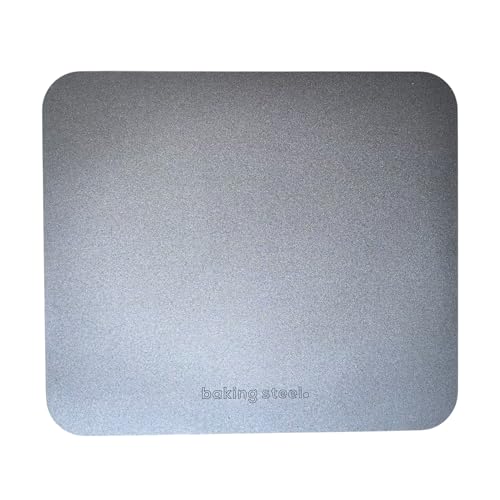
The Original is the steel that made the category, and it still sets the standard for a first purchase. It arrives pre-seasoned by hand with flax oil, so it bakes on arrival with no prep session. At 16 by 14 inches and a quarter inch thick, it fits a standard oven rack and holds a 12 to 14 inch pizza. Fifteen pounds keeps it liftable, and the lifetime warranty against defects covers the slab for as long as it stays in the kitchen. Preheat runs about an hour at 500 to 550 degrees, then a pizza bakes in five to seven minutes.
Specs
- 16 x 14 inches, 1/4 inch thick, 15 lb
- Solid carbon steel, pre-seasoned by hand with flax oil
- Made in USA
- Lifetime warranty against defects
- Model 3424321
Best for: First-time steel buyers who want a proven pre-seasoned slab.
Watch out for: Needs a full hour of preheat at high heat; confirm the 16 by 14 inch size fits the oven rack before ordering.
Dough-Joe Samurai 15×15

The Samurai is a square 15 by 15 inch plate that suits round pizzas with room to spare on every side. It ships pre-seasoned, and the maker builds it in the USA from carbon steel. At 16 pounds it sits in the same easy-lifting range as the Original, while the square shape fits ovens that run narrow front to back. The maker says to preheat at 500 degrees or higher, then give the steel another 30 minutes past the oven signal before launching the dough. It also works on a grill, which suits cooks who bake outside in summer.
Specs
- 15 x 15 inches, 1/4 inch thick, 16 lb
- Carbon steel, pre-seasoned
- Made in USA
- Model: The Samurai
- UPC 196852734603
Best for: Cooks who want a square pre-seasoned plate that also works on the grill.
Watch out for: Carbon steel rusts when left damp, so dry and oil the plate right after wiping it clean.
Chef Pomodoro 16-Inch Pizza Steel

Chef Pomodoro’s 16-inch plate is the easiest steel in this set to lift, thanks to a finger hole cut into one edge. The hole gives a firm grip on a 14.6-pound slab that would otherwise be awkward to move hot. The plate arrives pre-seasoned and ready to bake, with a quarter-inch thickness that browns a 13-inch round evenly from edge to center. It also carries a heat ceiling of 932 degrees, far above any home oven setting, so the steel is never the limit. Hand washing and a quick dry keep the surface in good shape.
Specs
- 16 x 13.25 inches, 1/4 inch thick, 14.61 lb
- Steel, pre-seasoned, with a finger hole for lifting
- Maximum temperature 932 degrees Fahrenheit
- Model CP-SBP13, UPC 810116041060
- Hand wash only
Best for: First-time buyers who want the easiest heavy plate to lift.
Watch out for: The 16-inch edge is the long side, so measure rack depth as well as width before ordering.
ThermiChef 16×16 Pizza Steel

ThermiChef’s square 16 by 16 inch plate is built for full-size New York style pies that need the whole surface. It is a quarter-inch slab of low-carbon steel, laser-cut in Minnesota, at 17.6 pounds. Unlike the pre-seasoned picks here, it ships shot-blasted and bare, so it needs one seasoning session before its first bake: wash, oil, and bake it empty for an hour. Once seasoned it holds heat well and recovers fast between pizzas, which suits hosts who bake several pies in a row.
Specs
- 16 x 16 inches, 1/4 inch thick, 17.6 lb
- Low-carbon steel, CNC laser-cut, made in USA
- Ships shot-blasted, not pre-seasoned
- Maximum temperature 750 degrees Fahrenheit
- Model CS-1416, UPC 850021629380
Best for: Hosts who bake full 16-inch pies and several in a row.
Watch out for: Needs seasoning before first use; also needs 18 inches or more of rack depth for the square shape.
VEVOR 16×14.5 Pizza Steel

VEVOR’s plate is the thick one in this set, at three-eighths of an inch, and that extra metal is the point. At 24.5 pounds it stores far more heat than a quarter-inch plate, so the surface holds its temperature when a second pizza lands. The plate arrives pre-seasoned, with a thumb hole for carrying and laser-cut polished edges. It works in the oven, on the grill, and in a smoker. Preheat runs 45 to 60 minutes at 550 degrees, then a pizza bakes in four to six minutes.
Specs
- 16 x 14.5 inches, 3/8 inch thick, 24.47 lb
- Q235 carbon steel cold rolled plate, pre-seasoned
- Thumb hole for carrying and hanging
- Maximum temperature 500 degrees Fahrenheit
- Model JHQ-CCP-406*368-6, UPC 197988462613
Best for: Back-to-back pizza nights where the steel must stay hot across several pies.
Watch out for: At 24.5 pounds it is the heaviest plate here, so leave it on the rack or lift with two hands.
Which One Fits Your Situation
Buying a First Steel
Pick the Baking Steel Original or the Chef Pomodoro. Both arrive pre-seasoned, both weigh under 15 pounds, and both fit a standard oven. The Original has the longer track record and a lifetime warranty against defects. The Chef Pomodoro adds a finger hole that makes a hot plate far easier to move. Either one bakes a crisp base on the first night.
Baking Several Pizzas in a Row
Pick the VEVOR or the ThermiChef. The VEVOR’s three-eighths thickness stores the most heat, so the second and third pies brown as well as the first. The ThermiChef’s square 16-inch surface fits full-size pies and recovers fast between bakes. Both need a longer preheat, so give the oven a full hour before the first launch.
Working with a Small Oven
Pick the Dough-Joe Samurai. Its 15 by 15 inch square fits ovens that run narrow front to back, and at 16 pounds it lifts out without a struggle. Measure the rack first, then leave an inch of air space on each side so heat can move around the plate. A steel that crowds the walls bakes unevenly, so the smaller plate is the right call here.
Baking Bread and Sourdough
Pick the Baking Steel Original or the ThermiChef. Both give a loaf the same fast bottom heat that crisps a pizza base, which lifts oven spring and browns the crust. The Original is ready on arrival, while the ThermiChef needs one seasoning session first. Either one also handles flatbreads, rolls, and pastries on the same hot surface.
Common Mistakes
- Launching dough onto a steel that has not finished preheating, which leaves a pale, soft base.
- Ordering a plate that crowds the oven walls, so hot air cannot move around the slab.
- Soaking carbon steel in the sink or leaving it wet, which brings rust fast.
- Skipping the first seasoning on a raw plate, then wondering why dough sticks.
- Lifting a hot 24-pound plate with one hand instead of using the thumb hole or two hands.
Frequently Asked Questions
How long should I preheat a baking steel?
Give the steel 45 to 60 minutes at 500 degrees or higher, and add extra time for a three-eighths plate. The oven signal alone is not enough, because the steel needs time to soak up heat all the way through. A fully heated plate browns the base in minutes, while a half-heated one bakes like an ordinary sheet pan.
Do I need to season a baking steel before first use?
Pre-seasoned plates arrive ready to bake, so they need no prep. Raw plates, like the ThermiChef here, need one session: wash, dry, rub on a thin coat of oil, and bake the plate empty for about an hour. After that, each bake adds to the surface, and a quick wipe and dry after cooking keeps it in good shape.
Is a baking steel better than a pizza stone?
Steel hands heat to dough far faster than ceramic, so the base sets and browns in minutes instead of slowly drying out. Steel also shrugs off thermal shock that can crack a stone. Stones still bake well and cost less in many cases, but for crisp crusts and back-to-back pizzas, a steel plate is the stronger tool.
Can I use a baking steel on the grill?
Yes, most of these plates list grill use, including the Dough-Joe Samurai, the Chef Pomodoro, the ThermiChef, and the VEVOR. Set the steel on the grate, close the lid, and let it heat through before launching the dough. Keep the steel away from direct flame that could warp it, and let it cool before moving it.