Key takeaways
- Compare the best honing rods for home kitchens, from classic steel and ceramic rods to diamond steels, and keep your knives cutting cleanly every day.
As an Amazon Associate, we earn from qualifying purchases.
The best honing rod for most home kitchens is the WÜSTHOF 10-Inch Sharpening Steel, because its grooved magnetic steel rod realigns a rolled edge in a few light strokes, its non-slip handle keeps your hand clear of the blade, and its 10-inch length suits the chef knives most cooks use every day. If your knives are hard Japanese blades, the ceramic rods below are the better match, and if your edges are genuinely dull rather than just rolled, the diamond steel at the end of this guide removes a small amount of metal to restore the edge.
A honing rod does not sharpen a knife the way a whetstone does. With normal use, the fine edge of a blade folds over to one side, and the knife starts to drag instead of slice. A honing rod straightens that folded edge back into line without grinding away much metal.
Table of Contents
- Short Answer
- How to Choose a Honing Rod
- Quick Comparison
- 1. WÜSTHOF 10-Inch Sharpening Steel
- 2. Mercer Culinary Genesis 10-Inch Knife Sharpening Steel
- 3. Mercer Culinary Ceramic Rod Knife Honing Steel, 10 Inch
- 4. Messermeister 12-Inch Ceramic Sharpening Rod
- 5. DMT 12-Inch Diamond Steel, Fine Grit Sharpener
- Frequently Asked Questions
- Conclusion
- Product and ASIN Reference
Short Answer
Buy the WÜSTHOF 10-Inch Sharpening Steel for everyday Western knives. Choose the Mercer Culinary Genesis 10-Inch steel for the same kind of tool at a budget tier. Pick the Mercer Culinary ceramic rod for hard Japanese knives, and the Messermeister 12-Inch ceramic rod for longer slicers and carving knives. Reach for the DMT 12-Inch Diamond Steel when your edges are too dull for a plain steel rod to revive. None of the five replaces a whetstone for a blade that is chipped or badly worn.
How to Choose a Honing Rod
Rod length comes first. A rod should be at least as long as the longest blade you plan to hone, because a full stroke runs the whole edge from heel to tip in one smooth pass. A 10-inch rod suits the 8-inch chef knife found in most kitchens, while a 12-inch rod suits longer chef knives, slicers, and carving knives.
Rod material decides what the tool does to the edge. A grooved steel rod realigns a rolled edge and removes almost no metal, which makes it right for daily maintenance of softer Western knives. A ceramic rod is harder than knife steel, so it both realigns and lightly abrades the edge, which is why it works on hard Japanese blades that a steel rod slides across without effect. A diamond-coated rod removes metal more quickly and restores a dull edge,, so use it sparingly.
Handle, guard, and grit finish the decision. A flared guard and a non-slip grip keep your fingers behind the working surface while a sharp blade moves toward your hand, and a hanging loop keeps the rod dry and out of the way. Match the rod to your knives: softer German steel in the mid to high 50s on the Rockwell scale responds well to a steel rod, while harder Japanese steel in the low 60s needs ceramic or diamond.
Quick Comparison
| Honing Rod | Material | Rod Length | Best For |
|---|---|---|---|
| WÜSTHOF 10-Inch Sharpening Steel | Alloy steel, grooved | 10 inches | Everyday honing of Western knives |
| Mercer Culinary Genesis 10-Inch Steel | Steel, medium cut | 10 inches | Budget daily maintenance |
| Mercer Culinary Ceramic Rod, 10 Inch | Ceramic, fine grit | 10 inches | Hard Japanese knives |
| Messermeister 12-Inch Ceramic Rod | Ceramic, fine 1200 grit | 12 inches | Long blades and slicers |
| DMT 12-Inch Diamond Steel DS2F | Diamond, fine 600 grit | 12 inches | Reviving dull edges |
1. WÜSTHOF 10-Inch Sharpening Steel

The WÜSTHOF 10-Inch Sharpening Steel is the rod to buy when you want one tool for the daily care of a normal set of kitchen knives. Made in Solingen, Germany, from alloy steel, its grooved surface catches and straightens a rolled edge with a few light strokes. The rod measures 10 inches, giving a full stroke for an 8-inch chef knife, and the whole tool is 14 inches long with the handle included.
The square, non-slip handle sits securely in the hand and lets you rotate the steel to spread wear evenly around the rod. A hanging loop makes storage simple, and the rod is magnetic, so it attracts the fine metal fibers that come off the edge during honing. This is a maintenance tool, not a sharpener for a neglected blade: WÜSTHOF notes that a diamond or ceramic steel suits a particularly blunt knife.
Specs
- Brand: WÜSTHOF
- Model: 3039700526
- ASIN: B00009WDT8
- Material: Alloy steel
- Rod length: 10 inches
- Item weight: 9.7 ounces
- Grit type: Light
- Handle: Non-slip, square, with hanging loop
- Tier: Mid-range
2. Mercer Culinary Genesis 10-Inch Knife Sharpening Steel

The Mercer Culinary Genesis 10-Inch Knife Sharpening Steel is the budget pick for cooks who want a plain, well-made steel rod without paying for a premium brand name. It is a 10-inch steel rod with a medium cut, which sits between the fine and coarse ends of the range and suits everyday knives. The whole tool measures 15 inches from tip to handle end, and the rod is balanced at 9.5 ounces.
Mercer Culinary builds this steel for professional kitchens, and the details show it. The handle is shaped for a secure grip, the medium grit gives the stroke a little more bite than a fine-cut rod, and the steel carries a lifetime limited manufacturer warranty. Because it is a steel rod, it works best on softer Western blades and does less on very hard Japanese steel, and it will not restore a blade that is chipped or badly worn.
Specs
- Brand: Mercer Culinary
- Model: M21010
- ASIN: B000NY2VZU
- Material: Steel
- Rod length: 10 inches
- Item weight: 9.5 ounces
- Grit type: Medium
- Handle: Black, ergonomic grip
- Warranty: Lifetime limited manufacturer warranty
- Tier: Budget
3. Mercer Culinary Ceramic Rod Knife Honing Steel, 10 Inch

The Mercer Culinary Ceramic Rod Knife Honing Steel is the pick for cooks whose knives are too hard for a plain steel rod. Its 10-inch rod is made of ceramic with a fine grit, and ceramic is harder than any kitchen knife steel, so the rod actually bites into a hard edge instead of sliding across it. That makes it right for Japanese knives hardened into the low 60s on the Rockwell scale, and it also works on softer German knives with a light touch.
The rod is set in a nylon handle with a hand guard, and the whole tool measures 17.25 inches long. Ceramic has one real drawback: it is brittle. A drop onto a tile floor or a hard counter can chip or crack the rod, so store it in a sleeve or a block slot and never toss it loose into a drawer. For a mixed drawer of German and Japanese knives, this single rod covers both, in the mid-range tier.
Specs
- Brand: Mercer Culinary
- ASIN: B00JGJBIGG
- Material: Ceramic, nylon
- Rod length: 10 inches
- Grit type: Fine
- Handle: Nylon, with hand guard
- UPC: 765301909109
- Tier: Mid-range
4. Messermeister 12-Inch Ceramic Sharpening Rod

The Messermeister 12-Inch Ceramic Sharpening Rod is the longest ceramic rod in this guide, and that length is its main advantage. With a 12-inch rod and an overall length of 18.5 inches, it gives a full, unhurried stroke for long chef knives, slicers, and carving knives that would run past the end of a 10-inch rod. The ceramic core is rated at a fine 1200 grit, abrasive enough to refresh a hard edge lightly while it realigns it, and the rod is set in a soft-grip handle with a hanging ring.
Messermeister describes the rod as a preventative maintenance tool, and that is the right way to think about it. Used regularly, it keeps an edge working so the knife rarely needs a full sharpening. The ceramic is industrial strength, and the rod comes with a lifetime warranty against defects in materials and workmanship. The same ceramic cautions apply as with the Mercer rod: protect it from drops and store it where it cannot roll off the counter.
Specs
- Brand: Messermeister
- Model: CR-12F
- ASIN: B002YK1RAQ
- Material: Ceramic
- Rod length: 12 inches
- Grit type: Fine, 1200 grit
- Handle: Soft grip, with hanging ring
- Warranty: Lifetime warranty against defects in materials and workmanship
- Tier: Premium
5. DMT 12-Inch Diamond Steel, Fine Grit Sharpener
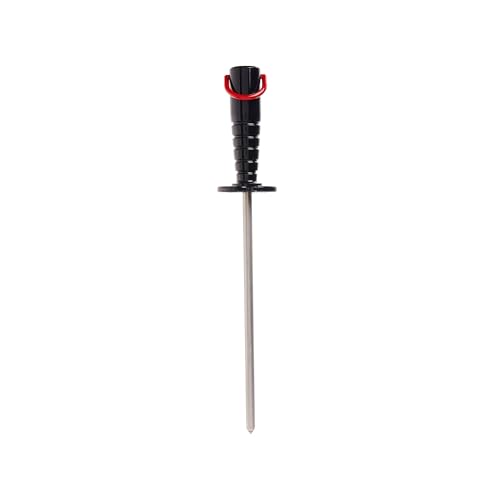
The DMT 12-Inch Diamond Steel, model DS2F, is the rod for edges that a plain honing steel can no longer help. Its 12-inch rod is coated with fine diamond at 600 grit, which is 25 microns, and that diamond surface both aligns and hones the blade, removing a small amount of metal with each stroke. The result is a sharper edge than a steel rod can produce, which is why this tool suits knives that have gone dull from months without care.
The rod is 12 inches long and about 0.375 inches in diameter, set in a black plastic handle with a large guard and a color-coded ring that marks the fine grit. The tool weighs 294 grams, DMT backs it with a lifetime warranty, and it is made in the USA. The diamond surface can be used dry or with water, with no oil needed. Diamond is the most aggressive material in this guide, so use light strokes and let the diamonds do the work; pressing hard removes more metal than the edge needs.
Specs
- Brand: DMT
- Model: DS2F
- ASIN: B00004WFSY
- Material: Diamond-coated steel, plastic handle
- Rod length: 12 inches
- Grit: Fine, 600 grit, 25 microns
- Handle: Black plastic, large guard, color-coded ring
- Use: Dry or with water, no oil needed
- Warranty: Lifetime
- Tier: Mid-range
Frequently Asked Questions
How often should I use a honing rod?
Hone your most-used knives before or after each cooking session. A few light strokes per side are enough. If the knife still drags after honing, the edge is worn rather than rolled, and it needs a full sharpening on a whetstone or a diamond rod.
What is the difference between honing and sharpening?
Honing realigns the fine edge of a blade that has folded over during use, and it removes almost no metal. Sharpening grinds away a small amount of metal to create a fresh edge. A steel honing rod is for maintenance between sharpenings.
What angle should I hold the knife at when honing?
Hold the blade at about 15 to 20 degrees to the rod, matching the edge angle of your knives. Western knives are usually ground to about 20 degrees per side, while Japanese knives are often ground to about 15 degrees. Keep the angle steady, use light pressure, and alternate sides so the edge stays even.
Can a honing rod fix a serrated knife?
A standard straight honing rod cannot reach into the scallops of a serrated edge, so it will not restore a serrated bread knife. A tapered ceramic rod made for serrations can touch up each scallop one at a time.
Conclusion
The best honing rod is the one that matches your knives and the way you cook. The WÜSTHOF 10-Inch Sharpening Steel is the most dependable all-around pick for everyday Western knives. The Mercer Culinary Genesis 10-Inch steel covers the same job at a budget tier, while the Mercer Culinary ceramic rod handles hard Japanese blades that steel cannot bite. The Messermeister 12-Inch ceramic rod adds the length that long slicers and carving knives need, and the DMT 12-Inch Diamond Steel restores edges that have gone too dull for a plain rod. Hone lightly and often.