We independently review everything we recommend. When you buy through our links, we may earn a commission. As an Amazon Associate we earn from qualifying purchases.
Best Cheap Bike Helmet 2: Value Picks for Everyday Adult Riders
A second-round guide to cheap bike helmets for adult everyday riders: four CPSC-certified value picks compared on fit, ventilation, and safety features, with sizing and buying advice — no prices, just value.
A second-round guide to cheap bike helmets for adult everyday riders: four CPSC-certified value picks compared on fit, ventilation, and safety features, with sizing and buying advice — no prices, just value.
As an Amazon Associate we earn from qualifying purchases.
Affiliate Disclosure: This article contains affiliate links. If you buy through links on this page, we may earn a commission from qualifying purchases, at no additional cost to you. Product details and specifications below are taken from the manufacturers’ Amazon US listings; we have not practical tested these helmets.
Scope of This Guide: A Second Round of Value Helmets
This guide is a second, distinct pass at the cheap bike helmet question, and its scope is stated up front so it does not blur into a general helmet roundup. The focus here is narrow: adult helmets for everyday riding — commuting, fitness rides, neighbourhood trips, and casual trail use — in the value segment of the market, where “cheap” means the entry-level, mainstream price band rather than a specific number. No prices are quoted in this article at all; helmets move between price bands constantly, so each pick is judged on what it delivers for the segment it sits in: certified protection, a fit system that actually adjusts, and ventilation that makes you willing to wear it.
Four helmets are covered, and all four are the same product type — adult bicycle helmets certified to the U.S. CPSC bicycle helmet standard. There are no skate-only helmets, no children’s helmets, and no accessories padding out the list. Where a pick also carries a multi-sport rating, that is noted, but every helmet here is first and foremost a bike helmet. If you are shopping for a child, a dedicated youth sizing guide is the right page; if you want premium road or mountain helmets with the newest retention systems, that is a different budget conversation entirely. This page is for the adult rider who wants a legitimate, certified helmet without paying for features they will never use.
What “Cheap” Should and Should Not Mean
Every bicycle helmet sold legally in the United States must meet the same federal safety standard, CPSC 16 CFR Part 1203. That is the single most useful fact in this category: a value-segment helmet that carries genuine CPSC certification has passed the same impact tests as a far more expensive one. Cheap, done right, does not mean uncertified.
What the value segment does give up is refinement. Expect fewer and smaller vents, simpler retention dials, basic fixed straps instead of premium yoke adjusters, heavier shells, and no rotational-impact system on most models. Those are comfort and convenience trade-offs, not safety failures — as long as the certification is real and the helmet fits your head properly. Fit, in fact, matters more than anything on the spec sheet: a certified helmet that rocks on your head protects worse than its test results suggest, so every pick below was chosen partly for the quality of its fit adjustment.
The warning side of “cheap” is the no-name end of the market. Helmets sold with vague claims, no named manufacturer, and no clear CPSC certification statement should be avoided at any price. All four picks here come from established brands or established marketplace sellers with a stated certification and a stated size range.
The Schwinn Thrasher is the default recommendation in this segment for a reason: it covers the fundamentals properly and asks very little in return. It is built on a lightweight microshell design with full-coverage interior padding that can be removed and washed, which matters more than it sounds on a helmet worn daily through summer.
Fit is handled by an adjustable dial retention system at the back, backed up by adjustable side and chin straps, and the adult version is sized for head circumferences of 58–62 cm for riders aged 14 and up. Ventilation comes from 20 air vents — a generous count for this segment, and the main reason the Thrasher stays comfortable on longer recreational rides where cheaper helmets with half the vents turn into sweat boxes. A removable visor adds basic sun and glare protection and pops off when you do not want it.
The Thrasher complies with the U.S. CPSC Safety Standard for Bicycle Helmets, with extended head coverage. What it does not have is a rotational-impact system such as MIPS, and its single large size range will not suit smaller adult heads. For the typical adult recreational rider, though, it is the most complete package in this roundup.
2. Zacro Adult Bike Helmet — Widest Fit Range for the Money
Runner-Up
2. Zacro Adult Bike Helmet — Widest Fit Range for the Money
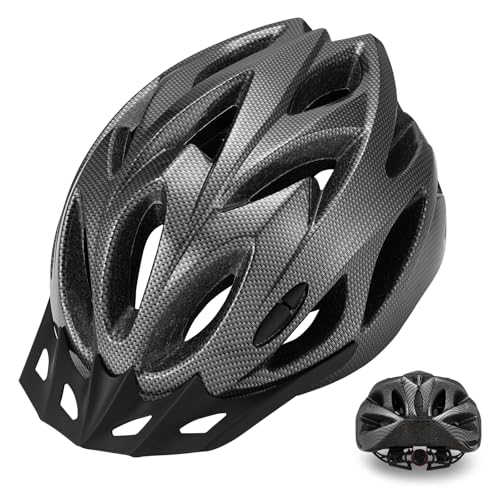
The Zacro adult helmet earns its place on range: its dial-adjustable fit covers head circumferences from 54 to 63 cm, the broadest span of any pick here, which makes it the easiest recommendation for riders who fall between the sizes of brand-name helmets or who are buying without a chance to try anything on.
Construction is a polycarbonate outer shell over high-density EPS foam, and the listing states both U.S. CPSC approval and European CE marking. At a stated weight of about 260 grams it is genuinely light for the segment, and 18 vents move a respectable amount of air. The visor detaches for washing or removal, the liner pads come out for cleaning, and the moisture-wicking interior suits commuting and scooter use as much as cycling.
The trade-offs are the usual ones for an aggressively priced marketplace helmet: the finish and strap hardware feel a step below the Schwinn and Giro, and long-term durability of the dial mechanism is the open question. As a first helmet, a spare helmet, or a helmet for a growing teenager who meets the size range, it is a sensible value buy.
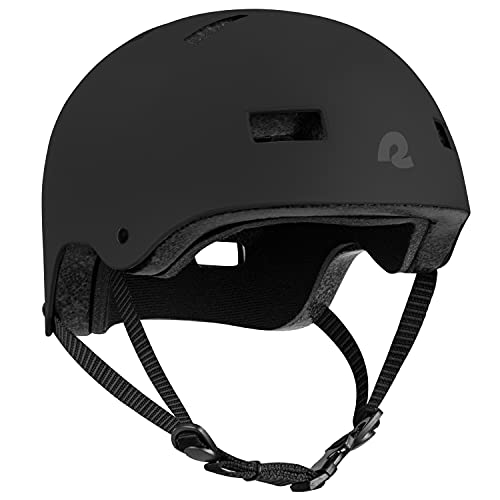
The Retrospec Dakota is the pick for riders whose helmet has to cover more than cycling. It is a classic skate-style helmet — hard ABS outer shell over shock-absorbing EPS foam — rated for biking, BMX, skating, and scooters, so one purchase covers the bike ride and the skate park.
It comes in three sizes spanning 51–60 cm (Small 51–54 cm, Medium 54–57 cm, Large 57–60 cm), which also makes it the only pick here that reaches smaller adult and older youth heads. Ten vents provide basic airflow, and the interior padding removes for washing. The skate-style shell gives more coverage at the back and sides of the head than a typical road-style helmet, which some riders prefer for urban riding.
The compromises follow from the style: ten vents is not many, the ABS shell is heavier and warmer than an in-mould cycling helmet, and fit adjustment is more basic than a dial system — you size it by the shell and pad thickness rather than fine-tuning it on your head. For pure road riding, the Thrasher breathes better. For mixed use, the Dakota is the value pick that makes sense.
4. Giro Fixture MIPS — The Step-Up Pick With Rotational Protection
4. Giro Fixture MIPS — The Step-Up Pick With Rotational Protection
The Giro Fixture MIPS sits at the top of this value roundup and is included for riders willing to move one band up for a meaningful safety feature. Its integrated MIPS system adds a low-friction slip plane intended to reduce rotational forces in certain impacts — the one genuine protective technology the other three picks do not offer.
Giro’s Roc Loc Sport fit system adjusts with one hand across a 7 cm range, the universal adult size covers 54–61 cm, and the in-mould construction — the outer shell fused directly to the foam liner — keeps weight down and airflow up compared with taped-shell designs. Reflective details add a small visibility benefit for dawn and dusk commuting. It is also the natural choice for riders who tried a basic helmet, found the fit crude, and want the adjustment quality of a established cycling brand without leaving the value segment behind entirely.
It is, plainly, the least “cheap” helmet here — but it remains a mainstream, widely stocked model rather than a premium race helmet, and for riders who will wear a helmet daily for years, the fit system and MIPS layer are the two upgrades most worth paying for in this category.
Side-by-Side Comparison
Helmet
Fit range
Vents
Fit system
Standout trait
Schwinn Thrasher
58–62 cm
20
Rear dial
Best all-round balance of vents, padding, and fit
Zacro Adult
54–63 cm
18
Rear dial
Widest size range; very light at about 260 g
Retrospec Dakota
51–60 cm (3 sizes)
10
Sized shells and pads
Multi-sport ABS shell for bike, BMX, and skate
Giro Fixture MIPS
54–61 cm
In-mould shell
Roc Loc Sport dial
MIPS rotational protection; best fit hardware
How to Choose Among the Four
Start with your head measurement, because it eliminates options fastest. Measure around your head just above the eyebrows with a soft tape. If you measure 58 cm or above and ride mainly on roads and paths, the Schwinn Thrasher is the straightforward choice. If you measure near either end of the ranges, or you are buying for someone whose size you only roughly know, the Zacro’s 54–63 cm span is the safest bet. Smaller heads and multi-sport riders should look at the Retrospec Dakota. And if your budget has any flex at all and you ride in traffic regularly, the Giro Fixture MIPS is where the extra money actually buys something — a rotational-impact system and a better dial — rather than graphics.
Whichever you choose, check the fit when it arrives: the helmet should sit level, low on the forehead, snug without pressure points, and should not shift when you shake your head with the straps fastened. A value helmet that fits correctly is a good helmet; a premium helmet that fits badly is not.
Frequently Asked Questions
Are cheap helmets actually safe? A cheap helmet with genuine CPSC certification has passed the same mandatory impact standard as an expensive one. The risks in this segment are uncertified no-name products and poor fit, not the price band itself. Buy a certified model from an identifiable brand, and fit it properly.
What does MIPS add, and is it worth it here? MIPS is a slip-plane liner designed to reduce rotational forces transferred to the head in angled impacts. It is a real, widely adopted technology, and in this roundup only the Giro Fixture MIPS includes it. Whether it is worth stepping up for depends on how and where you ride; daily traffic commuters get the most from it.
How often should a value helmet be replaced? Replace any helmet after a crash, even if the damage is not visible — the foam is designed to crush once. Otherwise, follow the manufacturer’s guidance; a few years of regular use, UV exposure, and sweat will age the materials of helmets in this segment faster than premium models.
Can I use the Retrospec Dakota only for skating instead? Yes — it is a multi-sport helmet rated for skating and scooters as well as cycling. The reverse does not hold for the other three picks, which are bicycle helmets only.
Verification Note
Each ASIN above was taken from the product’s live Amazon US listing reference, and each model was shown as in stock on Amazon.com in listing data checked on the date of this article. Direct product-page reads were blocked by Amazon’s automated-access controls at the time of writing, so all four ASINs are recorded at candidate evidence level rather than verified, and they should be re-checked on the live product page before this article is published. Prices are intentionally not stated anywhere in this article; check the listing at the time you buy.
Bottom Line
For most adult everyday riders, the Schwinn Thrasher is the cheap bike helmet to buy first: certified, well vented, and properly adjustable. The Zacro covers the widest range of head sizes, the Retrospec Dakota is the one-helmet answer for bike-plus-skate households, and the Giro Fixture MIPS is the step-up for riders who want rotational protection without leaving the value segment. Measure your head, insist on CPSC certification, and any of the four will do the job it is certified to do.
9
99klik Editorial Team
We compare specs, materials and verified owner reviews before a product earns a spot. Rankings are never paid.
Affiliate disclosure. As an Amazon Associate we earn from qualifying purchases at no extra cost to you. Prices accurate as of the date shown.
Compare three home laser printers for crisp black-and-white documents, wireless printing, duplex options, scanning, and paper capacity for small spaces.
Five prebuilt gaming computers with RTX graphics, fast memory, and roomy SSDs compared side by side, so you can match a desktop to your games and desk.
Discover the best smartwatches for iPhone under 200 with long battery life, built-in GPS and health tracking for everyday fitness on iOS. Top picks compared.
Explore the best 8K video cameras for filmmakers and hybrid shooters, with full-frame sensors, RAW recording, reliable autofocus and pro codecs. Compared.
Best race bike tyres 2: a second, tubeless-ready roundup covering the Continental GP5000 S TR, Schwalbe Pro One TLE, Pirelli P Zero Race TLR and Vittoria Corsa Pro TLR.
Looking for the best bike for wheelies? These 20-inch BMX picks offer the short rear end, strong frame and simple gearing that make learning to wheelie easier.
Shopping for the best beginner road bike under 2000? These mid-range aluminum picks with Shimano Claris and Tiagra groupsets are built to learn on and keep.
An informational guide to 10440 rechargeable batteries: what the size code means, lithium chemistries, voltage and capacity, compatible devices, charging, and safety — and why there is no affiliate product list here.

 1. Schwinn Thrasher — Best All-Round Value Pick
 2. Zacro Adult Bike Helmet — Widest Fit Range for the Money
 3. Retrospec Dakota — Best Multi-Sport Value Pick
 4. Giro Fixture MIPS — The Step-Up Pick With Rotational Protection