We independently review everything we recommend. When you buy through our links, we may earn a commission. As an Amazon Associate we earn from qualifying purchases.
Best 8K Video Cameras: Top Picks for Serious Filmmakers and Hybrid Shooters
Explore the best 8K video cameras for filmmakers and hybrid shooters, with full-frame sensors, RAW recording, reliable autofocus and pro codecs. Compared.
Explore the best 8K video cameras for filmmakers and hybrid shooters, with full-frame sensors, RAW recording, reliable autofocus and pro codecs. Compared.
Introduction
The best 8K video cameras sit at the top end of the camera market, and they exist for a clear reason: 8K footage gives filmmakers room to crop, stabilise, and reframe in post-production while still delivering a finished 4K master with detail to spare. The catch is that true 8K recording demands a lot from a camera — a high-resolution sensor, a fast processor, serious heat management, and very fast memory cards — so the field of genuine 8K cameras is small and the bodies are not cheap.
This guide covers three cameras that all record 8K video and are all built around the same proven Canon platform: the Canon EOS R5 body, the Canon EOS R5 bundled with the RF 24-105mm f/4L IS USM lens, and the cinema-focused Canon EOS R5 C. All three share a 45-megapixel full-frame sensor and Canon’s Dual Pixel CMOS AF II autofocus, but they differ in meaningful ways: the R5 is the hybrid all-rounder, the kit adds a versatile professional zoom lens for shooters starting from scratch, and the R5 C trades some stills convenience for unlimited-style 8K RAW recording aimed squarely at video work.
Below you will find a quick comparison, a buying guide, detailed reviews of each camera, answers to common questions, and a short conclusion to help you decide which of the three fits your work.
At a Glance
Product
Best for
Key spec
Canon EOS R5 (Body Only)
Hybrid stills and video shooting
45MP full-frame sensor, 8K DCI video, up to 12 fps mechanical shutter
Canon EOS R5 with RF 24-105mm f/4L IS USM Kit
Starting an 8K kit from scratch
Same 45MP 8K body plus a versatile professional standard zoom lens
Canon EOS R5 C (Body Only)
Dedicated video and cinema work
8K/60p internal RAW recording, Cinema EOS video formats, active cooling design
How to Choose an 8K Video Camera
Resolution is only the starting point
Every camera in this guide records 8K video, but the format matters as much as the resolution. The EOS R5 records 8K DCI and 8K UHD with Canon Log and 10-bit HDR PQ options, which preserve colour and tonal detail for grading. The EOS R5 C goes further with internal 8K RAW recording at up to 60 frames per second, plus Cinema EOS codecs such as XF-AVC, which suit professional editing workflows. If your finished work is delivered in 4K, 8K capture still helps: you can crop into the frame, stabilise shaky footage, and reframe a wide shot into a close-up without losing delivery resolution.
Heat management decides how long you can roll
High-resolution recording generates heat, and heat limits continuous recording time. Under Canon’s specified test conditions, the EOS R5 records 8K for approximately 20 minutes from a cold start before heat limits apply, while 4K at 60 frames per second runs for around 35 minutes. Actual times vary with ambient temperature, settings, and prior use. The EOS R5 C addresses this directly with a design built for video: it offers non-stop 8K/60p RAW recording without cropping the sensor, which makes it the better choice for long interviews, events, and extended takes. If your shoots involve short clips and stills, the R5’s limits are rarely a problem; if you roll for long stretches, the R5 C is the safer pick.
Autofocus and stabilisation
Keeping a moving subject sharp at 8K resolution is demanding, and Canon’s Dual Pixel CMOS AF II system is a key reason these cameras work well for video. It offers approximately 100 percent coverage with 1,053 autofocus areas, along with Eye, Face, and Head Detection and subject tracking for people, animals, and vehicles using deep learning. The R5 and R5 C also offer up to eight stops of shake correction with in-body image stabilisation when used with compatible lenses under specified conditions, which helps handheld footage stay steady, though it does not replace a gimbal for walking shots.
Media, storage, and computing power
8K footage creates very large files, and the camera, cards, and computer all need to keep up. These cameras need fast, compatible memory cards for their most demanding recording modes — the R5 C’s specifications call for cards with write speeds of at least 500 MB/s and a V90 video speed class for 8K RAW — and you should confirm your computer can comfortably handle high-resolution editing before committing.
Stills capability matters for hybrid shooters
If you shoot both video and stills, a hybrid camera earns its keep twice. The EOS R5 captures 45-megapixel stills at up to 12 frames per second with the mechanical shutter or up to 20 frames per second with the electronic shutter, which suits sports, wildlife, and event work. The R5 C keeps the same 45-megapixel sensor and stills capability, though its design and controls lean toward video, so photographers who shoot stills most of the time will prefer the R5, while video-first shooters will prefer the R5 C.
Lenses and the RF mount
All three cameras use Canon’s RF mount, which gives access to Canon’s modern RF lens range as well as adapted EF lenses. Buying the body alone makes sense if you already own RF or EF glass; buying the kit with the RF 24-105mm f/4L IS USM lens makes sense if you are starting fresh, since that single zoom covers wide-angle, standard, and short telephoto framing for most everyday video and photo work. The R5 C body is sold without a lens, so factor a lens into your plans if you choose it.
The Canon EOS R5 is the hybrid flagship of this guide, and it remains the most versatile 8K camera here for anyone who shoots both video and stills. At its heart is a 45-megapixel full-frame CMOS sensor paired with Canon’s DIGIC X image processor, which powers 8K DCI video recording, 4K recording at up to 120 frames per second, and stills at up to 12 frames per second with the mechanical shutter or 20 frames per second with the electronic shutter. The model number is 4147C005, and the body uses the Canon RF mount with a magnesium-alloy, dust- and drip-resistant construction that weighs approximately 738 grams with battery and memory card.
For video work, the R5 offers Canon Log and 10-bit HDR PQ recording for flexible grading, Dual Pixel CMOS AF II with 1,053 autofocus areas and deep-learning subject tracking for people, animals, and vehicles, and five-axis in-body image stabilisation rated at up to eight stops with compatible lenses. Its main limitation is heat: under Canon’s specified test conditions, 8K recording is limited to approximately 20 minutes from a cold start, so long continuous takes need planning around recording formats and cool-down time.
The R5 is best for hybrid shooters who want one body for high-resolution stills and serious video, including wedding, event, wildlife, and travel creators. It is less suited to filmmakers who need to roll uninterrupted for long interviews or events, where the R5 C is the better tool. Recent deal listings from November 2026 confirm the R5 remains actively listed on Amazon.
Pros:
– 45MP full-frame sensor with 8K DCI video and 4K up to 120 fps
– Fast burst shooting at up to 20 fps with the electronic shutter
– Dual Pixel CMOS AF II with 1,053 AF areas and subject tracking
– Up to eight stops of in-body image stabilisation
– Dust- and drip-resistant magnesium-alloy body at around 738 grams
Cons:
– 8K recording limited to around 20 minutes from a cold start under Canon’s test conditions
– Needs fast, high-capacity memory cards for demanding video modes
– 8K files demand a powerful computer for smooth editing
– Body-only price excludes lenses, which must be budgeted separately
The Canon EOS R5 kit pairs the same 45-megapixel full-frame 8K body with the RF 24-105mm f/4L IS USM lens, and it is the most sensible starting point for anyone building an 8K setup from nothing. The camera body is identical to the standalone R5 — model number 4147C013 for the kit — with the same 8K UHD 4320p video capture, DIGIC X processor, Dual Pixel CMOS AF II, and in-body image stabilisation, so nothing about image quality or video capability is compromised by choosing the kit. What changes is convenience: the included zoom covers wide-angle landscapes, standard documentary framing, and short telephoto portraits in a single professional L-series lens with a constant f/4 aperture and image stabilisation.
For a new 8K shooter, the kit removes the hardest early decision — which lens to buy first — and the 24-105mm range is genuinely versatile for both video and stills, while the constant aperture keeps exposure consistent through the zoom range. The same heat considerations apply as with the body-only R5, since the camera is the same, and the same fast memory cards are needed for 8K recording. Deal coverage from November 2026 confirms this kit remains listed on Amazon.
The kit is best for first-time full-frame buyers, creators moving up from a crop-sensor camera or a phone, and anyone who wants a complete, ready-to-shoot 8K package in one box. Its limits are that the f/4 maximum aperture gathers less light than a faster prime or f/2.8 zoom, so low-light shooters may later add a fast prime, and the kit costs more than the body alone, which matters if you already own suitable RF or EF lenses.
Pros:
– Same 45MP 8K body as the standalone R5 with no capability compromise
– Versatile 24-105mm professional zoom covers most everyday shooting
– Constant f/4 aperture with image stabilisation for smooth video
– Ready to shoot out of the box with no extra lens purchase needed
– 8K UHD video with Dual Pixel CMOS AF and deep-learning subject tracking
Cons:
– f/4 aperture gathers less light than faster prime or f/2.8 zoom lenses
– Same 8K heat limits as the body-only R5
– Costs more than the body alone, which may not suit owners of existing lenses
– Large 8K files still require fast cards and a capable editing computer
The Canon EOS R5 C is the video-first camera in this guide, and it is the one to choose when 8K recording is the job rather than a feature. It is a true hybrid cinema camera that combines many of the video formats and features of Canon’s Cinema EOS lineup with the still-imaging capabilities of the EOS R system, built around the same 45-megapixel full-frame CMOS sensor. Its defining capability is internal 8K RAW recording at up to 60 frames per second, with no cropping of the sensor, and it can also record 8K video in the versatile MP4 format, with lighter proxy files recorded alongside for efficient editing. The model number is 5077C002, and the camera is sold as a body only on the Canon RF mount.
Where the R5 C pulls ahead of the R5 is in sustained video work: it is designed for non-stop 8K/60p RAW recording, with a cooling design that avoids the heat limits that constrain the R5 on long takes. It also offers Cinema EOS codecs including XF-AVC, 4K and 2K oversampling from the full 8K sensor for 4:2:2 10-bit recording, 8K HDR recording in Hybrid Log Gamma and Perceptual Quantization, and HDMI output supporting 8K RAW for external recorders such as Atomos devices. Autofocus uses Dual Pixel CMOS AF II with 1,053 automatic AF zones, Eye, Face, and Head Detection, animal detection for cats, dogs, and birds, and vehicle detection for cars and motorcycles. The body weighs 1,310 grams and is listed by Canon as approved for use on Netflix productions.
The R5 C is best for filmmakers, multimedia journalists, and advanced amateurs who shoot long-form video, documentaries, interviews, and cinema-style projects, and who want RAW flexibility and professional codecs in a compact body. Its limits are that it is heavier than the R5, its controls and menus lean toward video rather than stills, and its most demanding modes require very fast memory cards, with Canon’s specifications calling for write speeds of at least 500 MB/s and a V90 video speed class. Stills shooters who rarely record long video will find the R5 simpler and lighter.
Pros:
– Internal 8K/60p RAW recording with no sensor crop
– Cinema EOS codecs including XF-AVC, plus 8K HDR in HLG and PQ
– 4K and 2K oversampling from the full 8K sensor for 4:2:2 10-bit recording
– Dual Pixel CMOS AF II with 1,053 AF zones and animal and vehicle detection
– Approved for use on Netflix productions
Cons:
– Heavier than the R5 at 1,310 grams
– Controls and menus lean toward video, so stills-first shooters may prefer the R5
– Demanding 8K RAW modes need very fast V90 memory cards
– Body-only purchase requires a separate lens
Comparison: Which One Fits You
Choose the Canon EOS R5 body if you shoot both stills and video and want one camera that does both at a very high level. Its 45-megapixel sensor, fast burst rates, and 8K video make it the most flexible of the three, and it is the lightest option here. Just plan around its heat limits on long video takes.
Choose the EOS R5 kit with the RF 24-105mm f/4L IS USM lens if you are starting fresh and want a complete package. The camera is the same as the body-only R5, and the included zoom covers nearly every everyday situation, so you can start shooting 8K video and high-resolution stills immediately without a separate lens decision.
Choose the EOS R5 C if video is your primary work. Its non-stop 8K/60p RAW recording, Cinema EOS codecs, oversampled 4K, and 8K HDR make it the only choice here for long interviews, documentaries, and cinema-style projects where the R5’s recording limits would get in the way. Accept its extra weight and video-leaning controls as the price of that capability.
All three record genuine 8K video from a 45-megapixel full-frame sensor with Canon’s best autofocus. The decision comes down to whether you need a hybrid all-rounder, a ready-to-shoot kit, or a dedicated cinema tool.
Frequently Asked Questions
What makes a camera a true 8K video camera?
A true 8K video camera records video at 8K resolution — 8192 by 4320 pixels in DCI or 7680 by 4320 in UHD — from its sensor, rather than upscaling lower-resolution footage. All three cameras in this guide record 8K natively.
Do I need 8K if my videos are delivered in 4K?
Not necessarily, but 8K capture still helps: you can crop into the frame, stabilise footage, and reframe a wide shot as a close-up while still delivering a sharp 4K master. It also future-proofs your footage and lets you extract high-resolution still frames.
How long can the Canon EOS R5 record 8K continuously?
Under Canon’s specified test conditions, the EOS R5 records 8K for approximately 20 minutes from a cold start before heat limits apply, while 4K at 60 frames per second runs for around 35 minutes. Actual times vary with ambient temperature, settings, and prior use. For longer uninterrupted recording, the EOS R5 C is designed for non-stop 8K/60p RAW recording.
What memory cards do these cameras need for 8K?
8K recording needs fast, compatible memory cards, and the requirements rise with the recording format. The R5 C’s specifications call for cards with write speeds of at least 500 MB/s and a V90 video speed class for 8K RAW. Check Canon’s card requirements for your chosen recording mode before buying.
Can the EOS R5 C shoot still photos as well as video?
Yes. The R5 C shares the R5’s 45-megapixel full-frame sensor and captures stills at up to 20 frames per second with its electronic shutter and up to 12 frames per second with the mechanical shutter, with Dual Pixel CMOS AF II tracking. Its design and controls lean toward video, so photographers who shoot stills most of the time will generally prefer the R5.
Is the EOS R5 kit lens good enough for 8K video?
The RF 24-105mm f/4L IS USM is a professional L-series zoom with a constant f/4 aperture and image stabilisation, and its 24-105mm range covers wide, standard, and short telephoto framing for most video work. It is a strong single-lens starting point, though low-light shooters may later add a faster prime or an f/2.8 zoom for shallower depth of field and better low-light performance.
Conclusion
The best 8K video cameras in this guide all come from one proven Canon platform, and the choice between them is about how you shoot rather than about resolution. The EOS R5 body is the hybrid all-rounder for stills and video, the R5 kit adds a versatile professional zoom for anyone starting from scratch, and the EOS R5 C is the dedicated cinema tool for filmmakers who need non-stop 8K RAW recording and professional codecs. Pick the one that matches your work, budget for fast memory cards and storage, and you will have a camera that handles demanding video with room to spare.
Disclosure: As an Amazon Associate, we earn from qualifying purchases.
9
99klik Editorial Team
We compare specs, materials and verified owner reviews before a product earns a spot. Rankings are never paid.
Affiliate disclosure. As an Amazon Associate we earn from qualifying purchases at no extra cost to you. Prices accurate as of the date shown.
Compare three home laser printers for crisp black-and-white documents, wireless printing, duplex options, scanning, and paper capacity for small spaces.
Five prebuilt gaming computers with RTX graphics, fast memory, and roomy SSDs compared side by side, so you can match a desktop to your games and desk.
Discover the best smartwatches for iPhone under 200 with long battery life, built-in GPS and health tracking for everyday fitness on iOS. Top picks compared.
Best race bike tyres 2: a second, tubeless-ready roundup covering the Continental GP5000 S TR, Schwalbe Pro One TLE, Pirelli P Zero Race TLR and Vittoria Corsa Pro TLR.
A second-round guide to cheap bike helmets for adult everyday riders: four CPSC-certified value picks compared on fit, ventilation, and safety features, with sizing and buying advice — no prices, just value.
Looking for the best bike for wheelies? These 20-inch BMX picks offer the short rear end, strong frame and simple gearing that make learning to wheelie easier.
Shopping for the best beginner road bike under 2000? These mid-range aluminum picks with Shimano Claris and Tiagra groupsets are built to learn on and keep.
An informational guide to 10440 rechargeable batteries: what the size code means, lithium chemistries, voltage and capacity, compatible devices, charging, and safety — and why there is no affiliate product list here.

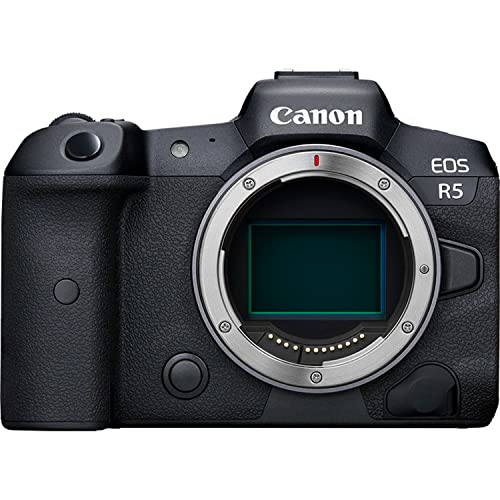 Canon EOS R5 (Body Only)
 Canon EOS R5 with RF 24-105mm f/4L IS USM Kit
 Canon EOS R5 C (Body Only)