Key takeaways
- Pro: A compressor from a dedicated air-system brand is a sensible match for big SUV tires that need more volume than a toy inflator can deliver.
- Pro: A portable design lives in the cargo area and runs from the vehicle, so it does not depend on a tool battery’s remaining charge.
- Con: Larger portable compressors are bulkier and can be heavier to store, which matters in a cargo area already full of gear.
The dashboard light blinks on just as the family finishes loading the roof box for a mountain weekend, and the nearest gas station air machine is out of order again. SUV tires are larger than car tires, they carry more weight, and they often run at higher pressures, so a weak little inflator can take forever to bring one tire back up. A good portable inflator saves a trip and lets you top off pressures before long drives.
The six inflators below range from 12-volt compressors to cordless tools tied to battery platforms. This guide restates what each name says and gives rules for flow, power source, duty cycle, and gauge accuracy, so you can compare against the product page. SUVs reward a bit of extra capacity, since sidewall volume is larger than on a compact sedan.
Quick Picks
| Product | Best for | Worth knowing |
|---|---|---|
| VIAIR 400P Portable Compressor | Off-road SUVs and larger tires | Portable compressor from a dedicated brand |
| VIAIR 88P Portable Compressor | Everyday SUV owners who want a compact unit | Smaller model number than the 400P |
| Slime 40026 2X Heavy Duty Direct Drive Tire Inflator | Budget-conscious drivers who still want heavy-duty positioning | Direct drive, heavy-duty label |
| DeWalt 20V MAX Tire Inflator DCC020IB | Owners with DeWalt 20V batteries | Battery platform inflator, tool only per model suffix |
| Milwaukee M18 Compact Inflator | Owners already invested in M18 batteries | Compact, cordless platform tool |
| Ryobi ONE+ 18V Portable Cordless Tire Inflator P737 | Home users with Ryobi batteries | Cordless, 18V platform |
How to Choose
Match the power source to how you drive
Inflators that plug into a 12-volt outlet or clamp to the battery never run out of runtime, which is why many off-road drivers favor them. Cordless models run on tool batteries and are handy in a garage but depend on charge. A good rule of thumb is to carry a 12-volt unit in the vehicle and keep a cordless tool for the driveway, since a dead tool battery is not much help on a trailhead.
Look at airflow and fill time, not just peak pressure
Most inflators list a maximum pressure of 100 pounds per square inch or more, but SUV tires need volume, not extreme pressure. Look for a published flow rate in cubic feet per minute or a stated time to fill a mid-size SUV tire by several pounds. Slower inflators work, but may take ten minutes or more per tire, and small units can overheat during that time.
Check duty cycle and cord length
Duty cycle tells you how long the compressor can run before it must cool. For a four-tire top-off after a trail, you want a unit that can run several minutes at a stretch. Cord and hose length matter too: SUVs are long and wide, so a combined reach of about 10 to 15 feet lets you service the far tires from one outlet without moving the vehicle.
Verify gauge, shutoff, and attachments
A digital gauge with preset shutoff is far easier than guessing, and some units let you set a target pressure and walk away. Check that the hose uses a screw-on or lever chuck that grips the valve firmly, and that the kit includes nozzles for sports balls and inflatables. Compare the gauge against a separate pencil gauge occasionally, because built-in gauges can drift.
Our Picks Reviewed
VIAIR 400P Portable Compressor

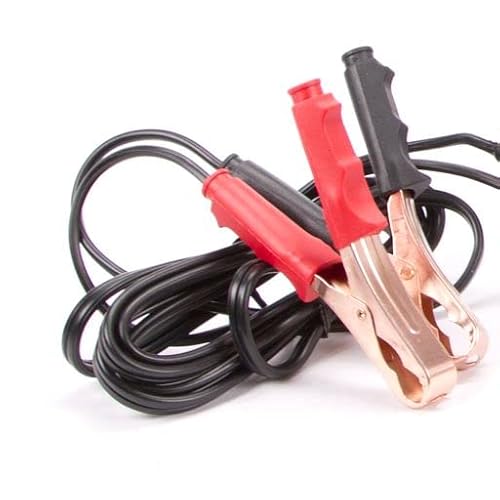
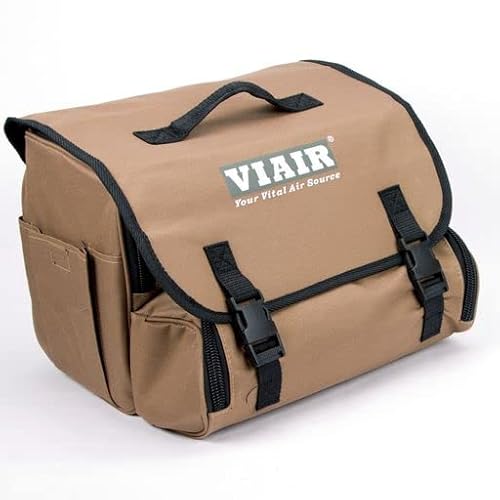
VIAIR 400P/40043 12V Portable Air Compressor, 150 PSI for Truck & SUV Tires | 150 PSI 12V compressor delivers 2.30 CFM for trucks, SUVs, Jeeps, RVs, and off-road tires up to 35 inches.




As an Amazon Associate we earn from qualifying purchases. Product prices and availability are accurate as of the date/time indicated.
VIAIR is a brand known among off-road and truck owners, and the 400P is the larger of the two portable compressors in this guide by model number.
- Pro: A compressor from a dedicated air-system brand is a sensible match for big SUV tires that need more volume than a toy inflator can deliver.
- Pro: A portable design lives in the cargo area and runs from the vehicle, so it does not depend on a tool battery’s remaining charge.
- Con: Larger portable compressors are bulkier and can be heavier to store, which matters in a cargo area already full of gear.
Skip it if you only top off tires a few times a year on a stock SUV; a smaller unit covers that job with less cost and less storage space and fewer parts to maintain.
VIAIR 88P Portable Compressor

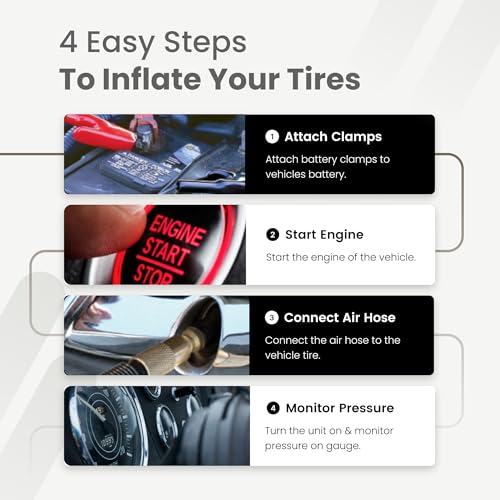
VIAIR 88P 00088 12V Portable Air Compressor Kit for Car and Truck Tires | Portable 12V Air Compressor Delivers Up To 120 PSI For Cars, Trucks, SUVs, Jeeps, RVs, And Tires Up To 33 Inches.



As an Amazon Associate we earn from qualifying purchases. Product prices and availability are accurate as of the date/time indicated.
The 88P sits lower in the same family, a more compact portable compressor that appeals to drivers who want capability without a large case.
- Pro: A smaller model number from the same brand suggests a more compact package that fits under a seat or in a side pocket.
- Pro: A portable compressor draws on vehicle power, so runtime depends on the vehicle, not on a battery pack you must remember to charge.
- Con: A compact unit generally fills larger SUV tires more slowly, which can test patience after a deflation for trail use.
Skip it if you regularly air up four large off-road tires after every trail run; a larger compressor will save time and heat build-up and spare the smaller unit.
Slime 40026 2X Heavy Duty Direct Drive Tire Inflator
Slime is a familiar tire-care brand, and this model number with its heavy-duty and direct drive wording points to a straightforward 12-volt compressor.
- Pro: A heavy-duty direct drive label suggests a simple, durable design aimed at everyday tire top-offs rather than occasional gimmicks.
- Pro: A widely sold brand makes replacement parts and accessories easy to find at auto stores and online.
- Con: Direct drive compressors at this level can be loud and warm up during longer fills, which limits how many tires you can do back to back.
Skip it if you want a premium off-road compressor with an extended duty cycle; this is better as a glovebox or trunk emergency tool than a daily trail companion. Keep it where you can reach it quickly, and let it cool between tires to protect the motor.
DeWalt 20V MAX Tire Inflator DCC020IB

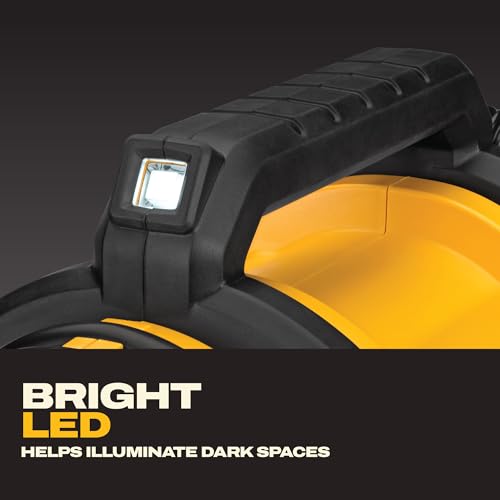
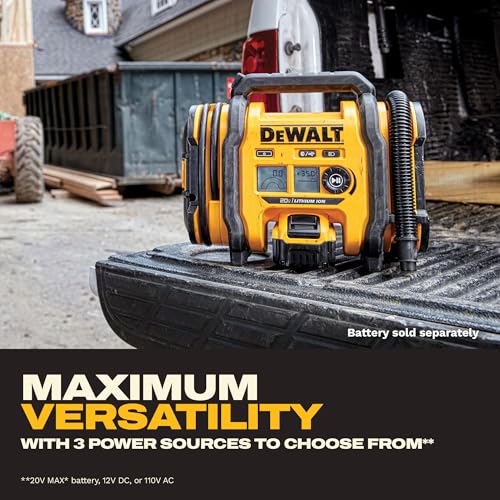
DEWALT 20V MAX Air Inflator, Tool Only (DCC020IB) | Automatic Shut Off, LED Light




As an Amazon Associate we earn from qualifying purchases. Product prices and availability are accurate as of the date/time indicated.
The name describes a cordless inflator in the DeWalt 20V MAX platform, with the IB suffix customarily indicating a tool-only version without batteries.
- Pro: Owners who already have DeWalt 20V batteries can share them, which avoids buying another power system for a garage inflator.
- Pro: A cordless design is easy to carry around a driveway and does not require the vehicle’s engine or outlet.
- Con: Battery-dependent tools stop when the battery runs low, and a tool-only listing means you must already own compatible batteries.
Skip it if you do not own DeWalt batteries or want an inflator that lives in the vehicle year-round; extreme heat and cold are tough on stored tool batteries. If the SUV is your only air source on a road trip, a plug-in unit remains the more dependable choice.
Milwaukee M18 Compact Inflator

Milwaukee M18 Inflator 2848-20


As an Amazon Associate we earn from qualifying purchases. Product prices and availability are accurate as of the date/time indicated.
A compact inflator that runs on the Milwaukee M18 battery platform, aimed at tradespeople and homeowners who already work with those batteries.
- Pro: Sharing batteries with other M18 tools means the inflator is ready whenever a charged pack is on hand.
- Pro: The compact label suggests a body that is easy to stash in a tool bag or garage cabinet between uses.
- Con: A compact cordless tool typically fills tires more slowly than a dedicated 12-volt compressor, and runtime depends on pack capacity.
Skip it if you have no M18 batteries; starting a new battery platform for one inflator is rarely cost-effective compared with a plug-in unit. Buyers who already own several M18 tools will find the choice easier, because the battery cost is already covered.
Ryobi ONE+ 18V Portable Cordless Tire Inflator P737
The ONE+ 18V name ties this inflator to the common Ryobi battery system, and the P737 model number identifies the cordless tire inflator version.
- Pro: Home users with Ryobi tools can share batteries, which keeps the total cost of ownership down for occasional inflating.
- Pro: A portable cordless layout means you can walk around a large SUV without hunting for an outlet or dragging a cord.
- Con: Cordless inflators depend on charge and may need a battery swap to finish four large tires.
Skip it if you expect to use it on remote trails with no way to recharge; a 12-volt unit that runs from the vehicle is more dependable there. For a driveway top-off before a road trip, though, a cordless tool is hard to beat for convenience.
Which One Fits
- Off-road SUV with big tires: VIAIR 400P Portable Compressor.
- Compact storage, daily driver: VIAIR 88P Portable Compressor.
- Glovebox emergency tool: Slime 40026 2X Heavy Duty Direct Drive Tire Inflator.
- Existing DeWalt tool owner: DeWalt 20V MAX Tire Inflator DCC020IB.
- Existing Milwaukee owner: Milwaukee M18 Compact Inflator.
- Existing Ryobi owner: Ryobi ONE+ 18V Portable Cordless Tire Inflator P737.
Whichever you choose, keep a separate pressure gauge in the vehicle and check tires cold, at least monthly. Pressure drops roughly one pound for every ten degrees of temperature change, so seasonal swings can make a tire look fine in the garage and low on a cold trip.
For a family SUV, a sensible kit is a 12-volt compressor in the cargo area, a pencil gauge in the glovebox, and a small plug set in case of a slow leak. Add a pair of work gloves, since hoses and valve stems get hot, and a flashlight for nighttime stops. Learn how to read the placard before you need it, and practice attaching the chuck so a real roadside stop is not the first time you handle it.
Common Mistakes
- Choosing by maximum pressure instead of airflow, then waiting ages for a large SUV tire to fill.
- Running a small compressor continuously past its duty cycle until it overheats.
- Inflating to the number on the tire sidewall instead of the placard pressure on the door jamb.
- Buying a tool-only cordless inflator without batteries or a charger.
- Skipping a check of the built-in gauge against a trusted manual gauge.
FAQ
What pressure should I use for my SUV?
Use the pressure listed on the door jamb placard for your vehicle and tire size. The number on the sidewall is the maximum, not the target.
Can a portable inflator fill a spare tire?
Yes, though a full-size spare can take longer than a street tire. Check the spare’s pressure a few times a year.
Are cordless inflators powerful enough for SUVs?
They are fine for top-offs, but may struggle to fill a fully flat tire on a larger SUV. A 12-volt model is better for that.
How does a dying battery relate to roadside tools?
A weak battery is another common winter issue; see the best car batteries for cold weather starting for a related guide.
Is a trailer tire inflator different?
The same inflator works, but trailer tires often need higher pressure. Read the best boat trailer tires overview as of 2026 for pressure and size basics.