Key takeaways
- Pro: An electric design runs from a household outlet and avoids gas, noise, and exhaust, which suits a driveway detailing routine well.
- Pro: A widely sold brand means accessories like replacement nozzles, hoses, and foam cannon adapters are easy to find in stores.
- Con: A multi-purpose washer may offer more pressure than paint needs, so using the wrong nozzle can risk damage near trim and chips.
Anyone who has blasted a muddy fender with a gas-powered washer built for decks knows the sinking feeling when paint starts to lift. Detailing is a different job from cleaning concrete: the goal is to loosen grit and apply foam without damaging clear coat, trim, or seals. That is why electric washers with modest output, soft nozzles, and a foam cannon option are the usual choice for enthusiasts washing their own cars in a driveway.
The five washers below are electric models from familiar brands. This guide describes them only by what the names say and explains how to judge pressure, flow, hose length, and accessories so you can verify the specifics yourself. Power matters less than control, and the right setup lets you rinse thoroughly without risk to the finish.
Quick Picks
| Product | Best for | Worth knowing |
|---|---|---|
| Sun Joe SPX3000 Electric Pressure Washer | Home users who wash cars, bikes, and patios | Electric model with a common brand name |
| Greenworks GPW1501 Electric Pressure Washer | Light-duty weekend car washing | Model number points to a lower-pressure class |
| Karcher K1700 Cube Electric Power Pressure Washer | Small garages and apartment storage | Cube design, electric |
| AR Blue Clean AR383 Electric Pressure Washer | Detailers who like a dedicated pressure-washer brand | AR383 model, electric |
| Westinghouse ePX3050 Electric Pressure Washer | Owners wanting a larger electric unit | Electric, ePX3050 model |
How to Choose
Aim for moderate pressure and decent flow
Car paint does not need extreme force. A good rule of thumb is a washer that delivers roughly 1,200 to 1,900 pounds per square inch at the nozzle, paired with a flow of around 1.4 to 1.8 gallons per minute. Higher flow rinses faster, while excess pressure risks chipping paint near chips and lifting decals. Use wide-angle nozzles, and keep the tip at least a foot from the surface.
Choose electric over gas for detailing work
Electric washers are lighter, quieter, and easier to start than gas models, and their output fits automotive work. Look for a motor that runs on a standard household outlet and a power cord long enough to reach the driveway, typically 20 feet or more. Extension cords should be rated for the amperage, since thin cords can overheat. Gas engines add noise and exhaust, which most detailers avoid.
Confirm foam cannon compatibility and fittings
A foam cannon makes a thick pre-wash layer that lifts grit before any wash mitt touches the paint. Check that the washer’s spray gun uses a quick-connect or threaded fitting compatible with common foam cannons, and ask whether an adapter is needed. A washer with a detergent tank is handy but usually creates thinner suds than a cannon, so many owners treat the tank as a secondary option.
Look at hose length, wheels, and storage
A hose of 20 to 25 feet reaches around a full-size SUV without moving the machine. Check that the hose connects to the gun with a quick-release fitting and that the unit can hang or sit upright for storage. A built-in nozzle holder and a power cord that wraps neatly make a washer more pleasant to use. Compact designs help in small garages and winter storage areas.
Our Picks Reviewed
Sun Joe SPX3000 Electric Pressure Washer

Sun Joe Pressure Washer, Electric Power Washer, 2500 Max PSI, SPX3000 | Heavy-Duty 2500 Max PSI (2030 PSI PWMA Rated)-Portable Cleaning & Washing Machine System with Patios & Sidewalks


As an Amazon Associate we earn from qualifying purchases. Product prices and availability are accurate as of the date/time indicated.
Sun Joe is a popular home-use brand, and this SPX3000 is an electric model that covers car washing along with other outdoor cleaning jobs around the house.
- Pro: An electric design runs from a household outlet and avoids gas, noise, and exhaust, which suits a driveway detailing routine well.
- Pro: A widely sold brand means accessories like replacement nozzles, hoses, and foam cannon adapters are easy to find in stores.
- Con: A multi-purpose washer may offer more pressure than paint needs, so using the wrong nozzle can risk damage near trim and chips.
Skip it if you want a gentle, dedicated detailing tool and tend to reach for the narrowest nozzle first; a lower-pressure model builds in a margin of safety for beginners and quick washes.
Greenworks GPW1501 Electric Pressure Washer
Greenworks sells a wide range of electric outdoor tools, and the model number points to a lower-pressure electric washer that suits lighter jobs like car washing.
- Pro: A lower-pressure electric class tends to be forgiving on paint, which helps beginners who are still learning nozzle distance and technique.
- Pro: Electric operation means quiet use in a neighborhood and an easy start with no choke, fuel, or oil to manage.
- Con: Light-duty washers rinse more slowly and may struggle with caked mud or heavy winter salt buildup on lower panels and wheel wells.
Skip it if you regularly wash large trucks or want a model that doubles for tough concrete cleaning; stronger output covers those jobs and finishes them in less time, with fewer passes.
Karcher K1700 Cube Electric Power Pressure Washer
Karcher is a well-known cleaning brand, and the Cube name points to a compact box-shaped design that is easy to store in a small garage or closet.
- Pro: A compact cube shape is a sensible fit for apartment storage and small garages where floor space is limited.
- Pro: Karcher is widely associated with consumer pressure washers, so manuals, parts, and service support are easy to locate.
- Con: Compact washers usually trade hose length and reach for size, so you may need to move the unit while rinsing a larger vehicle.
Skip it if you need a long reach around a full-size SUV with a single position; a larger unit with a longer hose and cord will save you from dragging the washer around the driveway during each rinse.
AR Blue Clean AR383 Electric Pressure Washer
AR Blue Clean is a brand that focuses on pressure washers, and the AR383 is an electric model often considered by hobbyists who detail their own vehicles.
- Pro: A brand dedicated to pressure washers usually offers a wide range of compatible accessories, including nozzles and wands.
- Pro: Electric operation fits the quiet, controlled approach that most car-detailing routines call for around paint and trim.
- Con: A specialist brand may be harder to find in local stores, which makes hands-on comparison difficult before purchase.
Skip it if you prefer to browse shelves and ask a store employee about fitment; online-oriented buyers will find the brand easier, but returns and exchanges may take longer when a part fails. Detailers who value fast local support will want to confirm the warranty terms before buying.
Westinghouse ePX3050 Electric Pressure Washer

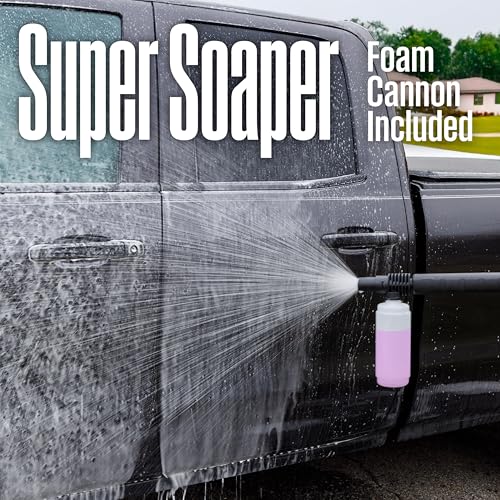
Westinghouse ePX3050 Electric Pressure Washer, 2100 Max PSI 1.76 Max GPM with Foam Cannon and Turbo Nozzle, for Cars/Fences/Driveways/Home/Patios



As an Amazon Associate we earn from qualifying purchases. Product prices and availability are accurate as of the date/time indicated.
Westinghouse is better known for generators and power equipment, and this ePX3050 is an electric washer positioned toward heavier home use than the lightest models.
- Pro: A larger electric washer can rinse faster and handle caked-on dirt that smaller units struggle to clear in one pass.
- Pro: A recognized power-equipment brand gives some assurance about build quality and the availability of support.
- Con: More output means more risk near paint, so a wide-angle nozzle and careful distance control become essential.
Skip it if your main job is delicate detailing on a freshly painted or older vehicle; a gentler washer is easier to control, and the extra capacity of this one goes unused on routine washing. Higher output also uses more water, which matters in drought-restricted areas and on long driveways.
Which One Fits
- All-around home washer: Sun Joe SPX3000 Electric Pressure Washer for multi-use flexibility.
- Beginner detailer on a budget: Greenworks GPW1501 Electric Pressure Washer for a lighter-duty class.
- Small garage or apartment: Karcher K1700 Cube Electric Power Pressure Washer for compact storage.
- Hobbyist wanting accessories: AR Blue Clean AR383 Electric Pressure Washer.
- Large vehicles and heavy dirt: Westinghouse ePX3050 Electric Pressure Washer.
Whichever washer you pick, work from the top down, keep the nozzle moving, and use a foam pre-wash before touching the paint with a mitt. Rinse wheel wells and lower panels first, because that is where the heaviest grit hides. A separate bucket for wheels prevents brake dust from reaching the body panels. Dry with a clean microfiber towel to avoid water spots, especially in hard-water areas.
A simple detailing routine pairs with any of these. Start by rinsing the whole vehicle from the roof down to knock off loose grit. Apply foam if you have a cannon, and let it dwell for a few minutes without drying in the sun. Wash with a clean mitt in straight lines, rinsing the mitt often, then rinse again with a wide fan nozzle. Finish with a drying towel or a leaf blower for mirrors and door seams, where water likes to hide. Wheels and tires go last, using a separate brush and bucket so brake dust never touches paint. This routine works with any of the washers above and takes less than an hour on a family sedan.
Also consider water supply: most electric washers need a steady garden hose with decent flow, and a kinked or thin hose will starve the pump. Add a screen filter at the inlet to keep grit from damaging internal parts, and drain the pump before winter storage so any trapped water cannot freeze and crack the housing.
Common Mistakes
- Using a zero-degree or very narrow nozzle on painted surfaces, which can chip clear coat.
- Holding the tip inches from the paint instead of keeping a safe distance.
- Skipping the foam pre-wash and dragging grit across the paint with a mitt.
- Washing in direct sun, which dries soap and water into spots before it can be rinsed.
- Using a thin extension cord that overheats and starves the motor.
FAQ
How much pressure is safe for car paint?
Many detailers stay under about 1,900 pounds per square inch and use wide fan nozzles at a distance. Test on an inconspicuous area first, and avoid chipped or peeling paint.
Do I need a foam cannon?
It is not required, but it helps loosen dirt before contact washing, which reduces swirl marks. Check fitting compatibility with your washer’s gun before buying one.
Can I use a pressure washer on a boat trailer?
Yes, and it helps remove salt and silt. See the best boat trailer tires guide for what to look for when salt exposure is routine.
Is a truck-mount machine the same as a pressure washer?
No. Those are interior cleaning machines; see the best truck mount carpet extractors for upholstery and carpet work.
Should I protect floors after washing?
Wet boots and slush ruin carpets, so consider floor liners made for off-road use, as of 2026 a common accessory after a wash.