We independently review everything we recommend. When you buy through our links, we may earn a commission. As an Amazon Associate we earn from qualifying purchases.
4 Best Infrared Gas Grills for Searing (November 2026)
Compare four infrared gas grills from Amazon listings, from a four-burner Amplifire cabinet to a portable TRU-Infrared grill, with burner and size specs.
Compare four infrared gas grills from Amazon listings, from a four-burner Amplifire cabinet to a portable TRU-Infrared grill, with burner and size specs.
The real decision with an infrared gas grill is not whether the box gets hot. Every model here gets hot. It is whether the emitter plate between the burners and the grates matches how you cook: hard sears on thick steaks, gentle heat for chicken, or a flat top for breakfast. Plate design, grate area and burner count change the result far more than the badge on the lid.
OUR TOP PICK
Charbroil Pro Series 4-Burner Grill with Side Burner
This guide is for backyard hosts feeding a crowd, families cooking several nights a week, couples on a small patio, and tailgaters who want infrared heat in a portable body. Each pick was chosen from the name and specifications printed on its Amazon listing, including burner counts, cooking surface area and BTU output, so the comparison rests on figures you can check on the product page.
Quick Picks
As an Amazon Associate we earn from qualifying purchases.
Product
Best for
Key spec from title
Charbroil Pro Series 4-Burner with Side Burner
Large cookouts and mixed menus
802.9 sq in total cooking surface
Charbroil Pro Series 3-Burner Grill and Griddle
Mid-size families who griddle often
25,500 BTU across three burners
Charbroil Pro Series 2-Burner Grill and Griddle
Small patios and two-person households
325 sq in primary cooking area
Char-Broil Grill2Go X200
Tailgates, camping and RV trips
200 sq in TRU-Infrared grate
How to Choose
Understand What the Emitter Plate Actually Does
In a conventional gas grill, flame heats the grates directly and dripping fat falls onto the burners, where it ignites and flares. Infrared models place a solid emitter plate between the burner and the grate. The plate absorbs the flame heat and radiates it evenly across the cooking surface, so food cooks from radiant heat instead of open flame. Charbroil calls its version Amplifire on the Pro Series and TRU-Infrared on older lines. The plate also catches drips before they reach a burner port, which is why flare-ups drop sharply. The trade-off is maintenance: the plate sits in the drip path and needs regular scraping and brushing to keep its surface working as intended.
Size the Cooking Area by the Primary Grate, Not the Total
Listings headline a total cooking surface that bundles the main grate and the warming rack together. The warming rack is useful for buns, corn and resting meat, but it is not searing space. Compare the primary area first: roughly 325 square inches handles about a dozen burgers, while a primary grate above 500 square inches suits two dozen burgers plus sides. Then check the assembled width, because a four-burner cabinet near 61 inches wide needs a real patio wall, not a balcony corner. If the listing only prints one area figure, treat it as the total and look for the primary number in the product details before deciding.
Match Burner Count and BTU to How You Cook
More burners mean more heat zones, and zones are what let you sear on one side while vegetables finish over low heat on the other. A two-burner grill gives you a hot side and a cooler side; three and four burners add a true middle zone for indirect cooking. BTU figures only help when read against grate size: 20,000 BTU over 325 square inches behaves very differently from the same output spread across a larger box. A side burner adds a stovetop for sauces, beans or a skillet, which matters if your grill is your whole outdoor kitchen, and matters little if you only cook meat and corn.
Check What the Modular System Includes in the Box
The current Pro Series grills are built around a modular cooking system: lift the grates out and a griddle insert drops in, turning the grill into a flat top for eggs, smash burgers and fried rice. On the three picks below, that griddle insert is included in the box, which is a genuine difference from older infrared grills where every extra surface was a separate purchase. The Gas2Coal charcoal tray is different: listings describe these grills as charcoal-ready, but the tray itself is sold separately, so budget for it if charcoal cooking is part of your plan. Also confirm the fuel type on the listing, since these models are propane grills.
This is the pick for the cook who treats the grill as a full outdoor kitchen. Four main burners under the Amplifire emitter plates give you wide heat zones for a crowd, and the separate side burner keeps a sauce pot or skillet going without stealing grate space. The listing’s total cooking surface is the largest in this guide, and the included griddle insert means the same cabinet handles burgers at noon and pancakes the next morning. It is a big, heavy cabinet grill, so it suits a permanent patio spot rather than a grill you move often.
The three-burner Pro Series is the balanced middle of this lineup: enough grate for a family dinner with guests, three heat zones for indirect cooking, and the same Amplifire plates and included griddle insert as the larger models. Its primary grate covers the weeknight workload of most households, burgers, chicken pieces and vegetables at once, without the footprint of the four-burner cabinet. If you cook for four to six people most of the time and like the idea of a flat top for weekend breakfasts, this is the size that fits without paying for capacity you rarely use.
Small footprint does not have to mean giving up the infrared plate or the griddle. This two-burner Pro Series keeps the Amplifire system, the enclosed cabinet and the included griddle insert, and trims the grate to a size that fits a modest patio. Two burners still give you a searing zone and a cooler zone, which covers the way most couples and small families actually cook: proteins on the hot side, vegetables and buns on the other. It is the sensible pick when the four-burner cabinet simply will not fit your space but you want the same cooking system.
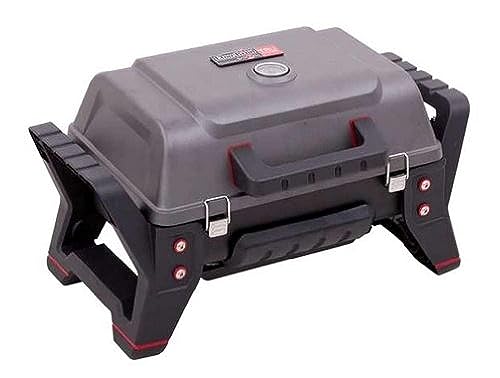
The X200 takes the TRU-Infrared plate out of the backyard and into a carryable body. A single burner fires a cast aluminum firebox under a 200 square inch stainless steel grate, enough room for about eight burgers at a tailgate or campsite. Stainless latches lock the lid down for transport, the legs fold for setup on a table or tailgate, and it runs on the small 1 lb propane canisters that pack easily, with an adapter path to a full-size tank at home. It runs hot and simple: one zone, strong searing heat, and a lid-mounted gauge to keep an eye on it.
Which One Fits Your Situation
You Host Big Weekend Cookouts
Choose the Pro Series 4-Burner with Side Burner. The four zones let you sear steaks over high heat while chicken finishes indirectly, the side burner handles sauces and sides outdoors, and the total surface absorbs a crowd without batch cooking. The included griddle also turns the same grill into a breakfast station the next morning.
You Cook Family Dinners Most Weeknights
Choose the Pro Series 3-Burner. Its 412 square inch primary grate covers a family meal in one round, three burners give you a dependable indirect zone for thicker cuts, and the griddle insert earns its keep on weekends. It is meaningfully smaller and lighter than the four-burner cabinet while keeping the same Amplifire plates.
Your Patio Is Small but You Grill Often
Choose the Pro Series 2-Burner. You keep the infrared emitter plates, the enclosed cabinet and the griddle insert, in a footprint that fits where full-size grills crowd out seating. For two to four people, the two-zone layout and 325 square inch grate match real meals better than a larger grill you have to squeeze around.
Your Grill Travels With You
Choose the Grill2Go X200. It is the only pick here built to ride in a trunk: locking latches, folding legs, a cast aluminum body and 1 lb canister fuel. The TRU-Infrared plate gives you the same flare-up control and hard sear as the big cabinets, scaled to a 200 square inch grate for campsite and tailgate cooking.
Common Mistakes
Comparing grills by total cooking surface alone, when the warming rack inflates that figure and cannot sear anything.
Letting grease and residue build up on the emitter plate, which dulls the even radiant heat the system is built around.
Assuming a grill with one infrared side burner cooks like a full infrared grill; the main grates on those models still cook over open flame.
Forgetting that the Gas2Coal charcoal tray is sold separately, even though the listings describe the grills as charcoal-ready.
Ordering a propane grill for a natural gas line, or the reverse, without checking the fuel type printed on the listing.
Frequently Asked Questions
How is an infrared gas grill different from a regular gas grill?
A regular gas grill cooks with flame heating the grates directly, so dripping fat can ignite and flare up. An infrared model puts an emitter plate between the burners and the food. The plate radiates heat evenly across the grate and blocks drips from reaching the burners, which cuts flare-ups and hot spots.
Can you cook low and slow on an infrared grill?
Yes, within limits. Turn one burner down or off and cook over the cooler zone, using the lid to hold gentle heat for chicken pieces, sausages or vegetables. Multi-burner models handle this well. A single-burner portable like the X200 runs hot by design and gives you far less room to work indirectly.
Do infrared grills need special cleaning?
The emitter plate needs the most attention, because it sits where drippings land. Let the grill run hot after cooking to burn off residue, then brush the plate and grates once they cool. Keeping the plate surface clear preserves the even heat distribution and keeps old grease from smoking into the next meal.
What size infrared grill should a family of four buy?
Look at the primary grate rather than the total figure. Around 325 to 412 square inches of primary space cooks a family meal of burgers, chicken and vegetables in one round. That points most households to a two or three-burner model, and leaves the four-burner cabinets for people who regularly cook for guests.
9
99klik Editorial Team
We compare specs, materials and verified owner reviews before a product earns a spot. Rankings are never paid.
Affiliate disclosure. As an Amazon Associate we earn from qualifying purchases at no extra cost to you. Prices accurate as of the date shown.
Compare five X99 motherboards for LGA 2011-3 gaming builds, from compact Micro-ATX boards to dual-CPU E-ATX models, and pick the right fit for your build.
Compare five bowhunting arrows by spine, grains per inch and straightness: Easton 6.5 Bowhunter, Gold Tip Hunter XT, Easton FMJ and two Victory builds.
Four 1x prism sights with etched reticles compared on eye relief, reticle design, brightness settings and weight, plus a clear pick for each rifle setup.
Compare the best hand pruning saws for garden and trail work, from compact folders to pro curved blades, and pick the right blade length for your branches.
Find grass seed that grows in Ohio shade, from dense-shade mixes that need only a few hours of sun to fast-establishing blends for patchy lawns under trees.
Compare bypass pruning shears from Felco, ARS, Fiskars and gonicc by cut capacity, blade steel and grip fit, with picks for large hands and weaker grips.


 Char-Broil Grill2Go X200