We independently review everything we recommend. When you buy through our links, we may earn a commission. As an Amazon Associate we earn from qualifying purchases.
4 Best 12 Volt Marine Batteries for Boats (November 2026)
Four 12 volt marine batteries compared by role, group size, capacity and cranking figures, with charger and tray checks taken from each Amazon listing.
Four 12 volt marine batteries compared by role, group size, capacity and cranking figures, with charger and tray checks taken from each Amazon listing.
A 12 volt marine battery has to answer two different questions at once: can it crank your engine on a cold morning at the ramp, and can it keep a trolling motor, fish finder and bilge pump alive until you head back in. Starting batteries, deep cycle batteries and dual purpose designs split that work differently, and the wrong split shows up fast, as short trolling days, weak cranks, or a battery that wears out in a couple of seasons.
This roundup is for boat owners replacing a single battery, anglers building a dedicated trolling motor supply, and cruisers adding a house bank for lights, pumps and electronics. Each pick below was chosen from its Amazon listing, using the capacity, cranking figures, group size and terminal details the listing itself publishes, and every battery here is listed for marine or dual purpose marine use.
Quick Picks
As an Amazon Associate we earn from qualifying purchases.
Product
Best for
Key spec from title
Interstate Batteries 31M-AGM-A Marine/RV Battery
One battery that starts the engine and runs the boat all day
100 Ah and 825 CCA
OPTIMA D34M BlueTop Dual Purpose Battery
Smaller boats that need cranking power in a compact case
750 CCA in a Group 34 case
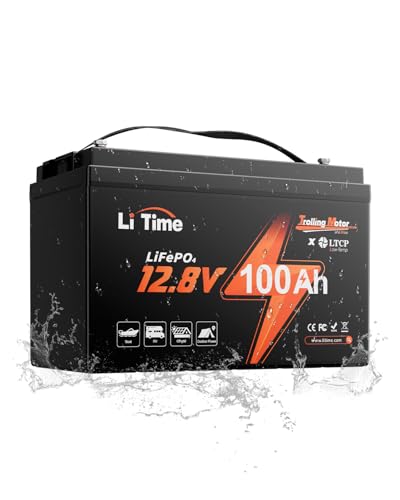
LiTime 12V 100Ah Trolling Motor LiFePO4 Battery
Long trolling days without lead-acid weight
100 Ah at 22.16 lb
WEIZE 12V 100Ah LiFePO4 Battery
A lithium house bank in a standard Group 31 footprint
100 Ah with a 100A smart BMS
How to Choose
Decide the Job Before the Brand
Marine batteries come in three working roles, and the role matters more than the badge on the case. A starting battery delivers a short, heavy burst to crank an engine and then recharges from the alternator. A deep cycle battery is built with thicker plates that tolerate long, steady draws from a trolling motor or house loads, repeated day after day. A dual purpose battery splits the difference for boats that run everything from one unit. Pick the role first, because a starting battery used for trolling duty fades early, and a pure deep cycle battery may not publish the cranking figures your engine needs.
Match the Group Size to Your Tray
The group size printed in a listing is a physical case standard, not a power figure. Group 24, 27, 31 and 34 cases differ in length, width and height, and your boat’s tray, box and hold-down were molded around one of them. A Group 31 battery like the Interstate and the two lithium picks below runs about thirteen inches long, while the Group 34 OPTIMA is roughly three inches shorter. Measure the tray before ordering, check that the hold-down strap still fits the case height, and confirm the terminals sit on the side your cables expect, because a battery that almost fits usually ends up returned.
Read Capacity and Cranking Figures Separately
Two numbers do most of the work in a marine listing, and they measure different things. Amp hours describe stored energy for steady loads, so a 100 Ah deep cycle battery feeds a trolling motor far longer than a 55 Ah dual purpose unit. Cold cranking amps and marine cranking amps describe the burst available for starting, and only batteries with a published CCA or MCA figure should be asked to crank an engine. Reserve capacity, printed in minutes, bridges the two: it tells you how long the battery can carry a moderate load before its voltage falls too low to be useful.
Let Chemistry Set Your Charger and Weight Plan
Sealed AGM batteries like the Interstate and OPTIMA below charge from the alternator and from ordinary marine chargers, tolerate being mounted at an angle, and ask for no watering, but a 100 Ah AGM weighs well over sixty pounds. LiFePO4 batteries cut that weight to roughly a third and can be drawn down further each trip, yet they need a charger with a lithium profile, and the better listings add low-temperature protection that stops charging in freezing weather. Whichever chemistry you choose, plan the charger at the same time as the battery, and check the listing for a built-in management system on any lithium pick.
The Interstate 31M-AGM-A is the traditional answer for a boat that asks one battery to do everything. Its listing pairs a full 100 amp hours of capacity with 825 cold cranking amps, so it can turn over a sizeable outboard in the morning and still carry a trolling motor, livewell and electronics through the day. The pure lead AGM build is sealed, so there is no watering and no acid to spill in a locker, and the marine terminal on top suits the ring connectors most boats already have. It is a Group 31M case, the largest footprint in this roundup.
The OPTIMA D34M BlueTop suits smaller boats where the battery box will not swallow a Group 31 case. Its spiral-wound AGM cells give it 750 cold cranking amps for starting, with 55 amp hours and 120 minutes of reserve capacity behind that for a fish finder, lights and a bilge pump between starts. The sealed case can be mounted in tight, awkward lockers, and the top carries both an SAE post and a stainless stud, so engine cables and accessory rings each get a proper connection point. Vibration resistance is the long-standing reason anglers pick this design for rough water.
Dedicated trolling motor and house power on fishing boats
Watch out for
The listing publishes no cranking figure and aims this battery at trolling motors, so keep a separate starting battery for the engine, and use a charger with a lithium profile.
The LiTime trolling motor battery is built for the front of the boat rather than the engine well. Its listing describes a Group 31 LiFePO4 case with a built-in 100A management system, a surge device that shields 12 to 36 volt trolling motors from voltage spikes, and low-temperature protection that stops charging below freezing. At 22.16 pounds it weighs about a third of the big AGM above, which matters every time you carry it down a dock, and its 100 amp hours can be used far more deeply than a lead-acid battery allows. It is listed for trolling motors in the 30 to 70 pound thrust range.
The WEIZE 12V 100Ah LiFePO4 is the straightforward way to move a house bank to lithium without changing battery boxes. It packs 100 amp hours into a Group 31 case with a built-in 100A smart management system, low-temperature protection and a stated cycle life of up to 8,000 cycles, figures its listing aims at RV, solar, marine and off-grid use. On a boat it fits the house role well: lights, pumps, a small fridge and electronics, recharged from shore power or solar between trips. Like the LiTime, it publishes no cranking figure, so engine starting stays with a lead-acid battery.
Specs
Voltage: 12 volts (12.8V nominal)
Capacity: 100 Ah, 1,280 Wh
Chemistry: LiFePO4
Management system: Built-in 100A smart BMS
Group size: 31 case
Dimensions: 13 x 6.77 x 8.48 inches
Cycle life in listing: up to 8,000 cycles
Low-temperature protection: built in
Best for: House banks for lights, pumps and electronics
Watch out for: Sources disagree on this battery’s weight, so confirm the figure on the listing before planning a one-person carry, and give it a lithium-profile charger.
ASIN: B09F2LLMY3
Which One Fits Your Situation
One Battery Has to Start the Engine and Run the Boat
Pick the Interstate 31M-AGM-A. It is the only battery here that pairs a full 100 Ah of capacity with a strong published cranking figure, so the same unit turns the outboard over and then carries the trolling motor and electronics. Choose it when your boat has a single Group 31 tray and you do not want to wire a second battery.
Your Trolling Motor Runs From Launch to Landing
Pick the LiTime trolling motor battery. Its deep cycle lithium build, spike protection for 12 to 36 volt motors and low weight suit a battery that lives at the bow and gets drained hard every trip. Pair it with a separate starting battery at the stern and a lithium-profile charger at home.
Space Is Tight and the Water Is Rough
Pick the OPTIMA D34M BlueTop. The Group 34 case is the shortest here, the sealed spiral design shrugs off pounding that shortens the life of flat-plate batteries, and 750 CCA still starts most outboards with ease. Accept the smaller 55 Ah reserve as the trade for the compact, mount-anywhere case.
You Are Building a House Bank for Nights Aboard
Pick the WEIZE 12V 100Ah LiFePO4, and add a second one in parallel if your lights, pumps and fridge draw more than a single unit holds. Its Group 31 case drops into the tray your old lead-acid battery used, and the smart management system watches overcharging and deep discharge while you are away from the dock.
Common Mistakes
Buying by voltage alone, then finding the new case is two inches too long for the tray or box it has to live in.
Asking a starting battery to run a trolling motor all day; its thin plates are built for bursts, not long draws, and it fades early.
Expecting a lithium deep cycle battery to crank an engine when its listing publishes no CCA or MCA figure at all.
Charging a LiFePO4 battery with an old lead-acid-only charger, or charging any lithium battery in freezing weather without low-temperature protection.
Wiring a fresh battery in parallel with a worn one, so the weak unit drags the whole bank down to its level.
Frequently Asked Questions
Can one 12 volt marine battery both start an engine and run accessories?
Yes, that is exactly the dual purpose role. A battery like the Interstate 31M-AGM-A publishes both a cranking figure, 825 CCA, and a deep capacity of 100 Ah, so it can start an outboard and then run electronics. The compromise is lifespan: a battery cycled hard every day will not last as long as two batteries each doing one job.
How do I know which group size my boat needs?
Read the label on the battery you are replacing, or measure the tray: length, width and the height your hold-down allows. Group sizes are case standards, so a Group 31 battery always runs about thirteen inches long, while a Group 34 is near ten inches. Match the group first, then compare capacity and cranking figures inside that size.
How long will a 100 Ah battery run a trolling motor?
It depends on the draw you ask for. A motor pulling 20 amps empties the usable half of a 100 Ah lead-acid battery in about two and a half hours, while a 100 Ah lithium battery can give up nearly its full capacity, stretching the same draw to around five hours. Running at half throttle instead of full roughly doubles those times.
Does a lithium marine battery need a special charger?
It needs a charger with a lithium or LiFePO4 profile, which charges to the voltage the battery’s management system expects and then stops instead of floating like a lead-acid charger. Many modern marine chargers include that profile as a selectable mode. Also check for low-temperature protection, which keeps the battery from accepting a charge in freezing weather.
9
99klik Editorial Team
We compare specs, materials and verified owner reviews before a product earns a spot. Rankings are never paid.
Affiliate disclosure. As an Amazon Associate we earn from qualifying purchases at no extra cost to you. Prices accurate as of the date shown.
Compare four suspension kits for the Chevy Silverado 1500, from a 2 inch front leveling kit to a 6 inch lift, with fitment years and box contents checked.
Four brake cleaner sprays compared on formula, can size and spray reach, from a chlorinated 19 oz shop can to low-VOC picks for home garage brake work.
Compare three home laser printers for crisp black-and-white documents, wireless printing, duplex options, scanning, and paper capacity for small spaces.
Five prebuilt gaming computers with RTX graphics, fast memory, and roomy SSDs compared side by side, so you can match a desktop to your games and desk.
Discover the best smartwatches for iPhone under 200 with long battery life, built-in GPS and health tracking for everyday fitness on iOS. Top picks compared.
Explore the best 8K video cameras for filmmakers and hybrid shooters, with full-frame sensors, RAW recording, reliable autofocus and pro codecs. Compared.
Best race bike tyres 2: a second, tubeless-ready roundup covering the Continental GP5000 S TR, Schwalbe Pro One TLE, Pirelli P Zero Race TLR and Vittoria Corsa Pro TLR.
A second-round guide to cheap bike helmets for adult everyday riders: four CPSC-certified value picks compared on fit, ventilation, and safety features, with sizing and buying advice — no prices, just value.