We independently review everything we recommend. When you buy through our links, we may earn a commission. As an Amazon Associate we earn from qualifying purchases.
3 Best Clay Chimineas for Small Patios (November 2026)
Three clay chimineas compared on size, rain lids, stands and fuel, from a medium terracotta model to a compact grey design built for tight patios.
Three clay chimineas compared on size, rain lids, stands and fuel, from a medium terracotta model to a compact grey design built for tight patios.
Buying a clay chiminea comes down to one decision metal models never force on you: you are choosing a handmade clay body that radiates gentle, even warmth, but that same body can crack if it is soaked, frozen, or fired too hard too soon. Size, an included stand, and a rain lid matter more here than raw firepower, because they decide whether the piece survives its first winter.
This roundup is for patio owners who want the traditional belly-and-chimney shape in real clay rather than cast iron or steel. Every pick below was chosen from its Amazon listing name and specification table, and each one states clay or terracotta as the body material, so you can compare footprint, height, and included hardware on equal terms.
Quick Picks
As an Amazon Associate we earn from qualifying purchases
Product
Best for
Key spec from title
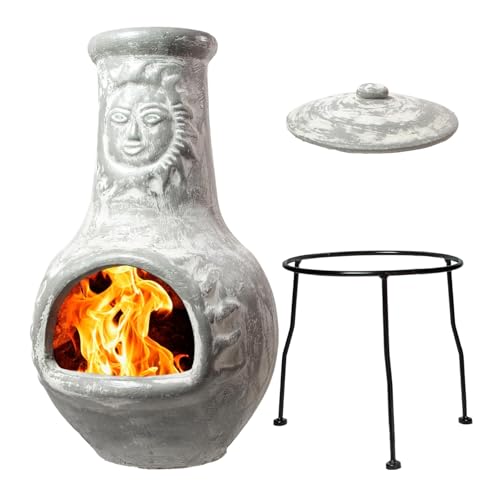
Wiosi Medium Terracotta Clay Chiminea
The classic terracotta look at a medium size
Handmade clay, rain lid and metal stand included
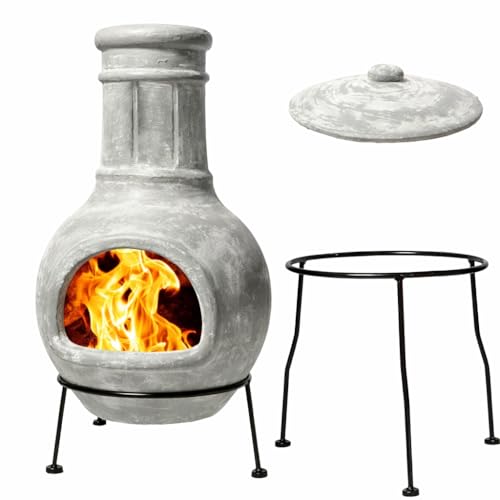
Wiosi Medium Grey Clay Chiminea
A softer grey finish for modern planting schemes
16 x 16 x 32 in clay body on a solid metal stand
Wiosi Small Grey Clay Chiminea
Tight corners where a medium model crowds the space
12 x 12 x 27 in handmade clay, lid and stand included
How to Choose
Footprint and Height Against Your Space
Clay chimineas concentrate heat in front of the mouth, so the footprint decides where people can actually sit. A medium body around sixteen inches wide suits a small seating group, while a twelve-inch small model fits a courtyard corner but holds shorter logs and warms a tighter circle. Measure the paved area, leave clear space on every side, and check the listed height against low branches, pergola beams, and eaves. The chimney only directs smoke upward well when nothing interrupts the column of hot air above it, so vertical clearance matters as much as floor space.
Rain Lid and Stand Are Not Extras
With clay, the included hardware is part of the purchase, not a bonus. A rain lid keeps water out of the chimney between fires, and standing water inside a clay body is a direct route to cracks when temperatures drop. A solid metal stand lifts the belly off cold, damp paving, improves airflow under the fire, and keeps the hot base away from decking boards. If a listing leaves the stand or lid as a separate purchase, factor that into your decision and confirm both pieces fit that exact body before ordering anything.
Clay Body, Finish, and First Fires
Listings describe these bodies as handmade clay, either left in natural terracotta or painted grey. Handmade means small variations in thickness and finish are normal, and the surface will weather outdoors. What matters more is how you treat the first fires: clay needs gradual heating, so begin with small kindling fires and build size slowly over several sessions instead of loading a full firebox on night one. Check the listing for the stated fuel, and plan on seasoned hardwood cut short enough to sit fully inside the belly rather than poking out of the mouth.
Placement, Surface, and Winter Storage
A clay chiminea belongs on level stone, concrete, or gravel, never directly on a wooden deck or dry grass. Keep it clear of fences, furniture, and overhanging planting, and let it cool fully before touching the body. In cold climates, winter is the real test: moisture absorbed into the clay expands as it freezes, so a cover helps during the season, but storing the body somewhere dry and frost-free is the safer habit. Two people should carry a medium clay body, since the weight sits high and the surface gives little grip.
Buyers who want the traditional terracotta look with the full hardware set in one box.
Watch out for
The listing text and its product information table give different heights; plan your placement around the product information figure and confirm the current listing before ordering.
This is the default clay chiminea on Amazon US right now, and it earns that spot by keeping the traditional formula intact: a handmade terracotta body in the classic round belly shape, sold with the rain lid and solid metal stand that clay ownership depends on. The listing also names a cooking grate, which suits owners who want to finish food over the coals after the flames settle. At a medium footprint it warms a small seating circle without dominating the patio, and the yellow terracotta finish reads as a deliberate garden feature rather than an appliance.
Choose this one when the terracotta color clashes with your space. It is the same medium format, a handmade clay body on a solid metal stand with a chimney rain lid, but the grey terracotta finish sits more quietly against stone paving, rendered walls, and modern planting. Nothing about the firing routine changes: you still season the clay with small early fires, keep the lid on between uses, and plan dry winter storage. For households comparing the two medium models side by side, this is purely a finish decision, because the size class, hardware, and wood fuel are the same.
The small grey model answers a different problem: a medium chiminea simply does not fit every space. At twelve inches wide it tucks into a courtyard corner or the end of a narrow terrace, still with a metal stand and lid in the box, and its lighter body is easier for one careful person to shift when the season changes. The trade is fire size. The belly takes short pieces only, the warm zone in front of the mouth is smaller, and it suits one or two chairs pulled close rather than a ring of seating.
Which One Fits Your Situation
A Small Patio Built Around One Focal Point
Take the medium terracotta model. Its footprint leaves room for chairs on a modest paved area, the included stand and lid cover the two accessories clay owners end up buying anyway, and the warm finish gives a plain patio a clear center. The cooking grate is a genuine bonus if your evenings drift from drinks into food over coals.
A Grey, Modern-Leaning Garden Scheme
The medium grey model keeps the same proportions and hardware while dropping the rustic color. Against pale stone, concrete, or a rendered wall it reads as part of the design instead of a folk ornament dropped into it. You give up nothing in fire size or included parts, so let the finish decide and spend your attention on curing the clay properly.
A Courtyard Corner or Narrow Terrace
Go with the small grey chiminea. Twelve inches of width is the difference between a fire feature and an obstacle, and the lighter body makes seasonal storage realistic in a home without a garage. Pull one or two chairs close, feed it short seasoned pieces, and treat it as a personal fireside spot rather than group heating.
A Mild Climate With Year-Round Outdoor Evenings
Either medium model works, and the choice returns to color. Where winters stay gentle, the clay faces fewer freeze cycles, the lid and a breathable cover handle most weather, and the chiminea can stay in place longer. Pick terracotta for a planted, traditional garden and grey for a cleaner-lined space, then keep the firing and cooling routine gentle either way.
Common Mistakes
Building a full-size fire on the first night instead of seasoning the clay with several small fires, which invites cracks in a new body.
Leaving the chimney uncovered between uses, letting rain collect inside the belly where it can freeze or steam against hot clay.
Sitting the body directly on decking, lawn, or uneven ground instead of using the stand on a level, non-flammable surface.
Feeding logs that are too long, so the ends stick out of the mouth and the fire burns unevenly against one wall.
Storing a damp chiminea outdoors through freezing weather rather than drying it and moving it somewhere sheltered.
Frequently Asked Questions
How Is a Clay Chiminea Different From a Metal One?
Clay absorbs heat and radiates it back slowly, so the warmth feels even and close-range rather than fierce. Metal heats faster and tolerates rougher handling, but it can rust and never matches the handmade look. Clay asks for gentler treatment in return: gradual first fires, dry storage, and care when moving the body.
Does a New Clay Chiminea Need Curing Before Regular Use?
Yes. Start with a few small kindling fires and let the body cool completely between them, then build toward normal fire sizes over several sessions. This drives moisture out of the clay gradually. A new body pushed straight to a roaring fire can develop cracks as trapped moisture turns to steam inside the walls.
Can a Clay Chiminea Stay Outside All Year?
In mild, dry climates it can stay out with its lid on and a cover during wet spells. Where winters freeze, the safer pattern is to dry the body and store it under shelter, because absorbed water expands as it freezes and splits clay. The stand can stay outside; the clay body is the part worth protecting.
What Should You Burn in a Clay Chiminea?
Seasoned hardwood cut short enough to sit fully inside the belly is the standard choice, and the listings here name wood as the fuel. Avoid treated lumber, painted offcuts, and anything that burns with chemical residue. Smaller pieces also make the gradual heating clay prefers much easier to control during the first season.
9
99klik Editorial Team
We compare specs, materials and verified owner reviews before a product earns a spot. Rankings are never paid.
Affiliate disclosure. As an Amazon Associate we earn from qualifying purchases at no extra cost to you. Prices accurate as of the date shown.
Compare five X99 motherboards for LGA 2011-3 gaming builds, from compact Micro-ATX boards to dual-CPU E-ATX models, and pick the right fit for your build.
Compare four infrared gas grills from Amazon listings, from a four-burner Amplifire cabinet to a portable TRU-Infrared grill, with burner and size specs.
Compare five bowhunting arrows by spine, grains per inch and straightness: Easton 6.5 Bowhunter, Gold Tip Hunter XT, Easton FMJ and two Victory builds.
Four 1x prism sights with etched reticles compared on eye relief, reticle design, brightness settings and weight, plus a clear pick for each rifle setup.
Compare the best hand pruning saws for garden and trail work, from compact folders to pro curved blades, and pick the right blade length for your branches.
Find grass seed that grows in Ohio shade, from dense-shade mixes that need only a few hours of sun to fast-establishing blends for patchy lawns under trees.