We independently review everything we recommend. When you buy through our links, we may earn a commission. As an Amazon Associate we earn from qualifying purchases.
Best Cold Weather AA Batteries
Best cold weather AA batteries: lithium AA packs that keep working below freezing, compared by pack size, shelf life, cell weight and temperature range.
Best cold weather AA batteries: lithium AA packs that keep working below freezing, compared by pack size, shelf life, cell weight and temperature range.
Disclosure: As an Amazon Associate, this site may earn from qualifying purchases made through links on this page.
Cold weather is where AA batteries show their real differences. An alkaline AA cell that runs a remote for months indoors can lose most of its capacity below freezing, and it can stop working entirely in deep cold. A lithium AA cell keeps working through the same weather. The chemistry is different, and the difference is not small: lithium AA cells are rated from minus 40 degrees Fahrenheit to 140 degrees Fahrenheit, while alkaline cells fade fast once the temperature drops below freezing.
This guide covers AA batteries for cold weather only. Every pick is a lithium AA cell, because lithium iron disulfide is the chemistry that holds its voltage and its capacity in the cold. There are no alkaline picks here, and no rechargeable picks either. Rechargeable lithium-ion AA cells lose capacity fast below freezing, and rechargeable NiMH cells run at 1.2 volts, which can trigger low-battery warnings in devices built for 1.5-volt cells. The three picks below are the lithium AA packs with live Amazon US listings at the time of checking: a Rayovac 24-pack, an Energizer 12-pack, and an Energizer 8-pack. The two Energizer packs hold the same L91 cell in different counts, which this guide states plainly rather than pretending they are different cells.
Cold-weather devices are the ones that live outside in winter: trail cameras, outdoor cameras, flashlights, headlamps, GPS units, smart home sensors, and doorbells. A dead battery in one of those devices means a camera that misses a week of footage, a doorbell that stops answering, or a flashlight that quits on a winter night. The right cell prevents that.
At a Glance
Rayovac Lithium AA, 24 Pack — The top-ranked lithium AA in a November 2026 roundup. Twenty-four Li-FeS2 cells, rated from minus 40 to 140 degrees Fahrenheit, with a 10-year shelf life.
Energizer Ultimate Lithium AA, 12 Pack — The benchmark cell in a middle count. Twelve L91 cells with up to 25 years in storage and the same minus 40 to 140 degree range.
Energizer Ultimate Lithium AA, 8 Pack — The small pack of the same cell. Eight L91 cells for one device, such as a single trail camera, with spares that wait for years.
How to Choose
Begin with chemistry, because chemistry decides whether a cell works in the cold at all. Primary lithium AA cells, sold as Energizer Ultimate Lithium and Rayovac Lithium, are single-use Li-FeS2 cells. They hold a flat 1.5 volts until near the end of their life, and they are rated from minus 40 degrees Fahrenheit to 140 degrees Fahrenheit. Alkaline AA cells lose most of their capacity below freezing and can stop entirely around zero degrees Fahrenheit. That is the whole reason this guide exists: outdoors in winter, lithium is not a luxury, it is the only chemistry that works reliably. Indoors, the advantage shrinks to shelf life and leak-proofing.
Do not confuse primary lithium AA cells with rechargeable lithium AA cells. Rechargeable lithium AA cells are lithium-ion inside, stepped down to a regulated 1.5 volts, and they lose capacity fast below freezing. They are the wrong pick for a winter device. Never put a bare 14500 cell, the AA-shaped lithium-ion cell that outputs 3.7 volts, into a 1.5-volt device: it can damage the device. A disposable lithium AA never says rechargeable in small print, so read the listing before ordering.
Pack size is the next decision. A trail camera takes eight AA cells, so an 8-pack refills one camera and leaves nothing over. A 12-pack refills one camera and leaves four spares. A 24-pack refills two or three cameras, or one camera plus a flashlight and a headlamp. Buy the count that matches the number of devices, and remember that spare lithium cells store for years, so a larger pack does not go to waste the way a large alkaline pack might.
Shelf life is the second reason to buy lithium. Energizer rates Ultimate Lithium AA at up to 25 years in storage, the longest shelf life of any AA cell. Rayovac rates its lithium AA at 10 years. Either figure is far beyond alkaline, and either one means a spare pack can sit in a drawer for years and still be ready when a low-battery alert fires. Store spare cells in their original packaging in a cool, dry place, away from metal objects that can bridge the terminals.
Weight matters for devices that hang on a wall or ride in a pocket. An Energizer Ultimate Lithium AA cell weighs 14.5 grams, about one third less than a standard alkaline AA cell. That difference adds up in a device that holds eight cells, and it matters for headlamps and handheld devices that get carried for hours.
Leak-proofing is the quiet advantage. Energizer lists its Ultimate Lithium cells with leak-proof construction, designed to help protect devices from leaks and corrosion based on standard use. Alkaline cells can leak, and the damage they cause falls on the device, not the battery. A lithium cell in a camera that sits on a fence through winter is far less likely to leave corrosion behind.
A few habits keep lithium cells working well. Confirm the device accepts lithium AA cells before installing them, since some devices specify alkaline or NiMH only. Replace all cells in a device at once, with cells from the same pack. Do not mix old and new cells, and do not mix lithium cells with alkaline cells in the same device. Match the positive and negative ends to the markings inside the battery compartment, and recycle spent cells at a proper collection point.
The Rayovac Lithium AA 24-pack is the top-ranked lithium AA in a November 2026 roundup of lithium AA batteries, checked live on Amazon on November 17, 2026. The cells are 1.5-volt lithium iron disulfide, Li-FeS2, with a listed capacity around 3,000 mAh, a 10-year shelf life, and a temperature range from minus 40 degrees Fahrenheit to 140 degrees Fahrenheit. The pack holds 24 cells, and the cells are single-use and not rechargeable.
Rayovac is a real American battery brand, and its lithium AA matches the benchmark chemistry at the same roughly 3,000 mAh capacity and the same temperature range as the Energizer. The difference between the two brands is shelf life: Rayovac rates its lithium AA at 10 years, against Energizer’s 25. The other difference is the depth of independent data behind the cell: the Energizer cell has a decade of it, and the Rayovac cell has far less. Neither difference changes how the cell behaves in a trail camera in January. Twenty-four cells cover two or three refills of most cameras, or one camera plus a flashlight and a headlamp.
This is the pick for buyers who want a full 24-pack of lithium AA cells for outdoor cameras and flashlights, and who want the top-ranked pack in the current roundup.
2. Energizer Ultimate Lithium AA Batteries, 12 Pack
Runner-Up
2. Energizer Ultimate Lithium AA Batteries, 12 Pack
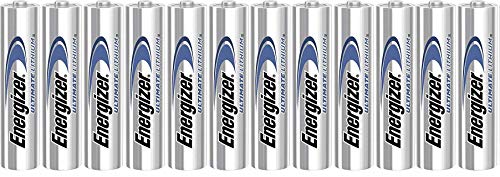
The Energizer Ultimate Lithium AA 12-pack holds the benchmark lithium AA cell, the L91, in a middle count. The cells are 1.5-volt Li-FeS2 with a listed capacity of 3,000 mAh, up to 25 years in storage, a temperature range from minus 40 degrees Fahrenheit to 140 degrees Fahrenheit, and leak-proof construction. The pack holds 12 cells, and the cells are single-use and not rechargeable. The pack was listed as live on Amazon in November 2026.
Twelve cells refill a trail camera and leave four spares, or fill a flashlight, a headlamp, and a remote with cells to spare. The 25-year storage figure is the longest of any AA cell, which means the spares in this pack can wait in a drawer for years and still be ready. Energizer states that Ultimate Lithium AA cells run up to 11 times longer than alkaline in high-drain devices, and that the cells hold their voltage flat until the end of their life. The L91 cell is also about one third lighter than a standard alkaline AA cell, at 14.5 grams per cell.
This is the pick for buyers who want the benchmark cell without committing to a 24-pack, and who want spares that store for decades.
3. Energizer Ultimate Lithium AA Batteries, 8 Pack
3. Energizer Ultimate Lithium AA Batteries, 8 Pack
The Energizer Ultimate Lithium AA 8-pack is the same L91 cell as the 12-pack, in a pack small enough for a drawer or a glove box. The model number is L91SBP-8. The cells are 1.5-volt Li-FeS2 with a listed capacity of 3,000 mAh, up to 25 years in storage, a temperature range from minus 40 degrees Fahrenheit to 140 degrees Fahrenheit, and leak-proof construction. The pack holds 8 cells, and the cells are single-use and not rechargeable. The pack was listed as live on Amazon in November 2026.
Eight cells refill one trail camera exactly, which is the natural use for this pack. One camera takes eight cells, and the rest of the household can wait. The pack is also the smallest buy in the Energizer lithium line, for a buyer who needs lithium AA cells now for one device. A note on the listing: a newer listing of the same 8-pack also appears under a different code, so match the model number L91SBP-8 when ordering to be sure of getting this pack.
This is the pick for one device, one camera, one flashlight, anyone who needs lithium AA cells now and does not need 24 of them.
Comparison Table
Pick
Cells
Chemistry
Voltage
Listed Capacity
Shelf Life
Temperature Range
Cell Weight
Rayovac Lithium AA
24
Li-FeS2 lithium
1.5V
About 3,000 mAh
10 years
Minus 40 to 140 F
Not published
Energizer Ultimate Lithium AA
12
Li-FeS2 lithium
1.5V
3,000 mAh
Up to 25 years
Minus 40 to 140 F
14.5 g
Energizer Ultimate Lithium AA
8
Li-FeS2 lithium
1.5V
3,000 mAh
Up to 25 years
Minus 40 to 140 F
14.5 g
Which One Fits Your Situation
For a trail camera or an outdoor camera that runs all winter, any pick in this guide works, and the count decides. One camera takes eight cells, so the Energizer 8-pack refills it exactly. Two cameras, or one camera plus a flashlight, call for the Energizer 12-pack or the Rayovac 24-pack. A household with several outdoor cameras should buy the Rayovac 24-pack, since it covers two or three refills in one order.
For a flashlight, a headlamp, or a GPS unit carried outdoors in winter, the Energizer 8-pack is enough for the device plus spares, and the cells are light enough to carry. The 14.5-gram cell weight matters here, since a headlamp with four cells feels the difference.
For a doorbell, a smart home sensor, or any device mounted outside and forgotten for months, the Energizer 12-pack fits best. The 25-year storage figure means the spares wait patiently, and the leak-proof construction protects a device that nobody opens for a year. The Rayovac 24-pack is the alternative when several such devices need cells at once.
For an emergency kit, the Energizer 12-pack is the natural fit: enough cells for the flashlights and the radio, with spares that store for decades. The Rayovac 24-pack covers a larger kit, and the Energizer 8-pack covers a small one.
FAQ
Why do alkaline AA batteries fail in cold weather?
Alkaline chemistry slows down as the temperature drops. Below freezing, an alkaline AA cell loses most of its capacity, and in deep cold it can stop working entirely. Lithium AA cells are rated from minus 40 degrees Fahrenheit to 140 degrees Fahrenheit, and they keep most of their capacity through the same weather.
Can I use lithium AA batteries in any device that takes AA batteries?
Almost any device, but check the manual first. Most AA devices accept lithium AA cells without trouble. A few devices specify alkaline or NiMH only, and those should get the chemistry the manual names. Never put a 14500 cell, which outputs 3.7 volts, into a 1.5-volt device.
Are lithium AA batteries rechargeable?
No. The picks in this guide are single-use primary lithium cells. They cannot be recharged, and trying to recharge one is unsafe. Rechargeable lithium AA cells are a different product, and they lose capacity fast below freezing, so they are the wrong pick for winter devices.
How long do lithium AA batteries last in storage?
Energizer rates Ultimate Lithium AA at up to 25 years in storage. Rayovac rates its lithium AA at 10 years. Both figures assume a cool, dry place in the original packaging. A spare pack can sit in a drawer for years and still be ready.
Do lithium AA batteries leak?
They are built to resist it. Energizer lists its Ultimate Lithium cells with leak-proof construction, designed to help protect devices from leaks and corrosion based on standard use. They are far less likely to leak than alkaline cells, which is one more reason to use them in a device that sits untouched for months.
What is the difference between the Energizer 8-pack and the 12-pack?
Nothing except the count. Both packs hold the same L91 cell, with the same capacity, the same temperature range, and the same storage life. Buy the 8-pack for one device and the 12-pack when spares are wanted.
Final Take
Cold weather sorts AA batteries by chemistry, and lithium wins by a wide margin. The Rayovac Lithium AA 24-pack is the top-ranked lithium AA in the current roundup, with a 10-year shelf life and enough cells for several devices. The Energizer Ultimate Lithium AA 12-pack holds the benchmark L91 cell in a middle count, with up to 25 years in storage. The Energizer Ultimate Lithium AA 8-pack is the same cell for one device.
Buy the count that matches the devices, confirm the device accepts lithium AA cells, replace all cells at once, and keep spares in a cool and dry place. Do that, and the camera on the fence, the doorbell by the door, and the flashlight in the glove box will all work when winter asks them to.
9
99klik Editorial Team
We compare specs, materials and verified owner reviews before a product earns a spot. Rankings are never paid.
Affiliate disclosure. As an Amazon Associate we earn from qualifying purchases at no extra cost to you. Prices accurate as of the date shown.
Compare the best x99 motherboards tomshardware readers still pick for Xeon E5 and Core i7 builds: five MACHINIST LGA 2011-3 boards by size, memory and storage.
Find the best sensor size for mirrorless cameras by comparing full-frame, APS-C and Micro Four Thirds bodies on image quality, low light, size and cost.
Compare adjustable chairs for home and office use by seat height, lumbar support, headrest and armrest adjustment, tilt, swivel and stated capacity today.
Galaxy Z Flip vs Galaxy S20 Ultra compared on display, cameras, battery and size, with five Amazon Renewed picks to help you choose the right 2020 Samsung.
Best Japanese vegetable cleaver guide: five nakiri knives compared on steel, edge angle, handle and weight, so you can pick the right one for produce prep.
What is a UPS battery? It is the sealed lead-acid battery inside a UPS that keeps devices running during an outage. See how it works and the best 12V 9Ah picks.
Does RV battery work directly offf batery or throungh nverter? DC loads run off the battery; AC loads need an inverter. See five 12V 100Ah RV batteries.
Can one replace the battery in a t900 tablet? Yes — the Galaxy Tab Pro 12.2 SM-T900 uses a 9500mAh cell. See five replacement kits and what the swap involves.
The best metals for earth battery builds are copper, magnesium, and aluminum-zinc. Compare voltage pairs and forms, and how long each metal lasts in soil.

 1. Rayovac Lithium AA Batteries, 24 Pack
 2. Energizer Ultimate Lithium AA Batteries, 12 Pack
 3. Energizer Ultimate Lithium AA Batteries, 8 Pack