
Key takeaways
- Unplug the opener before cleaning and keep fingers away from the cutting wheel.
- Even a smooth-edge cut leaves a metal rim; wash cloths and sponges can snag on it, so dispose of lids carefully.
- Do not use on dented, bulging or swollen cans, and discard cans that spurt or smell off when opened.
- Keep the cord away from hot surfaces and water, and keep the opener out of children’s reach.
- Dull cutting wheels can slip; if the wheel stops cutting cleanly, check the maker’s replacement guidance or buy a new unit.
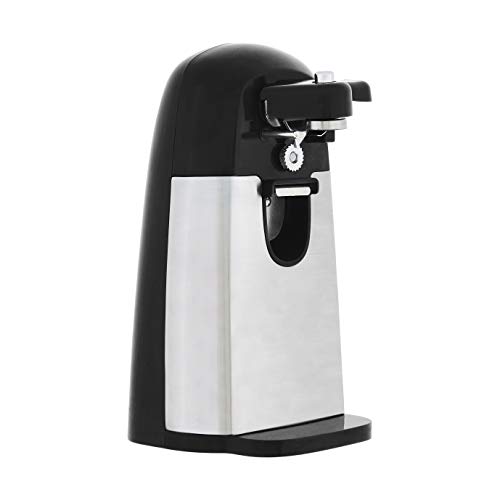
For most kitchens, the Cuisinart Deluxe CCO-50BKN is the better pick if you open cans of many sizes and want a steady, quiet machine, while the Hamilton Beach Smooth Touch is the better pick if you want a side-cutting design that leaves a smooth lid edge and a simple push-down lever. Both belong to the same budget class, far below the $150 cap, so the decision is about design, not price.
Our top picks


As an Amazon Associate we earn from qualifying purchases at no extra cost to you.
At a Glance: Electric Can Openers Worth Considering
| Model | Best for | Key points reported | Limits |
|---|---|---|---|
| Cuisinart Deluxe CCO-50BKN | All-round use and cans of every size | Maker lists a Power Cut blade, removable activation lever, non-slip base, single-touch operation and a 3-year limited warranty; retailer listings give about 60 W | Top-cut design leaves a sharp lid edge to handle with care |
| Hamilton Beach Smooth Touch (76609) | Smooth, side-cut lid edges and easy operation | Maker lists side-cut design, one-handed operation, extra-tall clearance, cord storage and a built-in knife sharpener and bottle opener; several outlets favor the Smooth Touch line | Wattage is not stated on the maker’s page |
| Hamilton Beach Extra-Tall 76702G | Lowest spend among well-known models | Maker lists an extra-tall design, removable washable cutting lever, automatic shutoff, built-in knife sharpener and cord storage at the base | Top-cut design; stock can vary |
| Hamilton Beach Extra-Tall stainless steel (76700G) | A brushed stainless look with the same removable lever | Maker lists a brushed stainless finish, detachable cutting lever and automatic shutoff | Top-cut design; model suffix varies by retailer |
| Manual safety-cut can opener (alternative) | Occasional use, no outlet needed | Cuts around the side of the rim | Needs hand strength and twisting |
How Electric Can Openers Differ
All electric can openers use a motor to rotate the can while a cutting wheel slices the lid. The main difference is where the wheel cuts. A traditional top-cut design pierces the lid from above, leaving a lid that can have a sharp rim and may drop into the can. A side-cut or “smooth edge” design cuts along the outer seam, so the lid lifts off with a rounded rim. Reviewers say side-cut designs are safer around children, though the cut lid and can edge should still be treated with care.
What to Look For
Can size range
Standard soup cans open on nearly every model. Taller cans, such as large tomato or coffee tins, are where differences show up. Cuisinart says its CCO-50BKN opens any size can, and Hamilton Beach lists extra-tall clearance on its Smooth Touch and Extra-Tall models. If you cook in bulk, make sure the model you choose lists clearance for tall cans.
Stability and footprint
A heavier base and a wide stance keep the opener steady while the can turns. Check the dimensions against counter space and cabinet height. Some models fit under wall cabinets only when tilted, so measure before buying.
Noise and power
Wattage figures for these openers differ between retailer listings and are not always stated by the maker, so treat them as rough. Retailer listings give about 60 W for the Cuisinart CCO-50BKN. Wattage alone does not guarantee speed or low noise, and reviewers describe how loud an opener is mostly in terms of personal preference, so read the manual and user feedback if noise matters to you.
Magnet and hands-free operation
Many models include a magnet that holds the lid after cutting. Some work hands-free once the lever is pressed; others require you to hold the lever. Choose hands-free if you want to keep both hands free, but stay nearby and watch the can.
Cord management
Cord storage built into the base, as Hamilton Beach lists on the Smooth Touch and Extra-Tall models, reduces clutter and trip hazards. If your outlet is far from the counter, look for a longer cord rather than using an extension.
Cleaning
The cutting wheel and gear collect food residue. Detachable cutting assemblies are easier to clean and keep the wheel sharp. Follow the maker’s instructions for washing; do not immerse the motor.
Safety Notes
- Unplug the opener before cleaning and keep fingers away from the cutting wheel.
- Even a smooth-edge cut leaves a metal rim; wash cloths and sponges can snag on it, so dispose of lids carefully.
- Do not use on dented, bulging or swollen cans, and discard cans that spurt or smell off when opened.
- Keep the cord away from hot surfaces and water, and keep the opener out of children’s reach.
- Dull cutting wheels can slip; if the wheel stops cutting cleanly, check the maker’s replacement guidance or buy a new unit.
Budget Tiers
Entry level
Basic Hamilton Beach models and other unbranded openers fall here. They open standard cans, but outlets note limits with large cans and some noise.
Mid-range
The Cuisinart CCO-50BKN and the Hamilton Beach Smooth Touch represent the sweet spot. Both appear repeatedly in reviewers’ lists, and both are far under the cap.
Premium
Electric can openers rarely climb much higher, so the premium tier is thin. Spending more mostly buys bulk, stainless exteriors or multi-purpose designs; ask whether a plain model does what you need.
Pick X If You Want Y
| Pick this | If you want |
|---|---|
| Cuisinart CCO-50BKN | A stable base, quieter running and reliable operation on tall cans |
| Hamilton Beach Smooth Touch | Smooth-edged lids and an easy push-down lever |
| Hamilton Beach Extra-Tall 76702G | A familiar brand at the lowest spend, with a built-in knife sharpener |
| Hamilton Beach Extra-Tall stainless (76700G) | A stainless finish and a removable cutting lever |
| A manual safety-cut opener | An occasional tool with no outlet needed |
Who Benefits Most
Electric openers suit people who open many cans each week, such as pet owners, large households and anyone cooking from pantry staples. They can also suit people who find twisting a manual opener uncomfortable. If you open a can only once in a while, a good manual opener takes less space and costs less.
Alternatives to Consider
A manual smooth-edge opener, such as the OXO Good Grips model, cuts around the side of the rim and requires no electricity. A rechargeable or battery-powered opener works where outlets are limited, such as in a camper, though runtime varies. A traditional hand-crank opener is the cheapest and most compact option. A wall-mounted opener is another choice if you open cans constantly, though installation is needed.
Fit and Daily Use Considerations
Counter space and storage
Electric openers are tall because the can hangs beneath the cutting wheel. Measure the clearance under wall cabinets and consider whether the unit will live on the counter or in a drawer. Models with cord storage in the base and a compact footprint are easier to tuck away, which is why small-kitchen buyers often favour them.
Left-handed and one-handed use
Most electric openers use a lever that can be pressed with either hand, so they suit left-handed users better than many manual openers with a fixed crank. Hands-free designs, where the machine keeps running until the lid is cut, can also help people who find twisting or squeezing tiring. This is a matter of convenience, and anyone with a specific hand or mobility concern should try a model in person where possible.
Pet food and bulk cans
Households that open many pet food cans or large catering-size cans should look for a model that lists a tall-can capacity and a stable base. Reviewers note that tall cans are where lightweight openers struggle, so a model with a sturdy non-slip base, such as the Cuisinart, which the maker says opens any size can, may suit this job better.
Lifespan and replacement
Cutting wheels dull over time and food residue builds up in the gears, so most makers suggest regular cleaning. If the opener starts leaving lids half-cut or slipping off the rim, replacement is usually more practical than repair given the low cost of the category.
Care Routine That Keeps an Opener Cutting Cleanly
After each use, wipe the cutting wheel and the drive gear with a damp cloth, because dried food is the usual reason an opener slips. Once a month, or sooner if you open a lot of sticky cans, use a small brush to clear residue from the wheel’s teeth. Dry everything before storing it so the metal does not rust. Only use cleaning methods that the maker’s manual allows, and never run a damaged cord through the opener’s housing or use the appliance if the plug is cracked.
Frequently Asked Questions
Do electric can openers work on all can sizes?
Most open standard soup and vegetable cans. Tall cans can be a problem on some models, so look for a listed capacity or a reviewer’s note about large cans. Cuisinart says the CCO-50BKN opens any size can.
What does a smooth-edge can opener do?
It cuts along the side of the can, so the lid comes off with a rounded edge instead of a sharp one. The can is easier to handle, but the rim is still metal, so treat it carefully.
Why does my electric can opener keep slipping?
The cutting wheel may be dull or covered in residue. Clean it according to the manual, and if it still slips, replace the unit.
Is it safe to use an electric opener on dented cans?
Avoid opening cans that are bulging, leaking or deeply dented near the seam. Discard them according to local guidance instead of risking the contents.
How do I clean an electric can opener?
Unplug it, wipe the cutter and surrounding parts with a damp, soapy cloth, then dry thoroughly. Some models have a removable cutting assembly; follow the manual. Do not submerge the motor.
Is an electric opener better than a manual one?
It depends on your habits. Electric models are faster and need less hand effort but take counter space and an outlet. A manual smooth-edge opener is compact and cheaper for light use.



