
Key takeaways
- Budget tier: Smaller 3 to 9 cup choppers and entry processors. They cover onions, nuts and sauces but often limit slicing, shredding and dough.
- Mid-range tier: 9 to 13 cup machines like the Ninja BN601 or entry Cuisinart sizes with a standard disc set and reasonable motors.
- Upper tier within the cap: KitchenAid 13-Cup and Cuisinart 14-Cup Custom, with larger bowls, more discs and better build.
Within a $150 cap, the KitchenAid 13-Cup suits cooks who want adjustable slicing and a compact footprint, the Cuisinart 14-Cup Custom suits big-batch cooks who want the largest bowl and a strong motor, and a Ninja processor suits shoppers who want the most capacity and power claims for the least outlay. Which one fits depends on how much you chop, how often you shred cheese or slice vegetables, and how much cabinet space you have.
A food processor does the repetitive prep that eats up weeknight time: chopping onions, shredding cabbage, slicing potatoes, mixing pie dough, grinding nuts and making hummus. Prices and street availability move around, so this guide sticks to what makers and outlets state about each model and groups them by budget tier instead of quoting figures.
Our top picks


As an Amazon Associate we earn from qualifying purchases at no extra cost to you.
Food Processors at a Glance
| Model | Best for | Key stated points | Limits |
|---|---|---|---|
| KitchenAid 13-Cup (KFP1318) | Balanced all-round home use | Yahoo Shopping is reported to name it best overall; 13-cup bowl, external slice-thickness adjustment, dough blade and an in-bowl storage caddy | Can sit near the top of the budget; slightly smaller than the Cuisinart; no small work bowl for tiny jobs |
| Cuisinart 14-Cup Custom (DFP-14BCNY) | Large batches, dough, heavy shredding | Outlets describe a 14-cup bowl and a 720 watt motor | Large and heavy; may be at the edge of the cap depending on the retailer |
| Ninja BN601 (9-cup class) | Buyers who want the strongest power-to-cost ratio | Reviewers note a high power figure listed as peak watts | Peak watts cannot be compared with continuous watts; fewer slicing options reported |
| Cuisinart Core Custom class | Mid-size kitchens | Cuisinart sells a Core Custom line, though outlets covered it less than the 14-cup Custom | Less independent review coverage |
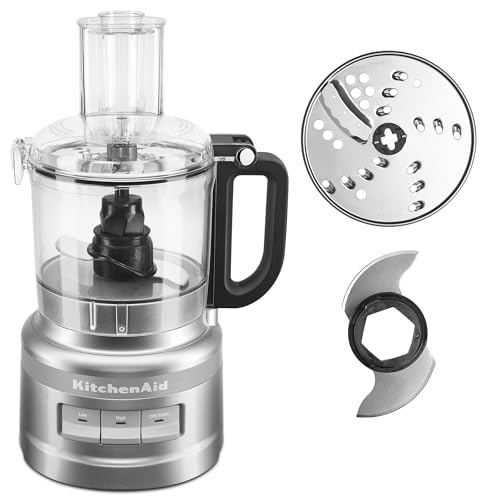
KitchenAid 13-Cup: Versatile and Space Savvy
The Yahoo Shopping roundup is reported to name the KitchenAid 13-Cup its best overall, noting that the reviewer expected a Cuisinart to win but was impressed given the price gap. It is described as handling chopping, shredding, slicing and emulsifying well. Two features come up repeatedly: an external adjustment lever to set slice thickness without swapping discs, and a storage caddy that nests inside the main bowl to keep the blades and discs together.
Because the caddy nests inside the bowl, the parts stay together in one place. Comparison writers say it has a slightly smaller footprint than the Cuisinart, which helps in compact kitchens. The compromise is bowl size and motor strength: it has less capacity than a 14-cup machine, may feel less powerful with stiff dough, and the 13-cup bowl is too large for very small jobs.
Cuisinart 14-Cup Custom: Big Bowl, Proven Layout
The Cuisinart 14-Cup Custom is the classic reference design, and several guides rank it best overall. Outlets describe a 14-cup bowl and a 720 watt motor. One review reportedly found that the 720 watt Cuisinart performed nearly the same as a 1,200 watt premium model in most everyday tasks, which supports the idea that wattage alone does not decide results.
Larger bowls help with bread dough, big salads and batch cooking for families. The trade-off is size and weight: it takes more space to store, and the extra capacity is wasted if you mainly mince small amounts. A comparison piece notes it lacks the external slice-thickness adjustment found on the KitchenAid, so you switch discs instead. Pricing varies widely across outlets and seasons, so compare current listings against your cap before deciding.
Ninja: The Power Pick
Ninja is frequently labeled the budget or power choice. Reviewers highlight the BN601 as a strong value, and a Ninja blender-and-processor combination appears near the top of at least one roundup, though that ranking is less rigorous. The key caveat is the wattage figure: Cuisinart and KitchenAid list continuous watts, while Ninja lists peak watts, a higher momentary value. The numbers should not be compared side by side.
Ninja models tend to appeal to people who want a lot of capability from a single motor base, including blending or dough functions in some versions. If you mostly want to chop, shred and puree and care less about adjustable slicing discs, this tier can make sense. If your priority is a wide choice of discs and a classic work bowl, the Cuisinart or KitchenAid layouts fit better.
Budget Tiers
- Budget tier: Smaller 3 to 9 cup choppers and entry processors. They cover onions, nuts and sauces but often limit slicing, shredding and dough.
- Mid-range tier: 9 to 13 cup machines like the Ninja BN601 or entry Cuisinart sizes with a standard disc set and reasonable motors.
- Upper tier within the cap: KitchenAid 13-Cup and Cuisinart 14-Cup Custom, with larger bowls, more discs and better build.
Premium models above the cap, such as the Breville Sous Chef, bring larger motors and more precise adjustment, but the review mentioned above found little everyday difference for many tasks.
Size, Fit and Compatibility Notes
Bowl size versus real batch size
A 13 or 14 cup rating is the bowl capacity, not the amount you can process at once. Liquids must stay below the maker’s fill line, and dough capacity is usually lower than the bowl figure. Read the manual for flour limits.
Feed tube and discs
A wide feed tube lets you process larger vegetables with less pre-cutting. Check which discs ship in the box: a slicing disc, a shredding disc and a stainless chopping blade are common, while dough blades and julienne discs vary by model.
Storage and footprint
Measure your cabinet or counter space before ordering. Nesting parts, such as the KitchenAid storage caddy, help, and some makers include a case or storage box for discs.
Noise and stability
Larger bases tend to stay put better during dough work, while lighter machines can walk across the counter. Hold the bowl and lid when running heavier loads.
Care and Safety Notes
Always unplug before touching blades or discs, and handle them by the hub, since they are sharp. Bowls, lids and many discs are listed as dishwasher-safe by makers, but follow your manual, and hand wash blades if the manual advises it. Do not exceed the recommended fill levels with hot liquids, and let hot soups cool before puree work. Use the pusher, not your fingers, when feeding the tube. If a unit smells hot or the motor stops, let it cool, then follow the manual before restarting.
Pick X If… Decision Table
| Pick this if you… | Choose | Why |
|---|---|---|
| Want adjustable slicing without swapping discs | KitchenAid 13-Cup | External thickness lever and in-bowl storage caddy |
| Cook for a crowd or make dough often | Cuisinart 14-Cup Custom | Largest bowl and a 720 watt motor |
| Want the most power claim for the least spend | Ninja BN601 | Reviewers cite strong power-to-cost, though in peak watts |
| Have little storage space | KitchenAid 13-Cup | Slightly smaller footprint than the Cuisinart |
| Mostly mince small amounts | A small chopper | Large bowls spread small batches too thin |
Alternatives
- Mini choppers: Low-cost and easy to store, ideal if you only mince garlic, herbs or nuts.
- Immersion blender with chopper bowl: Covers soups and small chopping jobs but not heavy shredding.
- Box grater and mandoline: Manual options for shredding and slicing with no motor, though they take more effort and care with fingers.
Everyday Jobs and the Right Setup
Most processor work falls into a handful of routines, and knowing them helps you judge whether a given model fits. For salsa and chopped vegetables, use the stainless blade and pulse in short bursts so pieces stay even instead of turning to paste. For shredded cheese, chill the block first so it grates cleanly, and use the pusher with light pressure. For coleslaw or potato gratin, the slicing disc works best when the vegetable is cut to fit the feed tube snugly and packed upright so it does not tip.
Pastry and pie dough is another strength. Cold butter and flour pulsed together form a crumb quickly, and a small amount of ice water brings it together in seconds. Nut butters, breadcrumbs, pesto and hummus all rely on the chopping blade, though thick mixtures need patience and occasional scraping. A larger bowl helps dough and big batches, while a small nested bowl is more efficient for herbs and garlic.
When comparing models, think about which of these routines you will repeat weekly. If it is mostly chopping and pesto, a smaller unit is enough. If it is shredding blocks of cheese and slicing a head of cabbage for a crowd, a 13 or 14 cup model with a wide feed tube saves real effort. Also look at the lid interlock design, since some are easier to lock and unlock one-handed than others.
Frequently Asked Questions
Is a 14-cup food processor too big for a small kitchen?
It can be. If counter and cabinet space is tight, a 9 to 13 cup unit or a compact chopper may be more practical. Measure the height with the lid on before buying.
Why do Ninja wattage numbers look higher than Cuisinart numbers?
Ninja lists peak watts, which describe a brief maximum, while Cuisinart and KitchenAid list continuous watts. The two are not directly comparable, so judge by the tasks you need done.
Can a food processor knead bread dough?
Many models include a dough blade and can handle small to medium batches. Check the maker’s flour limit and run time in the manual, since overloading can strain the motor.
Which blade or disc do I use for which job?
The stainless chopping blade handles chopping, grinding and puree. The slicing disc makes even slices, and the shredding disc handles cheese and cabbage. Some models add julienne or fine shred discs.
Are food processor parts dishwasher safe?
Many bowls, lids and discs are listed as dishwasher safe, but the base never is. Follow your model’s manual, and hand wash sharp blades if it recommends that to protect the edge.
Is a more expensive food processor worth it?
For heavy daily use, premium models offer larger motors and finer slicing control. Reviewers have reported that a 720 watt Cuisinart performed close to a pricier 1,200 watt model for most tasks, so many home cooks find the in-budget options sufficient.



