
Key takeaways
- Measure counter and cabinet space; a seven-tray unit is as tall as a small appliance tower and as wide as a stand mixer.
- Slice food evenly, usually between one-eighth and one-quarter inch, so pieces dry at the same pace.
- Do not overload the trays; leave gaps for airflow.
- Wash trays after each batch. Stainless trays often tolerate the dishwasher according to outlets, but follow the maker’s care instructions.
- Wipe the base and fan area with a damp cloth only; never immerse the motor housing in water.
For most home cooks, a stainless-tray model such as the Cosori 6-tray (CP267-FD) or the Magic Mill Pro 7-tray suits fruit, herbs and jerky well, the Nesco Snackmaster Pro FD-75A suits buyers who want the lowest spend and room to expand, and the Excalibur 9-tray suits people who dry large batches often but may sit above the $150 cap. Which one you pick depends on how much you dry, how quiet you need it, and whether you want plastic or stainless trays.
Our top picks

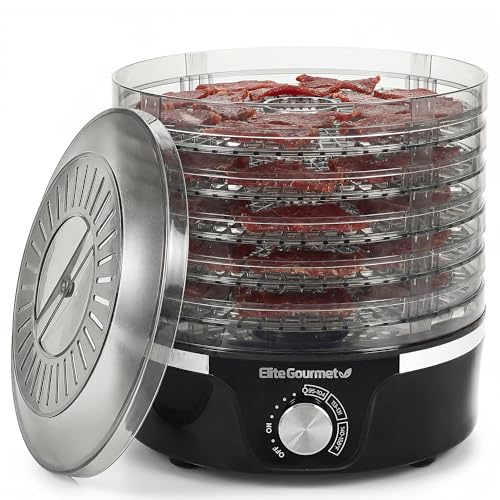
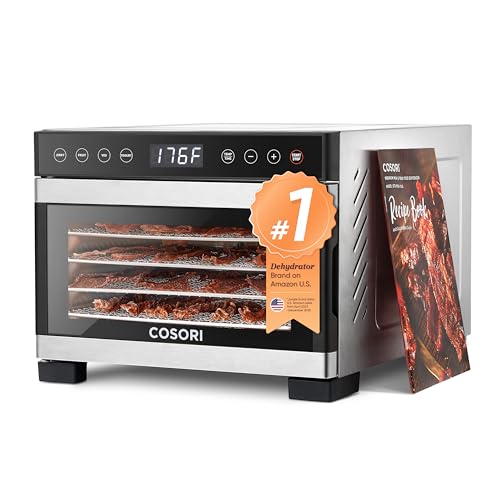

As an Amazon Associate we earn from qualifying purchases at no extra cost to you.
At a Glance: Food Dehydrators Worth Considering
| Model | Best for | Key stated specs | Limits |
|---|---|---|---|
| Cosori Premium stainless-steel dehydrator, 6 trays (CP267-FD) | Home users who want quiet, even drying and easy cleaning | Maker lists 600 W, 95 to 165 degrees F, a digital timer up to 48 hours and about 6.5 square feet of drying space; outlets report dishwasher-safe stainless trays and quiet operation | Smaller drying area than the nine-tray Excalibur |
| Magic Mill Pro 7-tray | Larger families and precise settings | Maker lists 7 stainless trays, a rear-fan system, 600 W, 95 to 176 degrees F and a timer up to 48 hours | Large footprint |
| Nesco Snackmaster Pro FD-75A | Budget buyers and expandable capacity | Five trays included, expandable to 12; 95 to 160 degrees F range; Converga-Flow airflow; 600 W per the manual | No digital timer in the version most outlets describe; plastic trays |
| Nesco Gardenmaster FD-1040 | Gardeners who need to expand later | Outlets describe four trays expanding to 20, 1,000 W, a digital timer up to 48 hours and 90 to 160 degrees F | Larger footprint when expanded; may exceed the cap when fully loaded |
| Excalibur 3926TB (9-tray) | Enthusiasts and bulk drying | Retail listings give 9 trays, 15 square feet of drying area, 600 W, 105 to 165 degrees F, a 26-hour timer and a 10-year limited warranty | Likely above the cap; large |
How Dehydrators Work
A dehydrator circulates warm air over thin slices of food to remove moisture at a low temperature. The process preserves fruit chips, herbs, vegetables and jerky for storage without a freezer. Compared with an oven on its lowest setting, a dedicated machine holds a steadier temperature, moves air across every tray and uses little energy, though it takes many hours.
What to Look For
Airflow design
The airflow layout affects how evenly trays dry. Stackable units with a base fan, such as older stackable designs, may need tray rotation. Models with a rear-mounted fan push air horizontally across trays, so food on the top and bottom dries at a similar rate. Nesco calls its system Converga-Flow, which it describes as forcing air down a chamber and across each tray, and the maker says trays do not need rotating. The Magic Mill, Cosori and Excalibur use rear fans, and reviewers generally prefer this layout for consistency.
Temperature range and control
Fruit and herbs dry at low temperatures; jerky needs a higher setting. The Nesco lists a range of 95 to 160 degrees F, the Magic Mill 95 to 176 degrees F and the Excalibur 105 to 165 degrees F according to outlets. A digital thermostat and timer, as the Magic Mill, Cosori and Gardenmaster include, make long runs easier because the machine can switch off on its own. Manual dial models like the Nesco FD-75A are simpler but need you to watch the clock.
Tray material and capacity
Stainless trays are easy to wash and do not hold odors. Plastic trays are lighter and cheaper but can stain and warp over time. Tray capacity is stated in square feet: listings give about 6.5 square feet for the six-tray Cosori and 15 square feet for the nine-tray Excalibur, while the Nesco FD-75A starts at five trays and expands to twelve. Think about how much you will dry at once. A small household that dries apples on weekends rarely needs nine trays.
Wattage
Wattage affects drying speed. Most listings and the Nesco manual summary give 600 W for the FD-75A, though a few outlets cite 700 W, so read the label on the unit you buy and follow the manual. Higher wattage does not automatically mean better results; a well-designed fan matters more.
Noise and placement
A dehydrator runs for many hours, so noise matters. Roundups describe rear-fan stainless models such as the Cosori as quieter picks. Place the unit on a stable, heat-resistant surface with clear space around the vents, and ideally in a well-ventilated room because drying meat can smell strongly.
Food Safety Notes
Drying does not make every food safe by itself. For jerky and other meat, the US Department of Agriculture and university extension services advise heating meat to a safe internal temperature as part of the process, because many home dehydrators run at temperatures that may not reach it on their own. Follow the guidance from those sources and the maker’s manual for meat and poultry, use fresh lean cuts, keep raw meat separate from other foods, and wash hands and surfaces. Store dried food in airtight containers in a cool, dark place, and discard anything that smells off or shows mold. Follow the manual for fruit, vegetables and herbs as well, and ask your local extension office if you are unsure about a recipe.
Budget Tiers
Entry level
The Nesco Snackmaster Pro FD-75A represents the lowest outlay, and outlets credit it with a long track record. It lacks a digital timer, but the thermostat range is wide, and trays can be added later.
Mid-range
Stainless-tray models with digital controls, such as the Cosori and the Magic Mill Pro, fall in the middle. They are easier to clean, quieter and more precise, which is why roundups so often put them on top for home use.
Premium
Excalibur is the usual premium name. Roundups credit it for build quality and capacity, and retail listings state a 10-year limited warranty. It is likely to cost more than the cap, so treat it as a step beyond the budget.
Pick X If You Want Y
| Pick this | If you want |
|---|---|
| Cosori stainless 6-tray | Quiet operation, dishwasher-safe trays and a digital timer |
| Magic Mill Pro 7-tray | A wide temperature range and long timer for larger batches |
| Nesco Snackmaster Pro FD-75A | The lowest spend with room to add trays later |
| Nesco Gardenmaster FD-1040 | A starter unit that can grow with a garden harvest |
| Excalibur 9-tray | Heavy use and bulk drying if the budget stretches |
Fit and Care Tips
- Measure counter and cabinet space; a seven-tray unit is as tall as a small appliance tower and as wide as a stand mixer.
- Slice food evenly, usually between one-eighth and one-quarter inch, so pieces dry at the same pace.
- Do not overload the trays; leave gaps for airflow.
- Wash trays after each batch. Stainless trays often tolerate the dishwasher according to outlets, but follow the maker’s care instructions.
- Wipe the base and fan area with a damp cloth only; never immerse the motor housing in water.
Alternatives to Consider
A convection oven with a dehydrate setting or an air fryer with a dehydrator function can do small batches, though capacity is limited. An oven set at its lowest temperature with the door propped open works for some foods, but temperature control is looser. A freeze dryer is a different class of appliance with a much higher cost. If you only dry herbs, a simple hanging rack and a dry room may be enough.
What You Can Dry and How
Fruit and vegetables
Apples, bananas, mango, tomatoes and kale chips are the most common first projects. Slice evenly, pat off excess moisture and arrange pieces in a single layer without overlapping. Fruit is usually dried at lower settings than meat, and the manual or a tested chart gives times by food.
Herbs and flowers
Herbs need the lowest settings and the shortest time. Keep leaves separate and check them often, because over-drying turns them to dust and loses aroma. A dehydrator is faster than air-drying and avoids the dust and damp of a hanging bundle.
Jerky and meat snacks
Choose lean cuts, trim visible fat and cut across or with the grain depending on the texture you want. Jerky is the project where food safety matters most, so follow USDA or extension service guidance on pre-heating or post-drying temperatures and use only a trusted recipe.
Fruit leather and yogurt melts
Solid sheets that come with some units, such as the fruit roll sheets in the Nesco kit, hold pureed foods. These sheets stop purees from dripping through the mesh. Spread thinly and evenly so edges do not dry before the centre.
Tips for even results
Group foods with similar drying times on the same load, avoid mixing strongly flavored foods such as onions with fruit, and rotate trays if your model’s manual advises it. Let dried food cool and condition in a loosely sealed jar for a day before final storage.
Frequently Asked Questions
How many trays do I need?
For a household that dries fruit or jerky occasionally, five or six trays is plenty. Choose an expandable unit if you garden and expect to dry a large harvest at once.
Are stainless-steel trays better than plastic?
Stainless trays resist stains and odors and are generally easier to clean. Plastic trays are lighter and cheaper but can warp or stain, so they suit lower budgets.
How long does drying take?
It depends on the food, slice thickness, humidity and temperature. Herbs may take a few hours, fruit often takes many hours, and jerky takes somewhere in between. Follow a tested recipe or the maker’s chart rather than a fixed time.
Can I make jerky safely in a home dehydrator?
Many people do, but meat needs extra care. USDA and extension guidance advises heating the meat to a safe temperature during or after drying, since the machine alone may not reach it. Follow their instructions and the manual.
Is a dehydrator loud?
Most make a steady fan noise similar to a small desk fan. Rear-fan stainless models are described as quieter than older stackable designs. Place the unit away from sleeping areas for overnight runs.
How should I store dried food?
Let it cool fully, pack it in airtight jars or bags and keep it in a cool, dark place. Discard anything that smells off, feels damp or shows mold.



