Key takeaways
- Pro: A toy laptop skips internet access entirely, which suits parents who want learning play without managing accounts or content.
- Pro: A familiar educational toy brand usually focuses on early skills such as letters and numbers through simple interaction.
- Con: It cannot run school apps, browse the web, or type real documents, so children outgrow it as homework begins.
A nine-year-old who needs to type a book report, join a virtual class, and then watch a drawing tutorial does not need a workstation, but she does need something sturdier than a hand-me-down. Kids laptops fall into two broad groups: toy-style learning laptops for younger children and affordable Chromebooks for school-age kids. Choosing between them depends mostly on age, how the laptop will be used, and how much control parents want.
The six products below span both groups, from a learning toy to common Chromebooks. Descriptions rely only on what each name states, so use the buying rules to confirm screen size, storage, battery life, and parental controls on the manufacturer page before you buy. A laptop that fits the child’s age is more valuable than one with the longest spec sheet.
Quick Picks
| Product | Best for | Worth knowing |
|---|---|---|
| LeapFrog My Own Leaptop | Preschoolers who want a toy laptop | Learning toy, not a full computer |
| VTech Tote and Go Laptop | Young kids who like portable learning toys | Toy laptop with a carry design |
| Acer Chromebook Spin 311 | School-age kids who like a convertible design | Spin name suggests a flip design |
| Lenovo IdeaPad Flex 3 Chromebook | Kids who like using the screen in tablet modes | Flex hints at a convertible design |
| HP Chromebook 14 | Older kids and early teens who want a larger screen | 14-inch class named in the title |
| Lenovo 100e Chromebook | Classroom-style use and rugged expectations | Education-oriented line |
How to Choose
Start with age and purpose
For ages three to six, a learning toy with buttons, games, and a small screen is usually enough and avoids internet exposure. From about seven or eight, children begin to need real keyboards, web access, and school apps. A good rule of thumb is to choose the simplest device that meets the child’s current schoolwork and to buy a more capable laptop only when homework requires it.
Check screen size, keyboard, and build
Screens around 11 to 14 inches balance portability and readability, and smaller screens suit younger kids carrying a bag. Look for a keyboard with decent key travel and, ideally, a spill-resistant design, since drinks and snacks happen. A sturdy hinge and rubberized corners help withstand drops. Weight matters too: a laptop under about three pounds is easier for children to carry between rooms and classes.
Look at battery life and storage
Choose a device that lasts a school day, which usually means eight or more hours of rated battery life. Chromebooks rely on cloud storage, so confirm that the local storage is enough for downloaded documents and apps, and that the family has a plan for backing up files. Fast charging and a standard charger help, because a proprietary cable is easy to lose.
Plan parental controls and school compatibility
Chromebooks offer family supervision tools that set screen-time limits, filter websites, and approve apps. If the school uses Google Classroom or similar services, a Chromebook is often the easiest match. Toy laptops skip the internet entirely, which is a feature for young children. Check that the device supports the software your school requires, and set up accounts with your child in the room.
Our Picks Reviewed
LeapFrog My Own Leaptop

LeapFrog My Own Leaptop, Pink


As an Amazon Associate we earn from qualifying purchases. Product prices and availability are accurate as of the date/time indicated.
LeapFrog is a learning toy brand, and the name tells you this is a toy laptop designed for young children rather than a full computer.
- Pro: A toy laptop skips internet access entirely, which suits parents who want learning play without managing accounts or content.
- Pro: A familiar educational toy brand usually focuses on early skills such as letters and numbers through simple interaction.
- Con: It cannot run school apps, browse the web, or type real documents, so children outgrow it as homework begins.
Skip it if your child is already in elementary school and needs a real keyboard and web access; a Chromebook covers those needs, and a toy laptop may feel too babyish for an older kid. Toy laptops also tend to have a short useful life, so treat one as a stepping stone, not a long-term purchase.
VTech Tote and Go Laptop

VTech Tote and Go Laptop, Orange


As an Amazon Associate we earn from qualifying purchases. Product prices and availability are accurate as of the date/time indicated.
VTech is another well-known learning toy brand, and the Tote and Go name points to a portable toy laptop kids can carry around.
- Pro: A carry-friendly toy design suits car rides and visits to relatives, where a child wants a familiar activity.
- Pro: Like other educational toy laptops, it keeps play away from the open internet, which reduces supervision concerns.
- Con: A toy laptop cannot grow with the child, so it typically has a short window of use before interest fades.
Skip it if you want a single device that handles both play and homework for years; a Chromebook fits better, even though it needs more supervision and a bit of setup time at the start. Parents who prefer screen-free play can keep the toy as a bridge until school demands more.
Acer Chromebook Spin 311

Acer - Chromebook Spin 311| 11.6" 2-in-1 Touch Screen Laptop|MediaTek Kompanio 500 MT8183C|4GB LPDDR4X|64GB eMMC (Pure Silver) (CP311-3H-K5WQ)


As an Amazon Associate we earn from qualifying purchases. Product prices and availability are accurate as of the date/time indicated.
Acer makes many budget Chromebooks, and the Spin name suggests a convertible design that can fold into tablet or tent positions.
- Pro: A convertible design makes it easier to use for reading, drawing, and watching videos in addition to typing homework.
- Pro: Chromebooks usually work with Google family controls, helping parents manage screen time and approved apps.
- Con: A flip hinge adds a moving part that may wear out sooner under rough handling by a young child.
Skip it if your child tends to be rough on devices and you want a simple clamshell; fewer moving parts can mean fewer repairs, and a rugged education model may be a safer bet for a very active kid. A padded sleeve and a firm talk about careful handling will help whichever style you choose.
Lenovo IdeaPad Flex 3 Chromebook

Lenovo IdeaPad Slim 3 Chromebook, 14″ FHD IPS Anti-GlareTouchscreen, MediaTek Kompanio 520, 4GB LPDDR4X, 224GB Storage(64GB eMMC+160GB Docking Station Set), Webcam, WiFi 6, Chrome OS, Blue


As an Amazon Associate we earn from qualifying purchases. Product prices and availability are accurate as of the date/time indicated.
Lenovo’s IdeaPad Flex 3 Chromebook name points to another convertible Chromebook that bends into different modes for varied use.
- Pro: A flexible design supports both laptop and tablet-style use, helping with drawing apps and reading on the couch.
- Pro: A major computer brand makes support, accessories, and replacement chargers easy to locate.
- Con: Convertible devices can feel heavier in a child’s backpack than basic clamshell models, which matters for younger kids.
Skip it if you want the lightest possible device for a young child carrying a school bag; a smaller, simpler laptop may be easier to handle, and the flexible features may not be used much at all. Weigh the finished laptop on a kitchen scale if you can, because a lighter bag makes a big difference for smaller shoulders.
HP Chromebook 14
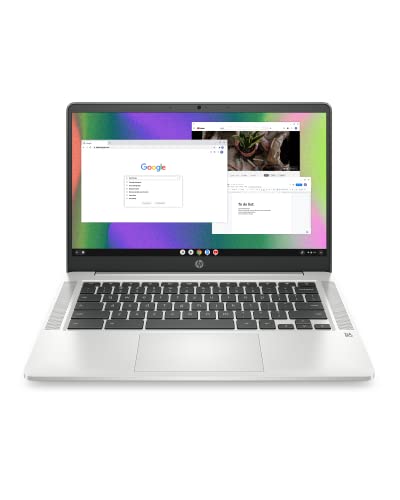
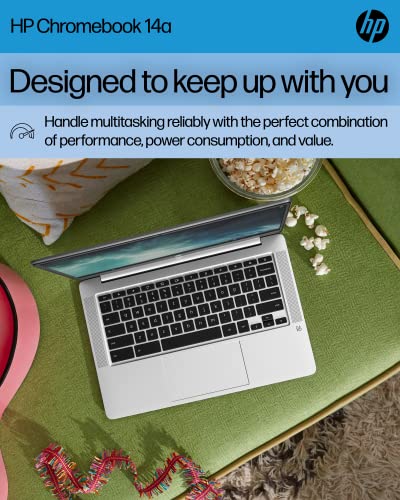
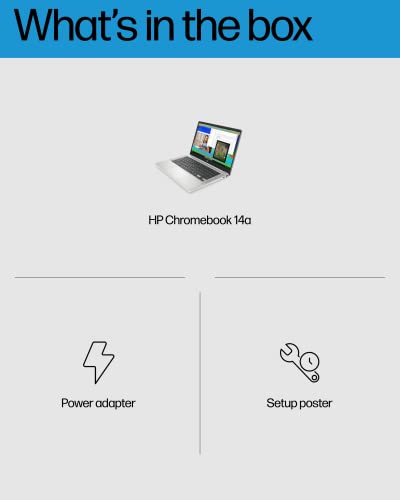
HP Chromebook 14 Laptop, Intel Celeron N4120, 4 GB RAM, 64 GB eMMC, 14" HD Display, Chrome OS, Thin Design, 4K Graphics, Long Battery Life, Ash Gray Keyboard (14a-na0226nr, 2022, Mineral Silver)



As an Amazon Associate we earn from qualifying purchases. Product prices and availability are accurate as of the date/time indicated.
HP is a familiar computer brand, and the 14 in the name points to a larger screen class than the 11-inch education models on this list.
- Pro: A larger screen is easier on the eyes for longer homework sessions, spreadsheets, and video classes.
- Pro: A Chromebook keeps the system simple, with automatic updates and school-friendly apps that suit many classrooms.
- Con: A bigger device is bulkier to carry, and younger children may find it unwieldy in a backpack or on a small desk.
Skip it if your child is young or small and needs a compact device for car rides and classroom desks; an 11-inch model is a better fit there, and the larger display is overkill for basic typing tasks.
Lenovo 100e Chromebook

Lenovo 100E Chromebook 2ND Gen 81QB000AUS Laptop Computer, 11.6" HD (1366 X 768) Display, MediaTek MT8173C Processor, 4GB RAM, 16GB eMMC TLC SSD, Powervr GX6250, Chrome OS, Black (Renewed)


As an Amazon Associate we earn from qualifying purchases. Product prices and availability are accurate as of the date/time indicated.
The 100e name is associated with Lenovo’s education-oriented Chromebook line, which is built with classrooms and younger students in mind.
- Pro: An education-focused line is designed for classroom conditions, with school fleets and student use in mind.
- Pro: A simple Chromebook platform works with common school accounts and supervised-child settings.
- Con: Education models usually keep features basic, so performance may feel limited for heavier multitasking as a child grows.
Skip it if your child needs a faster machine for creative software or older-teen projects; a more powerful laptop would suit that, and a basic education model could feel slow within a few years. Kids who start coding or video projects will likely want to step up to something with more memory.
Which One Fits
- Preschooler: LeapFrog My Own Leaptop for early learning without internet.
- Young child on the go: VTech Tote and Go Laptop.
- School-age, likes drawing and reading: Acer Chromebook Spin 311 or Lenovo IdeaPad Flex 3 Chromebook.
- Older child, larger screen: HP Chromebook 14.
- Classroom-style use: Lenovo 100e Chromebook.
Before you hand over a laptop, set up a child account, choose content filters, and agree on screen-time rules. Add a padded sleeve for the backpack and a screen protector if your child tends to press hard on the display. Teach basic habits like closing the lid gently and keeping drinks away from the keyboard. A weekly check-in on what your child is using builds trust and catches problems early.
It also helps to plan where the laptop lives. A shared family space such as the kitchen table keeps usage visible and makes it easier to step in when a site or game is not appropriate. Set a charging spot outside the bedroom so devices are not used late at night, and keep the charger in the same place every day to avoid lost cables. Finally, review privacy settings together, explain why strangers online should be ignored, and show your child how to ask for help. Those small habits matter more than any single spec on the label, and they carry over to every device your child will use in the future.
Common Mistakes
- Buying a full laptop for a preschooler who would be happier with a learning toy.
- Skipping parental controls because the child seems responsible.
- Choosing a large screen that is heavy in a school bag.
- Ignoring battery life and ending up with a device that dies by lunchtime.
- Forgetting to confirm that the school accepts the device and operating system.
FAQ
At what age should a child get a laptop?
Many families wait until homework requires typing or research, often around ages eight to ten. Younger kids do well with toy laptops or shared family devices.
Is a Chromebook good for kids?
It is a common choice because it is simple, updates automatically, and supports family supervision tools. Check that the school apps your child needs run on it.
How do I protect a child’s laptop from spills?
Look for a spill-resistant keyboard, use a protective sleeve, and keep drinks away from the workspace. Teaching habits matters as much as hardware.
What did families buy for infants before the laptop years?
Early gear includes play mats; see the best baby activity gyms for that stage.
What about a safe seat as kids grow?
Younger siblings need proper seating in the car; the best car seats for 1 year olds guide covers that stage as of 2026 for toddlers.