We independently review everything we recommend. When you buy through our links, we may earn a commission. As an Amazon Associate we earn from qualifying purchases.
4 Best Grass Seed for Shaded Areas in Ohio (November 2026)
Find grass seed that grows in Ohio shade, from dense-shade mixes that need only a few hours of sun to fast-establishing blends for patchy lawns under trees.
Find grass seed that grows in Ohio shade, from dense-shade mixes that need only a few hours of sun to fast-establishing blends for patchy lawns under trees.
An Ohio lawn under mature maples or oaks tells the same story every summer: the sunny patches stay thick and green while the ground beneath the canopy turns thin, pale, and bare. Ordinary sun-loving seed never had a chance there, because most lawn grasses need far more direct light than a shaded yard provides, and the seed that does sprout often dies back by August. The fix is not more seed of the same kind, but a mix bred for low light, cool-season roots, and the freeze-thaw cycle of an Ohio winter.
This guide is for Ohio homeowners with shaded lawns who want to overseed thin spots or start fresh under trees, and it compares mixes chosen from their Amazon product pages. Each pick below lists the sunlight hours it needs, the grasses inside the bag, and the coverage you can expect, so you can match the seed to the shade your yard actually gets.
Quick Picks
As an Amazon Associate we earn from qualifying purchases
Product
Best for
Key spec from title
Scotts Turf Builder Dense Shade Mix 5.6 lb
Yards with as little as 3 hours of sun
Grows with as little as 3 hours of sunlight
Pennington Smart Seed Dense Shade 7 lb
Shady spots on a budget with fertilizer included
Needs only 2 to 6 hours of sunlight
Jonathan Green Black Beauty Dense Shade 3 lb
Dark-green turf under big trees
Four cool-season grasses, 4 to 6 hours of sun
Scotts Turf Builder Rapid Grass Sun and Shade 5.6 lb
Mixed sun and shade lawns that need fast cover
Grows green grass in just weeks
How to Choose
Measure the sunlight before you buy the seed
Shade is not one condition, and the number of direct sun hours decides which bag will work. Dense shade means under 4 hours of direct light, usually beneath a heavy canopy, while partial shade means 4 to 6 hours of filtered or morning sun. Stand in the bare patch at mid-morning, midday, and late afternoon on a clear day and note when the sun actually hits the ground, because a mix rated for 4 hours will thin out in a spot that gets only 2, and paying for a premium dense-shade blend wastes money where a cheaper sun-and-shade mix would thrive.
Pick cool-season grasses built for Ohio winters
Ohio sits in the cool-season zone, where tall fescue, fine fescue, perennial ryegrass, and Kentucky bluegrass survive freezing winters and green up again in spring. Tall fescue brings deep roots and drought tolerance, fine fescues handle the deepest shade, perennial ryegrass germinates fast to fill gaps, and Kentucky bluegrass spreads to knit the lawn together. Warm-season grasses such as bermuda will not survive an Ohio winter, so check the blend on the bag and skip any mix whose grasses belong in southern lawns.
Compare coverage by square feet, not by bag weight
Bags look similar on the shelf yet cover very different areas, because seed coatings and filler change how much real seed sits inside each pound. One 5.6 pound bag may cover 465 square feet of new lawn and 1,400 square feet of overseeding, while a 7 pound bag of a different blend covers 600 square feet new and 1,750 overseeded. Measure your bare patches, add them up, and buy enough for overseeding rates if the lawn already has some grass, or new-lawn rates if you are starting from bare soil, so you do not run short halfway through the job.
Time the seeding to Ohio soil temperatures
Cool-season seed germinates best when soil sits between 60 and 75 degrees, which in Ohio means early fall, from late August through September, or mid-spring once the ground has warmed. Fall seeding wins most years because the seed establishes roots before winter and faces less weed competition, while spring seeding works if you water steadily through the first dry spells of summer. Seed sown into cold soil below 55 degrees sits dormant and may rot, and seed sown in midsummer heat dries out before it roots, so check soil temperature rather than the calendar alone.
The N Best Options
Scotts Turf Builder Dense Shade Mix 5.6 lb
Top Pick
Scotts Turf Builder Dense Shade Mix 5.6 lb
Best for: Ohio yards where trees block nearly all direct sun and only a few hours of light reach the ground.
Ohio yards where trees block nearly all direct sun and only a few hours of light reach the ground.
Watch out for
The coated seed adds weight to the bag, so you get fewer actual seeds per pound than an uncoated bag, and the mix still needs steady watering until it is established.
Scotts Dense Shade Mix is the pick for the darkest corners of an Ohio yard, because it is built to grow with as little as 3 hours of sunlight, less than any other mix in this guide. The bag combines seed with fertilizer and soil improver in one application, and its Root-Building Nutrition is designed to push roots deep so the turf survives dry spells under trees where roots compete for every drop of water. For a lawn that stays dim all day, this is the most forgiving starting point.
Watch out for: The coated seed adds weight to the bag, so you get fewer actual seeds per pound than an uncoated bag, and the mix still needs steady watering until it is established.
Pennington Smart Seed Dense Shade 7 lb
Runner-Up
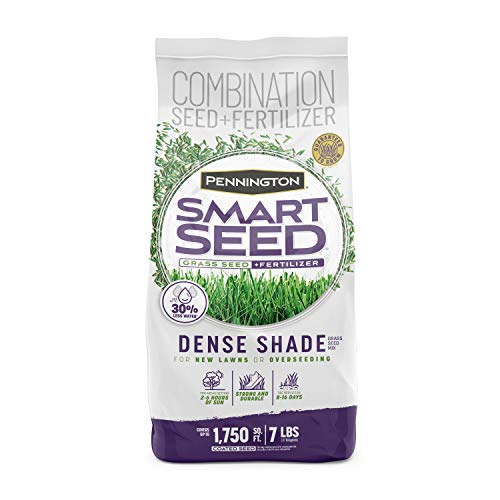
Pennington Smart Seed Dense Shade 7 lb
Best for: Homeowners patching multiple shady areas who want seed and fertilizer in one bag at a modest cost.
Needs only 2 to 6 hours of sunlight
Blend of tall fescue and fine fescue, with perennial ryegrass and Kentucky bluegrass
Homeowners patching multiple shady areas who want seed and fertilizer in one bag at a modest cost.
Watch out for
A large share of the bag weight is coating material, so the coverage per pound of actual seed is lower than the bag size suggests, and the mix performs best when planted in spring or fall at soil temperatures of 60 to 80 degrees.
Pennington Smart Seed Dense Shade suits the buyer who wants shade tolerance without a premium tag, since it needs only 2 to 6 hours of sunlight and includes fertilizer in the same bag. Its Penkoted coating helps the seed hold moisture and establish in tough spots, and the blend of tall fescue and fine fescue is the pairing that handles low light best in cool-season lawns. The 7 pound bag covers a generous area for overseeding, which makes it a practical choice for patching several shady spots at once.
Watch out for: A large share of the bag weight is coating material, so the coverage per pound of actual seed is lower than the bag size suggests, and the mix performs best when planted in spring or fall at soil temperatures of 60 to 80 degrees.
Jonathan Green Black Beauty Dense Shade 3 lb
Jonathan Green Black Beauty Dense Shade 3 lb
Best for: Yards under big trees that still get a few hours of morning or filtered light, where color and density matter most.
Four cool-season grasses: turf-type tall fescue, Kentucky bluegrass, perennial rye, fine fescues
Yards under big trees that still get a few hours of morning or filtered light, where color and density matter most.
Watch out for
Germination is slower than the other mixes here, so the seedbed must stay moist for two to three weeks, and spots with under 4 hours of sun will stay thin no matter how good the seed is.
Jonathan Green Black Beauty Dense Shade is the premium pick for buyers who want the darkest, thickest turf under their trees, built from four cool-season grasses chosen for shade tolerance and color. Turf-type tall fescue, Kentucky bluegrass, perennial rye, and fine fescues work together to produce a deep green lawn with a uniform growth habit, and the blend carries beneficial endophytes that give natural insect resistance. It asks for 4 to 6 hours of sun, so it suits the partly shaded side of the house and the edges of a canopy rather than the deepest gloom.
Watch out for: Germination is slower than the other mixes here, so the seedbed must stay moist for two to three weeks, and spots with under 4 hours of sun will stay thin no matter how good the seed is.
Scotts Turf Builder Rapid Grass Sun and Shade 5.6 lb
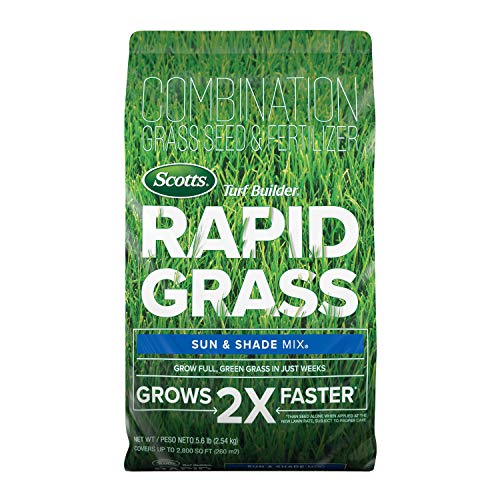
Scotts Turf Builder Rapid Grass Sun and Shade 5.6 lb
Best for: Lawns with mixed sun and shade that need quick, visible coverage across the whole yard.
Combination of grass seed and fertilizer
Grows green grass in just weeks, twice as fast as seed alone at the new-lawn rate
Lawns with mixed sun and shade that need quick, visible coverage across the whole yard.
Watch out for
The ryegrass in this blend is less shade-tolerant than the fescue, so the deepest shade patches may thin over time and need a dedicated dense-shade mix later.
Scotts Rapid Grass Sun and Shade is the choice for Ohio lawns where light varies from one corner to the next, because it is designed to grow in both sun and shade and to green up in just weeks rather than a full season. The combination of seed and fertilizer in one bag keeps the job simple, and the wide coverage per bag suits a whole-lawn overseed where some areas sit in open sun and others hide under trees. It is the fastest route to visible improvement when a lawn needs help before guests arrive or before winter sets in.
Watch out for: The ryegrass in this blend is less shade-tolerant than the fescue, so the deepest shade patches may thin over time and need a dedicated dense-shade mix later.
Which One Fits Your Situation
A yard that stays dark nearly all day
Choose Scotts Turf Builder Dense Shade Mix. It is the only pick here rated down to 3 hours of sun, and its fertilizer and soil improver give struggling seed the best chance to root where tree roots steal water and nutrients all summer long. Plant it in early fall when the soil is warm, so the seed has a full season to root before the first hard freeze arrives.
Several thin patches under trees on a budget
Choose Pennington Smart Seed Dense Shade. The 7 pound bag covers a wide overseeding area, the fertilizer coating speeds greening, and the 2 to 6 hour sun range fits most partly shaded Ohio spots without paying for a premium blend. It germinates in about two weeks, so you will see green sooner than with slower premium mixes, and one bag handles several bare patches at once.
A front lawn where a rich dark-green look matters
Choose Jonathan Green Black Beauty Dense Shade. Its four-grass blend produces the deepest color and densest turf of the group, provided the spot gets at least 4 hours of sun, and the slower germination pays off in a lawn that looks deliberately grown rather than patched. Keep the seedbed damp for two to three weeks while it sprouts, and mow high once it establishes so the young roots stay shaded and strong.
A whole lawn with sun in front and shade in back
Choose Scotts Rapid Grass Sun and Shade. One bag covers both conditions, it greens up faster than the dense-shade specialists, and the broad overseeding coverage makes a full-yard refresh affordable in a single weekend. Apply it in spring or fall when soil temperatures sit between 60 and 80 degrees, water daily until it sprouts, and expect visible green within a few weeks rather than a full season.
Common Mistakes
Seeding a dense-shade spot with a sun-loving mix, then wondering why the grass dies by August.
Sowing seed in midsummer heat and letting it dry out before the roots take hold.
Buying one bag for a new lawn at overseeding rates and running out halfway across the yard.
Skipping watering during the first two weeks, when the seedbed must stay damp every day.
Mowing the new grass too short, which starves young roots of the leaf area they need to grow.
Frequently Asked Questions
How many hours of sun does grass need in a shaded Ohio lawn?
Most shade-tolerant cool-season mixes need at least 2 to 4 hours of direct sun, with dense-shade blends rated down to 2 or 3 hours and premium blends asking for 4 to 6. Measure the actual sun on the bare patch across a clear day, because a spot under a heavy canopy may get far less light than it appears to from the porch.
When is the best time to plant grass seed in Ohio?
Early fall, from late August through September, is the best window, since soil is warm, nights are cool, and weed competition is low. Mid-spring is the second choice, once soil temperatures reach 60 degrees, though spring-seeded lawns need steady watering through the first hot spells of summer to survive.
Will grass seed grow under maple and oak trees in Ohio?
Yes, if you choose a dense-shade cool-season mix with fine fescue and tall fescue, and the spot gets at least a few hours of light. Grass will still struggle where the canopy is solid and tree roots take most of the water, so thin the canopy where you can, water deeply, and accept that the darkest spots may always stay thinner than the sunny lawn.
How long does shade grass seed take to germinate?
Germination runs from 8 to 21 days depending on the blend, with Pennington sprouting in 8 to 16 days, Scotts dense shade in about two weeks, and Jonathan Green taking 14 to 21 days. Keep the seedbed moist every day during that window, since a single dry day can stop germination and leave bare patches that need reseeding.
9
99klik Editorial Team
We compare specs, materials and verified owner reviews before a product earns a spot. Rankings are never paid.
Affiliate disclosure. As an Amazon Associate we earn from qualifying purchases at no extra cost to you. Prices accurate as of the date shown.
Compare five X99 motherboards for LGA 2011-3 gaming builds, from compact Micro-ATX boards to dual-CPU E-ATX models, and pick the right fit for your build.
Compare four infrared gas grills from Amazon listings, from a four-burner Amplifire cabinet to a portable TRU-Infrared grill, with burner and size specs.
Compare five bowhunting arrows by spine, grains per inch and straightness: Easton 6.5 Bowhunter, Gold Tip Hunter XT, Easton FMJ and two Victory builds.
Four 1x prism sights with etched reticles compared on eye relief, reticle design, brightness settings and weight, plus a clear pick for each rifle setup.
Compare the best hand pruning saws for garden and trail work, from compact folders to pro curved blades, and pick the right blade length for your branches.
Compare bypass pruning shears from Felco, ARS, Fiskars and gonicc by cut capacity, blade steel and grip fit, with picks for large hands and weaker grips.



 Scotts Turf Builder Rapid Grass Sun and Shade 5.6 lb