We independently review everything we recommend. When you buy through our links, we may earn a commission. As an Amazon Associate we earn from qualifying purchases.
4 Best 1x Prism Red Dot Sights for Rifles (November 2026)
Four 1x prism sights with etched reticles compared on eye relief, reticle design, brightness settings and weight, plus a clear pick for each rifle setup.
Four 1x prism sights with etched reticles compared on eye relief, reticle design, brightness settings and weight, plus a clear pick for each rifle setup.
A 1x prism sight answers a narrow question: how do you keep red dot speed when a projected dot blooms through your eyes, or when you want an aiming point that is still there after the battery fades? The real decision is not prism against reflex in the abstract. It is which etched reticle, eye box and mount height suit the rifle you actually shoot, because the four sights below separate themselves in exactly those places, not in magnification or glass coatings.
OUR TOP PICK
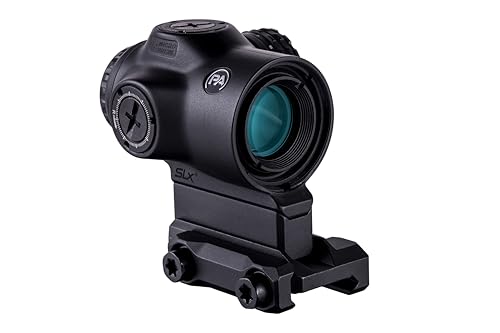
Primary Arms SLx 1X MicroPrism with Red Illuminated ACSS Cyclops Gen II Reticle
This roundup is for carbine owners whose eyes turn a plain dot into a comet, home-defense shooters who want a reticle that never depends on a battery, and range shooters stepping up from an entry reflex sight. Each pick is a genuine 1x prism optic, selected from its Amazon listing name and the specifications printed on that listing, so the reticle types, eye relief figures and weights quoted here come from the product pages themselves.
Quick Picks
As an Amazon Associate we earn from qualifying purchases.
Product
Best for
Key spec from title
Primary Arms SLx 1X MicroPrism
Lightest build for a carbine carried all day
5.5 oz without the riser
Primary Arms GLx 1x MicroPrism
Longest eye relief in this group
4.4 in eye relief
Swampfox Raider 1×20
Close-range holds on short barrels
BRC reticle with 5, 10 and 15 yard holds
Vortex Spitfire 1x
Widest view and a common AAA cell
79 ft field of view at 100 yds
How to Choose
Start with the reticle, because it decides what the sight can do
Every sight here etches its reticle into glass, so the pattern stays black and usable with the illumination switched off. What changes is how much information that pattern carries. A plain center dot or chevron is fastest inside a room and leaves the view uncluttered. A pattern with ranging marks and hold points, like the ACSS designs or the Raider’s BRC, asks a little more learning time but gives you reference points at 100 to 300 yards and offset holds at bad-breath distances. Pick the pattern around the shooting you do most weekends, not the longest shot you might take once a year.
Eye relief and the eye box control how forgiving the sight feels
A prism sight has a defined eye box, unlike a reflex dot that tolerates almost any head position. Eye relief figures here run from 3.54 to 4.4 inches, and that gap changes how the rifle must be set up. Longer relief lets you mount the optic further forward and keep a more heads-up posture. Shorter relief pulls the sight closer to your face, which some shooters prefer on compact builds. Whichever figure you choose, plan to set the mount position on the rail so your natural cheek weld lands inside the eye box every time, instead of hunting for the reticle on the draw.
Illumination controls and battery choice shape daily handling
Brightness steps range from 10 to 13 across these four sights, and the top settings matter more than the count: a reticle that washes out at noon slows you down more than one missing a dim step. Two designs add motion activation, waking the illumination when the rifle moves and sleeping it when the rifle rests, which stretches the coin cell through months of storage. Battery format is the other split. Three sights run a CR2032 coin cell, while the Vortex runs a single AAA, a cell many households already keep in a drawer.
Check the footprint and the heights in the box before anything else
Mounting decides whether a sight drops onto the rail at the height your iron sights and magnifier expect. The Raider uses the T-2 footprint shared with a wide field of aftermarket mounts, and the box carries 1.1 and 1.6 inch options. The SLx ships with a stack of riser heights, so you can land on absolute or lower-third co-witness without a second purchase. The Vortex arrives with its mount fitted for AR height. Before choosing, measure the setup you run now: a prism sight mounted too low forces a scrunched cheek weld, and one mounted too high makes the eye box feel narrow.
The 4 Best Options
Primary Arms SLx 1X MicroPrism with Red Illuminated ACSS Cyclops Gen II Reticle
Top Pick
Primary Arms SLx 1X MicroPrism with Red Illuminated ACSS Cyclops Gen II Reticle
Best for: Weight-conscious carbine builds that still want ranging marks in the reticle.
Reticle: ACSS Cyclops Gen II, red illuminated, etched glass
The Primary Arms SLx 1X MicroPrism is the pick for shooters who count ounces. At 5.5 ounces without its riser it keeps a carbine feeling front-light, and the etched ACSS Cyclops Gen II reticle pairs a fine center chevron with a wide horseshoe, so it reads fast up close and still gives hold points further out. Thirteen brightness settings include three steps suited to night-vision gear, and AutoLive motion activation wakes the illumination when the rifle lifts. The 3.6 inch eye relief is workable rather than generous, so mount position deserves a few minutes of care.
Primary Arms GLx 1x MicroPrism Scope with Red ACSS Cyclops Reticle
The Primary Arms GLx 1x MicroPrism suits shooters who found other micro prisms cramped. Its 4.4 inch eye relief is the longest in this group, which opens up mounting positions on rifles with longer stocks or rear-mounted charging handles. The red ACSS Cyclops reticle keeps the same chevron-and-horseshoe logic as the SLx in a larger housing, and the half-MOA click value lets you walk a zero in with finer steps. At 9.1 ounces it gives back some of the weight the SLx saves, a fair trade for the roomier view behind the glass.
Specs
Reticle: ACSS Cyclops, red illuminated, etched glass
Magnification: 1x
Objective lens: 20.5 mm
Eye relief: 4.4 in
Field of view: 74.8 ft at 100 yds
Click value: 1/2 MOA
Weight: 9.1 oz
Length: 2.6 in
Best for: Rifles that need the optic mounted further forward, and shooters who want finer zeroing steps.
Watch out for: It is the second heaviest sight here, so weigh it against a build you plan to carry for hours.
ASIN: B0DGHRCJ17
Swampfox Raider 1×20 Micro Prism Sight with Green BRC Reticle
Runner-Up
Swampfox Raider 1×20 Micro Prism Sight with Green BRC Reticle
Best for: Short-barreled carbines and pistol-caliber builds shot mostly inside 50 yards.
Reticle: BRC (Bullet Rise Compensation), green illuminated, etched glass
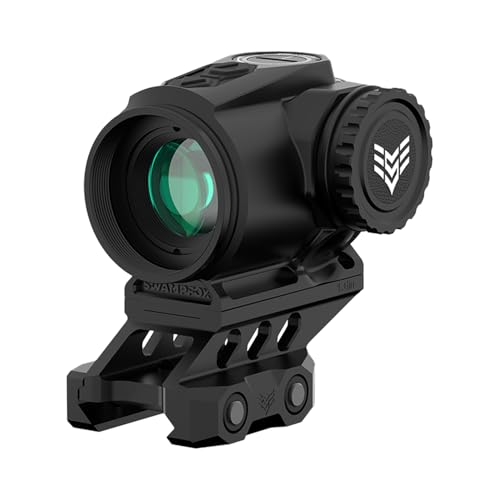
The Swampfox Raider 1×20 is built around close work. Its green BRC reticle prints dedicated holds for 5, 10 and 15 yards under a center dot set for a 50/200 yard zero, which answers the height-over-bore problem that short barrels exaggerate. Shake N’ Wake keeps the illumination asleep until the rifle moves, and the die-cast zinc alloy body is built to shrug off hard knocks. Ten brightness settings include night-vision steps at the low end. The T-2 footprint also means the aftermarket mount shelf for this sight is the deepest of the four.
Vortex Optics Spitfire 1x Prism Scope with DRT Reticle (MOA)
Vortex Optics Spitfire 1x Prism Scope with DRT Reticle (MOA)
Best for: Shooters who want the widest view and a battery they can replace from a kitchen drawer.
Model: SPR-200
Reticle: DRT (MOA), etched glass, red or green illumination
The Vortex Spitfire 1x is the straightforward option in the group. The DRT reticle centers on a fine point inside concentric rings, the illumination switches between red and green across 12 brightness settings, and the whole sight runs on a single AAA cell instead of a coin battery. Its 79 foot field of view at 100 yards is the widest here, and the 3.8 inch eye relief sits in the middle of the pack. The trade is size: at 11.2 ounces and 4.3 inches long, it is the largest sight in this roundup by a clear margin.
Which One Fits Your Situation
Your red dot turns into a comet shape
Astigmatism is the classic reason to leave reflex sights behind. An etched reticle is printed on glass rather than projected, so it holds a clean edge through imperfect eyes. Both Primary Arms sights and the Raider give you that sharp pattern, and each adds a rear diopter you can turn until the reticle snaps into focus for your prescription. Start with the SLx if weight matters, or the Raider if your shooting stays close.
A short-barreled carbine kept by the door
Close-range work punishes a reticle with no offset references, because the bore sits well below the sight line at hallway distances. The Raider’s BRC pattern answers that directly with holds marked for 5, 10 and 15 yards, and its motion activation means the illumination is awake the moment the rifle comes up. The etched pattern stays visible in black if the battery is flat, which suits a gun that waits months between range trips.
A lightweight carbine you carry through a long range day
Hours of drills and movement turn small weight savings into real comfort. The SLx at 5.5 ounces without its riser is the lightest sight here by a wide gap, and its included riser stack lets you set a height that keeps your neck neutral. You give up nothing in reticle function: the Cyclops pattern still carries ranging marks for the occasional longer stage, and the diopter keeps it crisp as your eyes tire late in the day.
You want simple controls and nothing exotic in the battery drawer
Some shooters want an optic that a family member can pick up and run without a briefing. The Vortex fits that brief: a rear dial steps through 12 brightness settings, the reticle swaps between red and green, and the AAA cell is the same one your remotes use. The view through it is the widest of the four, which forgives a rough cheek weld when the shot has to happen quickly.
Common Mistakes
Buying a magnified prism by accident: a 3x or 5x prism looks similar in photos, so confirm the listing says 1x before ordering.
Mounting the sight before finding your eye box: slide it along the rail with the mount loose until your natural cheek weld centers the reticle, then tighten.
Leaving the diopter at the factory setting: the reticle will look fuzzy through your eyes even when the glass is fine, so focus it once at the range.
Trusting hold marks before confirming zero: BRC and ACSS reference points only line up after the center is zeroed at the distance the pattern expects.
Ignoring footprint when you already own mounts: the Raider takes T-2 pattern mounts, while the others use their own fitted mounts and risers.
Frequently Asked Questions
Does a 1x prism sight still work when the battery dies?
Yes. The reticle is etched into the glass, so it stays visible as a black pattern in daylight with no power at all. Illumination only adds color and brightness for dim light or busy backgrounds. That is the core difference from a reflex dot, which projects its aiming point and goes blank when the cell runs out.
Can I run a magnifier behind a 1x prism sight?
Often, yes, and the SLx was shaped with that pairing in mind. The catch is eye relief: the magnifier needs its own eye position, and the prism sight needs yours, so the two have to share rail space without pushing either out of its working distance. Set the prism sight first, confirm a clean view, then place the magnifier and check both views before a range session.
How does a prism sight differ from a reflex red dot?
A reflex sight projects a dot onto a coated lens, which keeps the housing small and the eye position flexible, but the dot can bloom for shooters with astigmatism. A prism sight routes the image through a glass prism with an etched reticle, so the pattern stays sharp and visible without power, at the cost of a defined eye box you must sit inside.
Which mount height should I choose for an AR-15?
Most AR-15 shooters land on absolute co-witness or lower-third co-witness. Absolute height centers the iron sights in the window, which suits shooters who run irons often. Lower-third drops the irons toward the bottom edge and leaves a cleaner view, which suits a dedicated optic setup. The SLx and Raider include height options in the box, so you can try both before settling.
9
99klik Editorial Team
We compare specs, materials and verified owner reviews before a product earns a spot. Rankings are never paid.
Affiliate disclosure. As an Amazon Associate we earn from qualifying purchases at no extra cost to you. Prices accurate as of the date shown.
Compare five X99 motherboards for LGA 2011-3 gaming builds, from compact Micro-ATX boards to dual-CPU E-ATX models, and pick the right fit for your build.
Compare four infrared gas grills from Amazon listings, from a four-burner Amplifire cabinet to a portable TRU-Infrared grill, with burner and size specs.
Compare five bowhunting arrows by spine, grains per inch and straightness: Easton 6.5 Bowhunter, Gold Tip Hunter XT, Easton FMJ and two Victory builds.
Compare the best hand pruning saws for garden and trail work, from compact folders to pro curved blades, and pick the right blade length for your branches.
Find grass seed that grows in Ohio shade, from dense-shade mixes that need only a few hours of sun to fast-establishing blends for patchy lawns under trees.
Compare bypass pruning shears from Felco, ARS, Fiskars and gonicc by cut capacity, blade steel and grip fit, with picks for large hands and weaker grips.